Manufacturing Fleet Management Software: How to Monitor Every Machine Across Every Plant

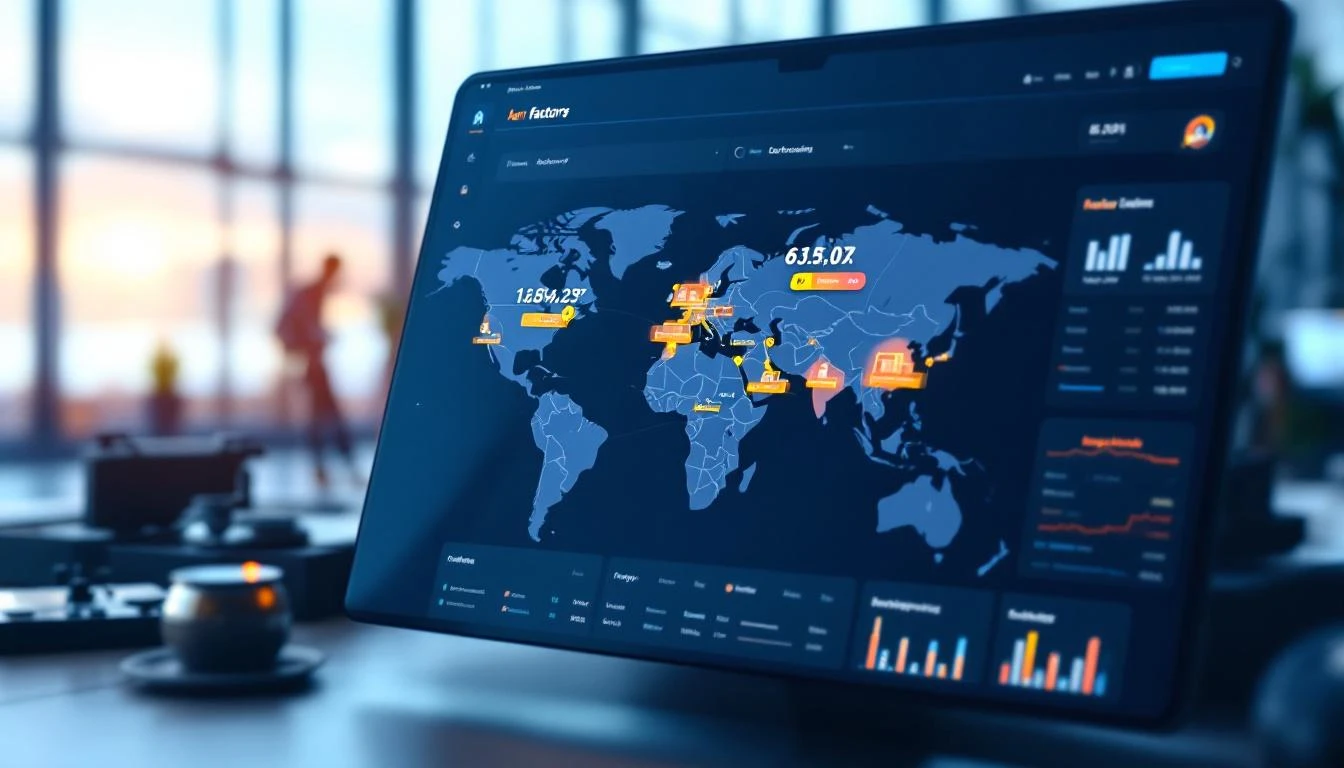
Managing machines at one plant is hard. Managing them across five plants, three states, and two shifts is a different beast entirely. Manufacturing fleet management software gives operations leaders a single pane of glass across every machine, every location, and every zone — replacing the phone calls, spreadsheets, and site visits that eat your week.
What "Fleet Management" Means in Manufacturing
In logistics, fleet management means tracking vehicles. In manufacturing, it means something more complex: monitoring, comparing, and optimizing equipment performance across multiple production facilities.
Manufacturing fleet management answers questions like:
- Which of my five plants has the highest OEE this month?
- Which machines across all locations are currently in alarm state?
- Where am I running at capacity, and where do I have available production time?
- Which failure modes are most common across my fleet?
- How does spare parts consumption compare between Plant A and Plant B?
- Are my maintenance practices consistent across sites?
Without fleet management software, these questions require plant managers to manually compile data, operations teams to schedule review meetings, and executives to trust that self-reported numbers are accurate. The lag between reality and visibility can be weeks or months.
Why Multi-Site Manufacturers Need Fleet Management
According to McKinsey, multi-site manufacturers who standardize operations across plants achieve 15-30% better performance than those managing each site independently. The key enabler is visibility — you can't standardize what you can't see.
Common problems without fleet management:
Performance Variance Is Invisible
Two identical production lines at different plants running 15% different OEE is surprisingly common — and often undetected for months. Without cross-plant comparison, each site's "normal" goes unchallenged.
Best Practices Don't Travel
When Plant B solves a recurring issue, Plant A keeps dealing with it because there's no systematic way to share operational learnings across the fleet.
Capacity Planning Is Guesswork
Allocating production orders across plants requires knowing available capacity in real time. Most manufacturers estimate based on scheduled production, not actual utilization.
Maintenance Inconsistency
Different plants develop different maintenance cultures. Some over-maintain (wasting money). Some under-maintain (risking failures). Without fleet-wide data, there's no way to identify and correct the discrepancy.
Failure Patterns Repeat
A bearing failure mode at one plant often indicates a systemic issue that will hit other plants with similar equipment. Without fleet-wide failure analysis, each site discovers the problem independently.
Key Features of Manufacturing Fleet Management Software

Fleet Overview Dashboard
A single view showing all machines across all locations with real-time status: running, idle, alarm, offline. This replaces the morning check-in calls where each plant manager reports yesterday's numbers.
Multi-Location Organization
Organize equipment by company, location, and zone. A location might be a plant. Zones within that plant might be production lines, departments, or building areas. This hierarchy lets you drill from fleet-wide metrics down to individual machine performance.
Capacity Utilization Views
See how each location's equipment is being utilized over configurable time ranges — last 3 months, 6 months, 12 months. Compare capacity utilization across locations to identify plants with room for additional production.
Fleet Performance Analytics
Aggregate performance data across the fleet with date range filtering. Visualize capacity utilization as bar charts across locations and compare machine type performance across sites.
Failure Analysis
Fleet-wide failure analysis showing which machine types, locations, and failure modes contribute most to downtime. Charts break down spare parts consumption, machine type failures, and downtime categories across the entire fleet.
Part Management Across the Fleet
View services, sales, and parts data across all locations with searchable, filterable tables. Identify which locations consume the most parts and which machines drive the highest maintenance costs.
Cross-Site Comparison
Compare identical machines at different locations to identify performance gaps. If the same CNC model runs at 85% OEE in one plant and 72% in another, that gap represents a concrete improvement opportunity.
Best Manufacturing Fleet Management Platforms
MachineCDN — Purpose-Built Industrial Fleet Management
MachineCDN's fleet management module is built specifically for manufacturers managing equipment across multiple locations and zones. Because it connects directly to PLCs through industrial protocols, every data point in the fleet view comes from the machines themselves — not from manual entry or operator reporting.
Fleet management capabilities:
- Fleet Overview — all machines across all locations on a single dashboard with real-time status indicators
- Capacity utilization — configurable date ranges (3/6/12 months) showing utilization across locations with visual charts
- Failure analysis — drill into spare parts consumption, machine type distribution, and downtime categories with bar chart visualizations
- Part management — searchable services and sales data across the fleet with inline filtering
- Fleet performance — aggregate performance metrics with date range selection and location comparison
- Location and zone hierarchy — organize equipment by company → location → zone for logical drill-down
- Alarm management — see active alarms across every location from a single view
- Threshold alerting — approaching and active thresholds fleet-wide
What sets MachineCDN apart for fleet management:
- 3-minute per-device setup — adding a new machine to the fleet takes minutes, not days
- Cellular connectivity — no need to configure each plant's network. Devices communicate independently over cellular
- No IT coordination — the biggest blocker for multi-site IIoT deployment is coordinating with each plant's IT team. Cellular connectivity eliminates this entirely
- Real PLC data — fleet comparisons are meaningful because they're based on direct machine data, not operator-entered production numbers
Samsara — Mixed Fleet (Vehicles + Equipment)
Samsara offers fleet management for both mobile assets (trucks, trailers) and fixed equipment. If your operation includes both transportation and manufacturing, Samsara provides a single platform for both.
Strengths: GPS tracking, environmental monitoring, combined mobile/fixed asset views. Limitations: Manufacturing-specific features like OEE tracking, downtime analysis, and materials management are less developed than dedicated IIoT platforms.
PTC ThingWorx — Enterprise IIoT Fleet Management
ThingWorx provides fleet management capabilities within a broader enterprise IIoT platform. It's highly customizable but requires significant implementation effort.
Strengths: Extensive integration options, digital twin capabilities, augmented reality for remote assistance. Limitations: Complex implementation (months, not days), high cost, requires dedicated IIoT development team.
Siemens MindSphere (Insights Hub) — Siemens Equipment Fleets
MindSphere is strongest when managing fleets of Siemens equipment. If your plants run predominantly Siemens PLCs and automation, MindSphere offers deep native integration.
Strengths: Best-in-class for Siemens equipment, strong digital twin support. Limitations: Vendor-specific advantages don't extend to mixed-vendor environments. Complex pricing, long deployment times.
AVEVA — Process Manufacturing Fleets
AVEVA (now part of Schneider Electric) serves fleet management for process manufacturing — chemicals, oil & gas, food & beverage. Their strength is in continuous process operations rather than discrete manufacturing.
Strengths: Deep process manufacturing expertise, historian integration. Limitations: Heavy enterprise platform, not designed for discrete manufacturing fleet management. Significant implementation investment.
Comparing Fleet Management Platforms
| Feature | MachineCDN | Samsara | ThingWorx | MindSphere | AVEVA |
|---|---|---|---|---|---|
| Multi-location dashboard | ✅ | ✅ | ✅ | ✅ | ✅ |
| Capacity utilization | ✅ | Basic | Custom | ✅ | ✅ |
| Failure analysis | ✅ | Basic | Custom | ✅ | ✅ |
| Part management | ✅ | ❌ | Custom | ❌ | ❌ |
| PLC connectivity | ✅ Native | ❌ | ✅ | Siemens-focused | ✅ |
| Cellular connectivity | ✅ | ✅ | ❌ | ❌ | ❌ |
| 3-min setup | ✅ | ❌ | ❌ | ❌ | ❌ |
| Zero IT | ✅ | Partial | ❌ | ❌ | ❌ |
| OEE monitoring | ✅ | Basic | Custom | ✅ | ✅ |
| Materials tracking | ✅ | ❌ | Custom | ❌ | ✅ |
| Energy monitoring | ✅ | Basic | Custom | ✅ | ✅ |
| Deployment time | Days | Weeks | Months | Months | Months |
Building a Multi-Site Deployment Plan
If you're deploying fleet management across multiple plants, here's a proven approach:
Phase 1: Pilot at One Site (Week 1-2)
Deploy on 10-20 machines at your most data-mature plant. Validate data accuracy, train the local team, and establish baseline metrics. With MachineCDN's 3-minute setup and cellular connectivity, you can have a pilot running within a single shift.
Phase 2: Expand to Critical Equipment (Week 3-5)
Add remaining critical equipment at the pilot site. Deploy to one additional site's critical equipment. Begin cross-site comparisons and identify your first performance gaps.
Phase 3: Fleet-Wide Rollout (Week 6-12)
Expand to all sites and all production equipment. Establish fleet-wide KPIs, cross-site benchmarks, and standardized reporting cadences. Use failure analysis data to prioritize fleet-wide improvement initiatives.
Phase 4: Optimization (Ongoing)
Use fleet data to drive continuous improvement: standardize maintenance practices based on best-performing sites, optimize spare parts inventory across locations, rebalance production loads based on actual capacity data.
The ROI of Fleet Visibility
For a manufacturer with 5 plants and 200 machines total, fleet management software typically delivers:
- 2-5% OEE improvement through cross-site benchmarking and best practice transfer ($500K-$2M/year in additional production capacity)
- 15-20% reduction in spare parts inventory through cross-site parts visibility and demand planning ($150K-$300K in working capital freed)
- 10-15% reduction in unplanned downtime through fleet-wide failure pattern detection ($200K-$500K/year in prevented losses)
- Elimination of manual reporting — operations reviews shift from "what happened?" to "what should we do?" (8-12 hours/week recovered per plant manager)
The total typically represents 5-10x the annual platform cost, with payback in the first quarter.
Getting Started
If you manage equipment across multiple manufacturing locations and still rely on spreadsheets, email reports, or site visits for cross-plant visibility, fleet management software closes the gap between what's happening and what you know.
See your entire manufacturing fleet in one view. Book a MachineCDN demo and see how 3-minute device setup transforms multi-site monitoring.