IoTFlows vs MachineCDN for OEE Monitoring: Which Platform Delivers Accurate Production Data?

If you're evaluating OEE monitoring platforms, IoTFlows and MachineCDN represent two fundamentally different approaches to collecting production data from your factory floor. The difference matters more than most vendor comparisons suggest — it affects every metric you'll ever trust.
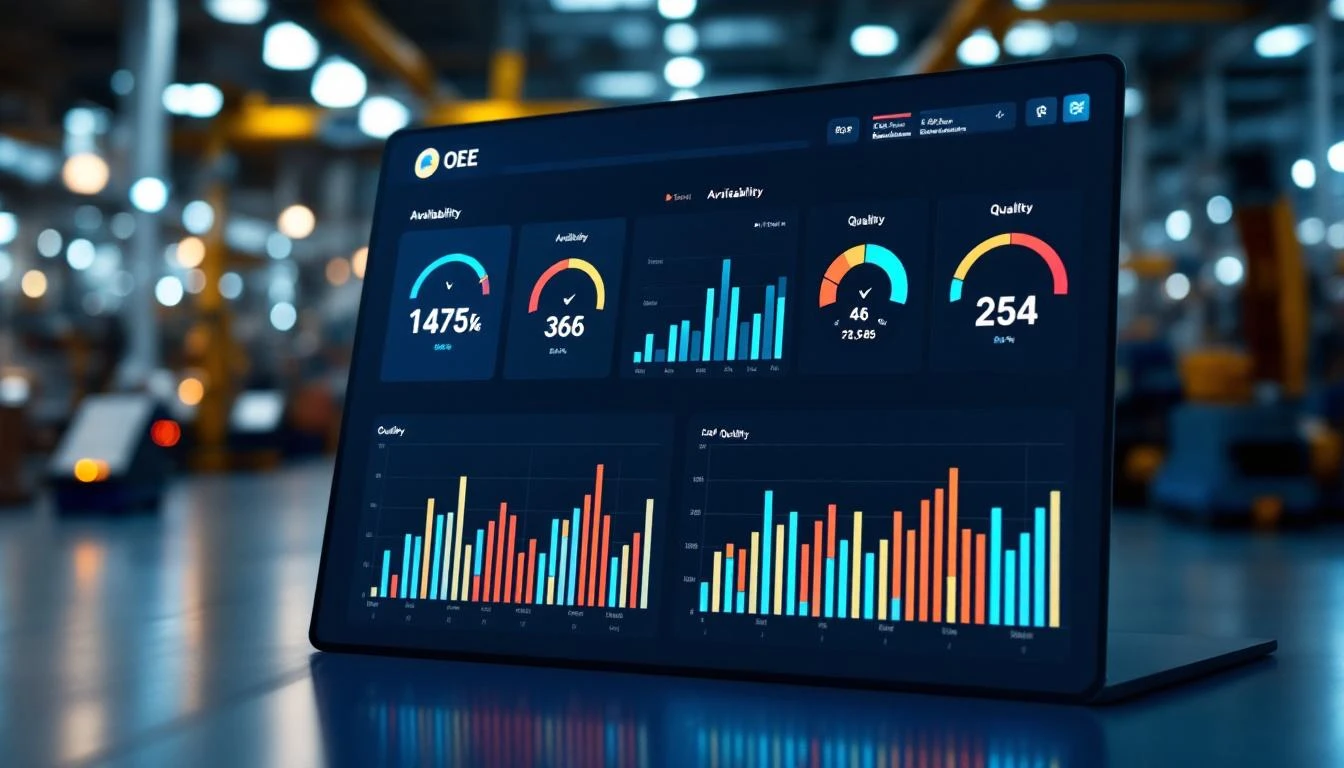
Why Your OEE Data Source Matters More Than Your OEE Software
OEE is simple math: Availability × Performance × Quality. The hard part isn't the formula — it's getting accurate data into the formula.
According to McKinsey's research on smart manufacturing, manufacturers who digitize data collection see a 10-30% improvement in OEE within the first year. But the key word is accurate digitization. Garbage in, garbage out applies to OEE more than almost any other manufacturing metric.
The accuracy of your OEE calculation depends entirely on how you capture three things:
- Machine state transitions — when did the machine start running, stop, idle, alarm?
- Cycle times — how long does each production cycle actually take vs. the ideal?
- Quality signals — how many parts were rejected, reworked, or scrapped?
IoTFlows and MachineCDN capture this data through very different mechanisms, and those differences cascade through everything downstream.
How IoTFlows Approaches OEE Monitoring
IoTFlows is a YC-backed platform built around their proprietary SenseAi sensor family. Their approach to OEE monitoring works like this:
- SenseAi sensors attach to machines to detect vibration, acoustic signatures, and environmental conditions
- Sensor data is used to infer machine states — running, idle, off — based on vibration patterns
- AI algorithms analyze acoustic and vibration profiles to correlate with production events
- OEE dashboards display availability, performance, and quality metrics derived from sensor inference
This sensor-overlay approach has some strengths. It's non-invasive — you don't need to touch the PLC or machine controls. For older equipment without modern controls, it can provide visibility where none existed before. IoTFlows claims their customers see an average 35% reduction in downtime.
The challenge is accuracy at the edges. Sensor-inferred machine states are probabilistic — they're the platform's best guess about what the machine is doing based on vibration and sound patterns. For high-level "is it running or not?" questions, this works well. For granular OEE tracking — differentiating between planned stops, unplanned stops, reduced speed operation, and quality events — inference introduces uncertainty.
How MachineCDN Approaches OEE Monitoring
MachineCDN takes a protocol-native approach. Instead of adding sensors on top of machines, MachineCDN connects directly to the programmable logic controllers (PLCs) that already run your equipment.
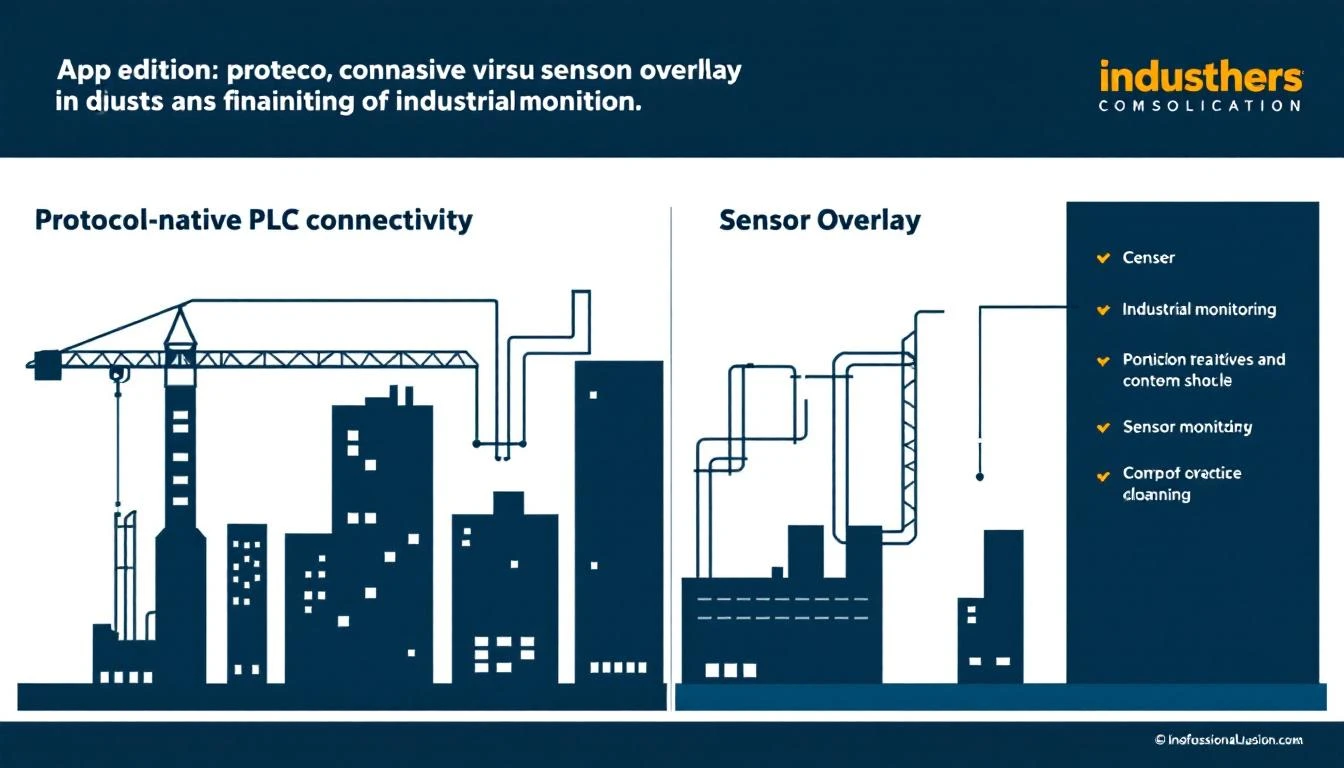
Here's what that means in practice:
- Direct PLC connectivity via industrial protocols (Ethernet/IP, Modbus TCP, Modbus RTU) — the same protocols your machines already speak
- Reads actual machine data — cycle counts, alarm codes, temperature, pressure, speed, material consumption — directly from the controller
- Real machine states rather than inferred states — the PLC knows exactly what the machine is doing because it's the computer running the machine
- 3-minute device setup — connect, configure tag mapping, and data starts flowing
- Cellular connectivity — bypasses your plant IT network entirely
For OEE specifically, this means MachineCDN reads the actual values the machine is reporting: real cycle counts, real alarm codes with specific fault identifiers, real operating parameters. There's no inference layer between the machine and your OEE dashboard.
The platform's capacity utilization views show equipment availability across locations and zones, with configurable date ranges for historical analysis. You can drill down from fleet-wide OEE to individual machine performance with filtering by location, zone, and time period.
Head-to-Head: OEE Accuracy Comparison
| OEE Component | IoTFlows (Sensor-Based) | MachineCDN (Protocol-Native) |
|---|---|---|
| Availability | Inferred from vibration patterns | Read directly from PLC run/stop/alarm states |
| Performance | Estimated from acoustic cycle detection | Calculated from actual PLC cycle counts |
| Quality | Limited — requires separate quality integration | Reads reject counters, scrap counts from PLC |
| Downtime Reasons | AI-classified from sensor signatures | Actual alarm codes with specific fault IDs |
| Planned vs. Unplanned | Requires manual classification or schedule integration | PLC provides planned stop codes vs. fault codes |
| Micro-stops | May miss stops under sensor threshold | Captures every state change the PLC registers |
The most significant difference shows up in downtime reason tracking. When a machine stops, manufacturers need to know why — not just that it stopped. MachineCDN reads the specific alarm code from the PLC (motor overtemp, material jam, safety interlock, etc.) and maps it to a downtime reason. IoTFlows would need to infer the cause from vibration and acoustic patterns, which works for some failure modes but not all.
Setup and Time-to-Value
IoTFlows Setup Process
IoTFlows requires physical sensor installation on each machine you want to monitor. Their SenseAi sensors need to be mounted, powered, and connected to their cloud platform. For their IP67-rated SenseAi Embedded units, this involves:
- Mounting sensors at optimal positions on each machine
- Ensuring wireless connectivity (Wi-Fi or cellular gateway)
- Training the AI model on each machine's normal operating patterns
- Calibrating baseline vibration and acoustic profiles
- Validating that inferred states match actual machine behavior
The AI training period is important — IoTFlows needs time to learn what "running" sounds and feels like for each specific machine. This calibration period varies by equipment type.
MachineCDN Setup Process
MachineCDN setup is fundamentally different:
- Connect the edge device to your machine's PLC network port
- Configure which PLC tags to read (cycle counts, alarms, temperatures, etc.)
- Data appears on your dashboard
MachineCDN advertises a 3-minute setup time per device. Because the platform uses industrial protocols to read data the PLC is already generating, there's no AI training period, no calibration, and no baseline learning. The first data point is as accurate as the thousandth.
The edge device uses cellular connectivity, which means you don't need to involve your plant IT team — a significant advantage in regulated manufacturing environments where network access requires extensive security reviews.
Cost Considerations
The total cost of OEE monitoring goes beyond software licensing:
IoTFlows costs include:
- SenseAi sensor hardware per machine
- Cloud platform subscription
- Installation labor (mounting, wiring, commissioning)
- AI model training time (lost opportunity cost during calibration)
- Ongoing sensor maintenance and battery replacement (for wireless units)
MachineCDN costs include:
- Edge device per machine or group of machines
- Cloud platform subscription
- Cellular data subscription (built into device cost)
- Minimal installation labor (plug and configure)
For a typical 20-machine deployment, the MachineCDN approach generally involves lower total hardware costs because you're not purchasing individual sensors for each monitoring point. One edge device can read hundreds of PLC tags simultaneously, covering machine state, temperatures, pressures, speeds, and material levels — all from a single connection.
When IoTFlows Makes More Sense
IoTFlows has legitimate advantages in specific scenarios:
- Legacy equipment with no PLC — old mechanical machines, manual presses, or equipment predating modern controls benefit from sensor-based monitoring because there's no PLC to connect to
- Vibration-specific monitoring — if your primary concern is bearing health, shaft alignment, or cavitation detection, IoTFlows' seven-metric machine health scoring is purpose-built for this use case
- Non-production equipment — HVAC systems, cooling towers, and utility equipment often lack PLCs but benefit from vibration and temperature monitoring
- Quick pilot without PLC access — if PLC access requires lengthy approval processes, sensors can provide interim visibility
When MachineCDN Makes More Sense
MachineCDN's protocol-native approach delivers more value when:
- Accurate OEE is the primary goal — direct PLC data eliminates inference uncertainty
- You need granular downtime reasons — alarm codes from the PLC identify specific failure modes
- Multi-site fleet management — MachineCDN's fleet management views provide cross-location OEE comparison with zone-level drill-down
- Materials tracking matters — MachineCDN includes inventory and material management that connects consumption to production data
- Spare parts and PM scheduling — built-in preventative maintenance task scheduling tied to machine runtime or calendar intervals
- Fast deployment — 3-minute setup with cellular connectivity means no IT involvement and no sensor installation labor
- Energy monitoring — built-in energy consumption tracking per machine for sustainability reporting
Beyond OEE: What Else Matters
OEE monitoring is rarely the only thing manufacturers need from an IIoT platform. Consider what else each platform provides:
IoTFlows also offers:
- AI job scheduling
- Shift-based production reporting
- Machine health scores (7 metrics)
- BeamTracker laser tracking
MachineCDN also offers:
- Fleet management across locations and zones
- Spare parts tracking and inventory management
- Material consumption monitoring with job and system inventory reports
- Threshold alerting with approaching and active alert views
- Preventative maintenance scheduling with task management
- Custom report builder with tag selection and export capabilities
- Multi-tenant architecture for OEMs managing customer equipment
- Energy consumption monitoring per machine
For manufacturers who need a comprehensive operational platform — not just OEE tracking — MachineCDN's broader feature set reduces the number of separate systems required.
Making the Right Choice
The IoTFlows vs. MachineCDN decision for OEE monitoring comes down to one fundamental question: do your machines have modern PLCs?
If yes — and the vast majority of production equipment manufactured in the last 20+ years does — MachineCDN's protocol-native approach delivers more accurate OEE data with faster deployment and lower total cost. You're reading the truth the machine already knows, not inferring it from external signals.
If your equipment lacks programmable controllers, or if your primary use case is vibration-based condition monitoring rather than OEE, IoTFlows' sensor approach fills a genuine gap.
For most discrete and process manufacturers evaluating OEE monitoring platforms in 2026, the protocol-native approach is the more reliable foundation for data-driven continuous improvement.
Ready to see accurate OEE data from your factory floor? Book a demo with MachineCDN and see live data from your machines in under 5 minutes.