Modern SCADA Alternatives: Why Manufacturers Are Moving Beyond Traditional SCADA to Cloud-Native IIoT

SCADA systems have been the backbone of industrial automation since the 1970s. They were revolutionary when operators needed centralized visibility into distributed processes. But fifty years later, many manufacturers are running SCADA architectures that were designed before the internet existed — proprietary protocols, on-premises servers, thick-client HMIs, and licensing models that charge per tag. Modern IIoT platforms offer everything SCADA does, plus predictive analytics, AI-driven insights, remote access, and deployment timelines measured in minutes instead of months. Here's why the shift is happening and what it means for your plant.
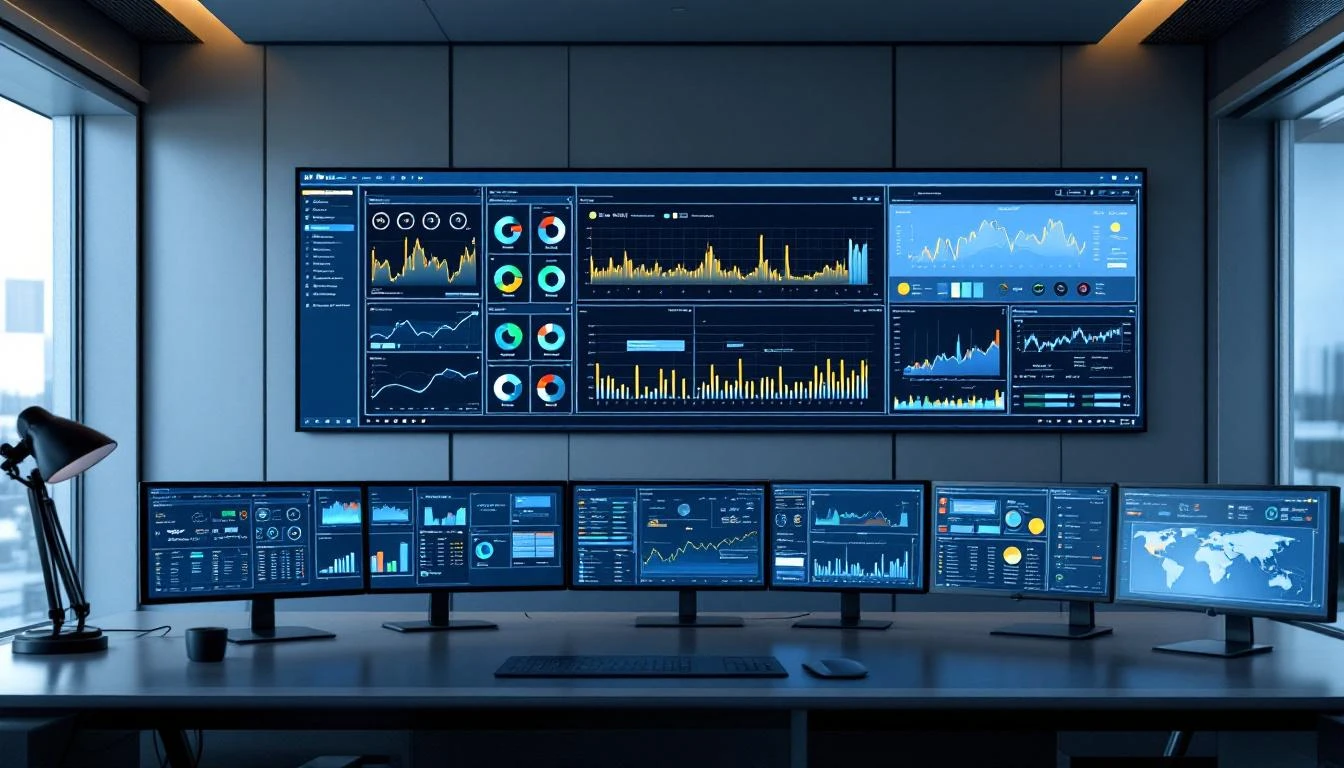
What SCADA Was Designed to Do (and Why It's Showing Its Age)
SCADA — Supervisory Control and Data Acquisition — was built for a specific purpose: collect data from remote terminal units (RTUs) and PLCs, display it on operator screens, and enable supervisory control of processes. The keyword is "supervisory." SCADA was never designed to analyze data, predict failures, or enable remote access from a phone.
Traditional SCADA architectures have several characteristics that made sense in the 1990s but create friction today:
On-premises everything. SCADA servers live in server rooms on plant premises. Every plant needs its own server infrastructure, its own historian, its own licensing. Multi-plant visibility requires expensive integration projects.
Proprietary protocols. OPC Classic (DCOM-based), Modbus RTU, and vendor-specific protocols lock you into specific hardware ecosystems. Interoperability between vendors requires middleware and integration specialists.
Tag-based licensing. Traditional SCADA vendors charge per data point (tag). A mid-size plant monitoring 5,000-10,000 tags can easily spend $50,000-$150,000 on SCADA software licensing alone — before hardware, integration, and ongoing maintenance.
Thick-client interfaces. Traditional HMI/SCADA applications run as installed Windows applications. Remote access requires VPN connections, Remote Desktop, or expensive web-publishing add-ons.
Historian as a separate product. Want to store and analyze historical data? That's a separate product, separate license, separate database. Want to do any analytics beyond basic trending? That's another separate product.
The result: a typical SCADA implementation costs $200,000-$500,000 per plant (software + hardware + integration), takes 6-12 months to deploy, and delivers real-time visualization without built-in analytics.
What Modern IIoT Platforms Offer Instead
Cloud-native IIoT platforms approach the same problem — connecting to machines and making data visible — with fundamentally different architecture:
Cloud-First Data Architecture
Instead of on-premises servers per plant, modern IIoT platforms store data in the cloud. This means:
- Multi-plant visibility from a single dashboard — no integration required
- Unlimited historical storage — no historian capacity planning
- Automatic backups — no manual backup management
- Elastic compute — analytics scale with your data, not your server hardware
Edge Computing for Real-Time Processing
Modern platforms don't just send data to the cloud — they process it at the edge. Edge devices perform local analytics, threshold monitoring, and alarm evaluation. This gives you:
- Sub-second local response for critical alarms
- Reduced bandwidth — send insights, not raw data
- Continued operation during connectivity loss — the edge handles it
- No exposure of plant networks — the edge device is isolated
Web-Based Interfaces
No thick clients. No VPN. Open a browser on any device, anywhere, and see your plant data. Role-based access controls determine who sees what. Your maintenance manager checks vibration trends from their phone at 6 AM. Your plant manager reviews OEE from the airport.
Built-In Analytics and AI
Traditional SCADA shows you what's happening right now. Modern IIoT platforms show you what's happening now, what happened historically, and what's about to happen next:
- Predictive maintenance — AI models identify patterns that precede failures
- Anomaly detection — machine learning spots deviations humans wouldn't notice
- Trend analysis — automatic identification of degradation trends
- Correlation analysis — discover relationships between process parameters
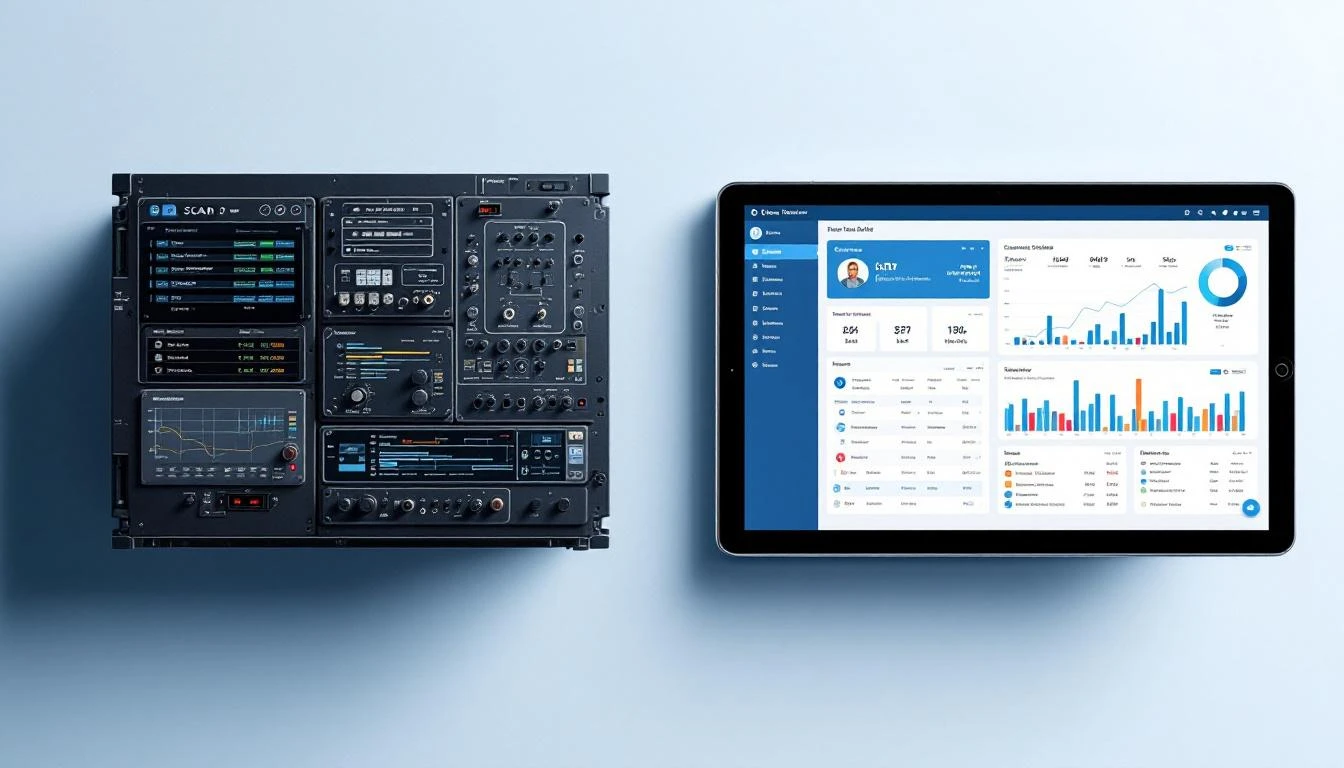
Head-to-Head: SCADA vs Modern IIoT Platforms
| Capability | Traditional SCADA | Modern IIoT Platform |
|---|---|---|
| Deployment time | 6-12 months | Days to weeks |
| IT involvement | Heavy (servers, networking, VPN) | Minimal (cellular, cloud) |
| Cost per plant | $200K-$500K | $20K-$80K |
| Multi-plant visibility | Complex integration project | Built-in |
| Remote access | VPN + Remote Desktop | Any browser |
| Predictive analytics | Requires separate software | Built-in |
| Historical data | Separate historian license | Included |
| Licensing model | Per-tag, per-server, per-client | Per-device or subscription |
| Update cycle | Annual patches, manual install | Continuous, automatic |
| Scalability | Buy bigger server | Automatic |
| Mobile access | Limited or none | Full responsive UI |
| AI/ML capabilities | None (requires 3rd party) | Integrated |
When SCADA Still Makes Sense
Let's be fair — SCADA isn't dead, and it's not wrong for every application:
Process control loops. If you need closed-loop control (PID loops, sequence logic), SCADA/DCS systems with PLCs are still the right tool. Modern IIoT platforms focus on monitoring, analytics, and predictive capabilities — not real-time process control.
Safety instrumented systems. SIS (Safety Instrumented Systems) rated to SIL 2/3 require certified SCADA/DCS platforms. Cloud platforms shouldn't be in the safety loop.
Regulatory requirements. Some industries (nuclear, certain pharmaceutical processes) have regulations that mandate specific on-premises systems with validated architectures.
Existing investments. If you've recently invested $500K in a new SCADA system, you're not replacing it. But you might layer an IIoT platform on top of it for analytics and multi-plant visibility.
The Hybrid Approach: IIoT on Top of SCADA
Many manufacturers aren't ripping out SCADA — they're layering IIoT platforms on top. This approach:
- Keeps existing SCADA for control — operators use familiar screens for process control
- Adds IIoT for analytics — predictive maintenance, OEE tracking, energy monitoring
- Enables multi-plant visibility — aggregate data from SCADA systems across plants into a single cloud dashboard
- Extends access — give management browser-based access without touching the SCADA network
This is the approach many MachineCDN deployments take. The edge device connects to the same PLCs that feed the SCADA system — tapping into existing Ethernet/IP or Modbus communications — without modifying the SCADA installation. It's additive, not replacement.
Five Signs You've Outgrown SCADA
1. You Can't See All Your Plants in One View
If reviewing production data requires logging into separate systems at each plant, exporting spreadsheets, and manually combining data — you've outgrown your SCADA architecture. Multi-plant manufacturing operations need unified visibility.
2. Your Maintenance Is Still Reactive
SCADA shows alarms after they happen. If your maintenance team is still responding to failures instead of preventing them, your monitoring system isn't giving you enough lead time. Predictive maintenance requires analytical capabilities that traditional SCADA doesn't offer.
3. Your Historian Is Full (Again)
If you're constantly managing historian disk space, archiving old data, or running out of tags — your data infrastructure is constraining your visibility. Cloud-native platforms eliminate capacity planning entirely.
4. Remote Access Is a Nightmare
If checking plant data from home requires a VPN, Remote Desktop, and a Windows laptop — you're fighting yesterday's architecture. Your team should be able to check machine status from any device, anywhere.
5. Your SCADA Vendor Relationship Feels Like a Hostage Situation
When your annual SCADA maintenance contract costs more than a full IIoT platform deployment, and adding 100 tags requires a purchase order and a 6-week lead time — it's time to evaluate alternatives.
Cost Comparison: Real Numbers
Let's compare the total cost of ownership for a 3-plant manufacturing operation over 5 years:
Traditional SCADA Deployment
| Cost Item | Year 1 | Annual Recurring | 5-Year Total |
|---|---|---|---|
| SCADA software (per plant) | $150,000 × 3 | $30,000 × 3 | $810,000 |
| Historian (per plant) | $50,000 × 3 | $15,000 × 3 | $375,000 |
| Server hardware (per plant) | $30,000 × 3 | $5,000 × 3 | $150,000 |
| Integration services | $100,000 × 3 | — | $300,000 |
| Multi-plant integration | $150,000 | $20,000 | $230,000 |
| VPN/remote access | $20,000 | $10,000 | $60,000 |
| Total | $1,120,000 | $290,000 | $1,925,000 |
Modern IIoT Platform Deployment
| Cost Item | Year 1 | Annual Recurring | 5-Year Total |
|---|---|---|---|
| Platform subscription (3 plants) | — | $60,000-$120,000 | $300,000-$600,000 |
| Edge devices (3 plants) | $30,000-$60,000 | — | $30,000-$60,000 |
| Implementation/training | $15,000-$30,000 | — | $15,000-$30,000 |
| Total | $45,000-$90,000 | $60,000-$120,000 | $345,000-$690,000 |
5-Year Savings: $1.2M-$1.6M — and that's before counting the value of predictive analytics, faster deployment, and reduced IT burden.
How to Evaluate Modern SCADA Alternatives
When evaluating IIoT platforms as SCADA alternatives, ask these questions:
-
How does it connect to my PLCs? Look for native support for Ethernet/IP, Modbus TCP/RTU, and OPC UA. Avoid platforms that require custom drivers or middleware.
-
What's the deployment timeline? If the answer is "6-8 weeks for a pilot," keep looking. Modern platforms deploy in minutes per device.
-
Does it require IT involvement? Cellular-connected edge devices bypass plant network complexity entirely. If the platform requires network infrastructure changes, your deployment timeline just expanded by months.
-
Is analytics built in or bolted on? Separate analytics packages mean separate licenses, separate integration, and separate learning curves. Built-in AI and ML should be standard.
-
How does pricing scale? Per-tag pricing punishes you for monitoring more. Per-device or flat subscription pricing aligns the vendor's incentives with yours.
-
Can I see all plants in one view? Multi-plant visibility should be native, not an integration project.
Conclusion
Traditional SCADA served manufacturing well for decades. But the gap between what SCADA offers and what modern manufacturing requires is widening every year. Today's plants need predictive analytics, multi-plant visibility, mobile access, and deployment timelines that match the pace of business — not 12-month implementation projects.
The shift from SCADA to cloud-native IIoT isn't about abandoning what works. It's about adding the capabilities that SCADA was never designed to deliver. Whether you layer IIoT on top of existing SCADA or deploy it as a standalone monitoring platform, the result is the same: smarter maintenance, faster insights, and manufacturing operations that prevent problems instead of reacting to them.
Ready to see what's beyond SCADA? Book a demo with MachineCDN and experience an IIoT platform that deploys in minutes, requires zero IT involvement, and delivers the analytics your SCADA system can't.