Getting Started with IIoT: The Complete Beginner's Guide for Manufacturers

Industrial IoT sounds complicated. The reality is simpler than most vendors make it appear. At its core, IIoT is about connecting your factory equipment to the internet so you can see what's happening — in real time, from anywhere, with data you can actually use to make better decisions.
If you're a plant manager, maintenance engineer, or operations leader who's been hearing about IIoT but hasn't started yet, this guide is for you. No jargon walls, no PhD-level concepts. Just the practical foundation you need to go from "I should probably look into this" to "we have our first machines connected and delivering value."
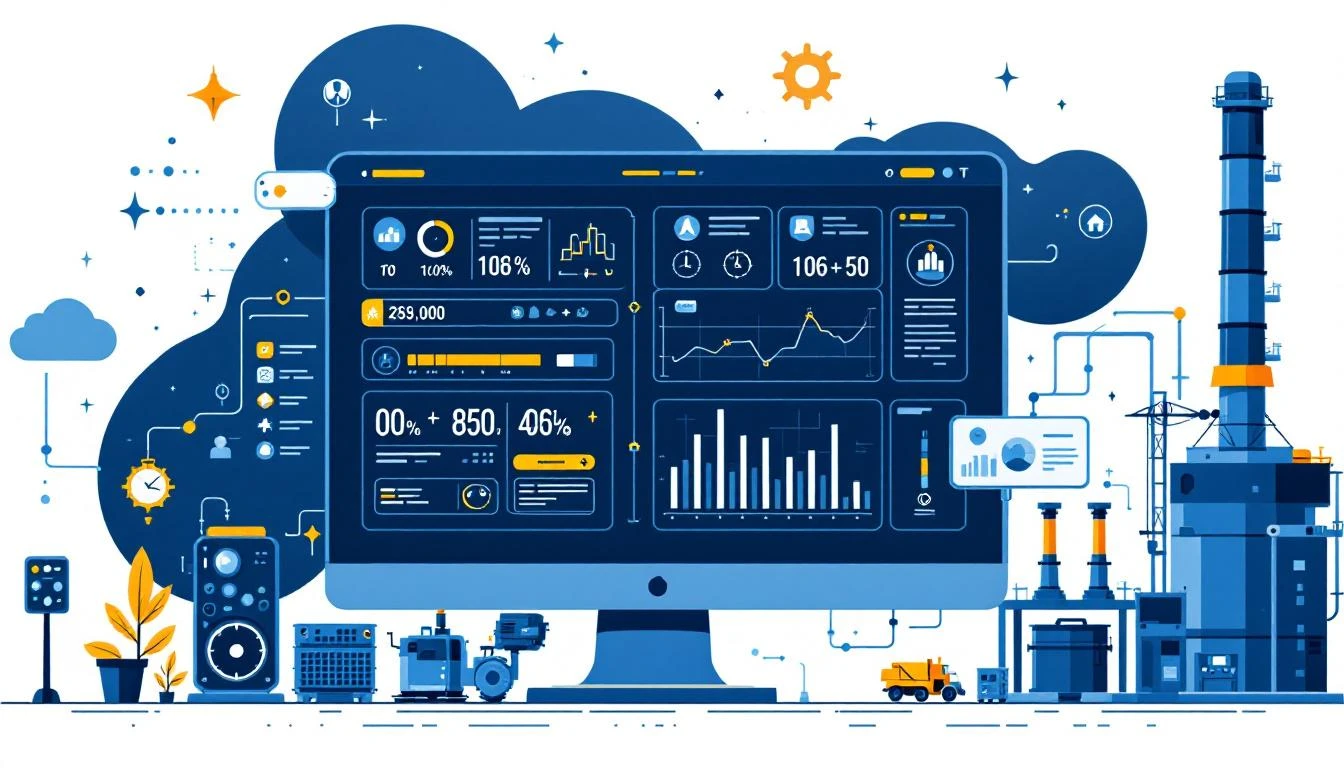
What Is IIoT, Really?
Industrial Internet of Things (IIoT) = Connecting industrial equipment to the internet to collect data, monitor performance, and make smarter decisions.
That's it. Everything else — edge computing, predictive maintenance, digital twins, AI — is what you do with the data once you have it. But step one is always the same: get data from your machines into a system where you can see it and act on it.
Here's what IIoT looks like in practice:
Before IIoT:
- Walk the floor to check if machines are running
- Fill out clipboards for production counts
- Find out about failures when the operator calls you
- Monthly OEE reports that are 2 weeks out of date
- No visibility across multiple plants
After IIoT:
- See every machine's status on your phone from anywhere
- Automatic production tracking with zero manual entry
- Instant alerts when parameters go out of range
- Real-time OEE dashboards updated every minute
- Fleet-wide view across all plants in a single interface
The first manufacturer to install a chart recorder on a temperature process was doing IIoT. We've just gotten better at it.
The Four Layers of IIoT
Every IIoT system, no matter how simple or complex, has four layers:
Layer 1: Sensing & Data Collection
This is the physical layer — the sensors and controllers that generate data on the factory floor.
You probably already have this. If your machines have PLCs (Programmable Logic Controllers), HMIs (Human-Machine Interfaces), or any electronic controllers, they're already collecting data. Motor speed, temperature, pressure, cycle counts, alarm states — it's all there, locked inside the controller.
The question isn't "do I have data?" It's "am I doing anything with it?"
Additional sensors you might add:
- Vibration sensors for rotating equipment
- Power meters for energy monitoring
- Environmental sensors (temperature, humidity)
- Flow meters for fluid processes
Layer 2: Connectivity & Edge
This layer moves data from the factory floor to somewhere useful. It includes:
- Edge gateways: Hardware devices that connect to your PLCs and stream data to the cloud
- Protocols: How the gateway talks to your PLCs (Ethernet/IP, Modbus, OPC UA — more details here)
- Communication: How data reaches the cloud (cellular, Wi-Fi, Ethernet)
The biggest decision at this layer is connectivity method. You have two choices:
Option A: Plant network (Ethernet/Wi-Fi)
- Uses your existing IT infrastructure
- Requires IT approval, firewall rules, VLANs
- Dependent on plant network availability
- Typical timeline: 3-6 months (most of it waiting for IT)
Option B: Cellular
- Independent of plant network
- No IT involvement required
- Always-on, dedicated connection
- Typical timeline: Days to weeks
Most plants that stall on IIoT do so because they chose Option A and got stuck in the IT approval process. MachineCDN uses cellular connectivity specifically because it eliminates this bottleneck. The gateway has a built-in SIM card, connects to PLCs locally, and sends data over cellular — no plant network touching required.
Layer 3: Cloud Platform & Storage
Your data needs to live somewhere accessible. The cloud platform provides:
- Data storage: Time-series databases that efficiently store millions of data points
- Dashboards: Visual interfaces to monitor your equipment
- Alerting: Rules and thresholds that notify you when something goes wrong
- APIs: Programmatic access for integration with other systems
- Analytics: Historical trending, comparison, and pattern analysis
You can build this yourself (AWS IoT + InfluxDB + Grafana) or use a purpose-built platform. Building yourself gives you maximum flexibility but requires ongoing development and DevOps resources. A platform like MachineCDN gives you manufacturing-specific features out of the box — machine monitoring, alarm management, spare parts tracking, OEE calculation — without the engineering overhead.
Layer 4: Applications & Intelligence
This is where IIoT generates ROI. Applications built on top of your data:
- Real-time monitoring: See what's happening now
- Predictive maintenance: Prevent failures before they happen
- OEE tracking: Measure and improve equipment effectiveness
- Energy management: Reduce energy consumption and costs
- Fleet management: Compare and optimize across sites
- Quality correlation: Link process parameters to quality outcomes
You don't need all of these on day one. Start with real-time monitoring and alerting. The other applications grow naturally as your data maturity increases.
What You Need to Start (It's Less Than You Think)
Here's the minimum viable IIoT setup:
Hardware
| Item | Purpose | Cost Range |
|---|---|---|
| Edge gateway (1 per machine or group) | Connects to PLC, sends data to cloud | $500-2,000 |
| Ethernet cable | Connects gateway to PLC | $10-50 |
| Power supply | Powers the gateway | Usually included |
That's it. If your machines already have PLCs with accessible data, you don't need additional sensors for the initial deployment.
Software
| Component | Purpose | Options |
|---|---|---|
| IIoT Platform | Data storage, dashboards, alerts | MachineCDN, AWS IoT, Azure IoT, ThingWorx |
| Mobile app | Remote monitoring from phone | Most platforms include this |
| Integration | Connect to CMMS, ERP | API-based, depends on your systems |
People
| Role | Responsibility | Time Commitment |
|---|---|---|
| Project champion | Drives adoption, secures resources | Part-time |
| Maintenance/controls engineer | Configures PLCs, validates data | 2-4 hours per machine |
| Platform administrator | Manages dashboards, alerts, users | Ongoing, 2-4 hours/week |
You do NOT need:
- A dedicated data science team
- An IT infrastructure project
- A 6-month consulting engagement
- A massive capital expenditure request
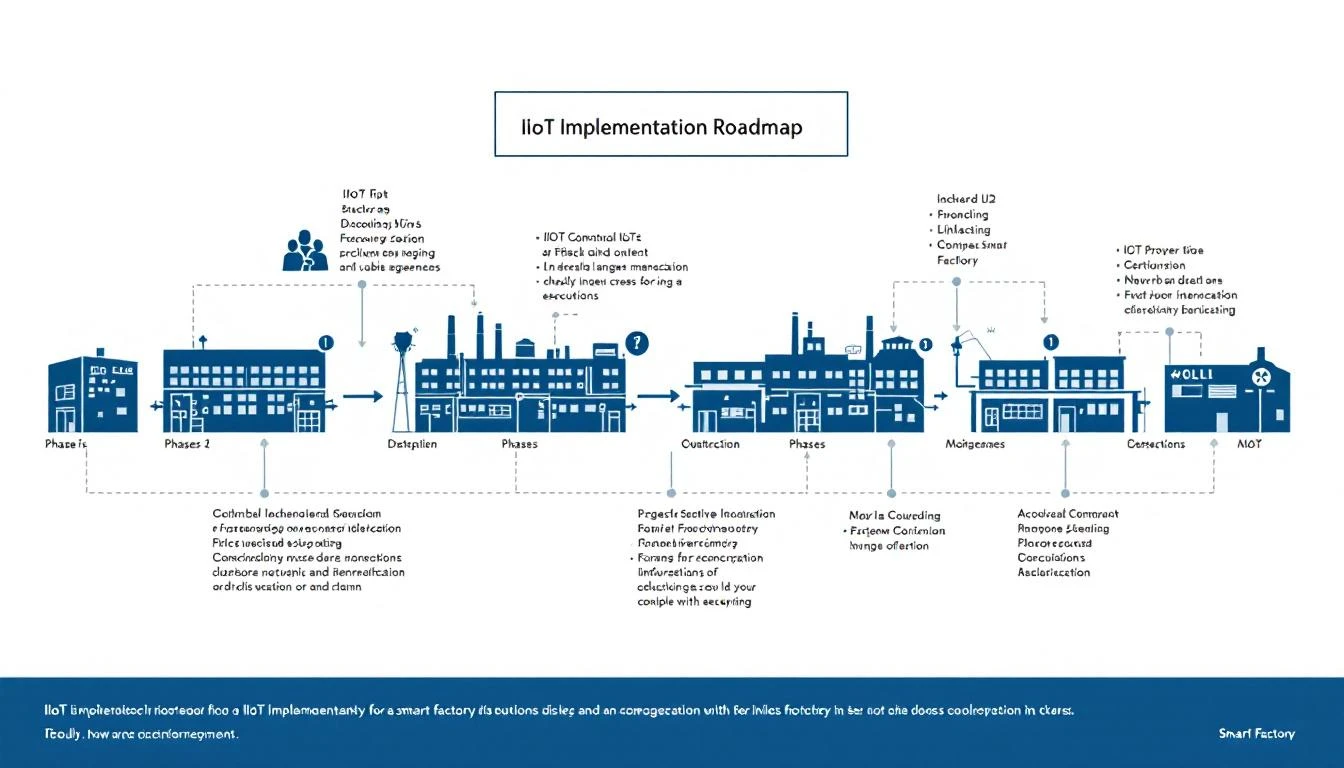
The 30-Day Quickstart Plan
Week 1: Discovery (2-3 Hours)
Day 1-2: Identify your starting machines
Pick 3-5 machines based on:
- High downtime impact (the ones that hurt when they stop)
- PLC accessibility (modern PLCs with Ethernet ports are easiest)
- Maintenance team interest (start where you have a willing champion)
Day 3-5: Document what data is available
For each machine, answer:
- What PLC model is installed?
- What protocol does it use? (Ask your controls engineer)
- What data points do you care about? (Temperature, pressure, speed, state, alarms)
- What is the PLC's IP address?
Week 2: Setup (4-6 Hours)
Day 8-10: Install your first edge gateway
- Mount the gateway near the PLC (inside the electrical panel or on a DIN rail nearby)
- Connect Ethernet cable from gateway to PLC
- Power the gateway
- Configure PLC connection (protocol, IP address, tags)
- Verify data is flowing to the cloud platform
With MachineCDN, this takes about 3 minutes per device. The gateway auto-detects the PLC type and available data.
Day 11-14: Configure your dashboard
- Create a machine overview showing key parameters
- Set up alarm thresholds for critical values (high temperature, abnormal vibration, overcurrent)
- Configure notification rules (email, SMS, or push notification when thresholds are crossed)
- Add users (maintenance manager, plant manager, reliability engineer)
Week 3: Validate (2-3 Hours)
Day 15-17: Compare data to reality
Walk the floor and compare what you see on the machine to what the dashboard shows. Verify:
- Values are accurate (compare to HMI readouts)
- Timestamps are correct (are alarms showing up when they happen?)
- Machine states are correct (running vs. idle vs. alarm)
Day 18-21: Tune your alerts
You'll inevitably get false alarms in the first few days. That's normal. Adjust thresholds based on actual operating ranges, not theoretical specs. The goal is high-confidence alerts that maintenance trusts.
Week 4: Expand (4-8 Hours)
Day 22-28: Add your remaining machines
Apply the same process to your next 2-4 machines. By now you've learned the workflow, so each additional machine takes less time.
Day 29-30: Set up your first reports
- Create a daily machine status summary (auto-emailed each morning)
- Set up a weekly downtime report
- Configure OEE tracking if you have cycle count and quality data available
The Five Most Common Questions
"What about cybersecurity?"
Valid concern. The key principles:
- Read-only: Your IIoT system should read data FROM PLCs, never write TO them
- Network isolation: Use cellular connectivity or a properly segmented DMZ
- Encryption: All data in transit should use TLS 1.2+
- Authentication: Every device should authenticate with certificates, not just passwords
More on IIoT security in our PLC connectivity guide.
"How much data do I generate?"
A typical machine with 20 data points sampled every 5 seconds generates about 10-20 MB per day. That's roughly 500 MB per month per machine — trivial by modern cloud standards. Even a 100-machine plant generates less data than a few YouTube videos.
"What if my PLCs are old?"
Most PLCs made in the last 20 years support either Modbus RTU (serial) or Modbus TCP (Ethernet). Even legacy equipment from the early 2000s typically has some form of accessible communication. Truly ancient equipment (relay-based, no electronic controller) will need retrofit sensors, but that's increasingly rare.
"Do I need to stop production to install?"
No. Edge gateways connect to the PLC's communication port — a completely non-intrusive connection. You're reading data, not modifying the PLC program. Installation can happen during normal production without any downtime risk.
"What's the ROI?"
The first prevented unplanned downtime event typically pays for the entire initial deployment. For a machine where an hour of downtime costs $10,000, preventing even one surprise failure per quarter delivers $40,000 in annual value against an investment of a few thousand dollars.
MachineCDN customers see ROI within 5 weeks on average.
What NOT to Do
Based on watching dozens of IIoT implementations succeed and fail:
-
Don't start with a pilot committee. Committees debate. Engineers build. Find one champion, connect one machine, show results, then expand.
-
Don't try to connect everything at once. 200-machine deployments that try to go all at once take 18 months and often fail. 5-machine deployments that prove value in 30 days and expand to 50, then 200, almost always succeed.
-
Don't build your own platform. Unless you're a software company, the time and cost to build and maintain a custom IIoT platform far exceeds the subscription cost of a purpose-built one. Use your engineering talent on what you make, not on building monitoring infrastructure.
-
Don't wait for the perfect plan. The best IIoT data you can have is 6 months of historical data. The second best time to start collecting was yesterday. The best time is now.
-
Don't ignore the people. Technology adoption fails when the maintenance team doesn't trust or use the system. Involve your maintenance techs early, show them how it makes their job easier (not harder), and let them help configure alerts and thresholds.
What Happens After the First 30 Days
Once your initial machines are connected and generating data, the natural progression looks like this:
- Month 2-3: Enough historical data to spot recurring patterns. Set up predictive maintenance models.
- Month 4-6: Expand to additional machines and plants. Start comparative analysis across your fleet.
- Month 6-12: Advanced applications — energy optimization, quality correlation, automated reporting. Consider digital twin capabilities for process optimization.
- Year 2+: Full fleet visibility, mature predictive maintenance, continuous improvement driven by data instead of gut feeling.
The compound value of IIoT grows with time and data. Every month of historical data makes your predictions more accurate and your insights more valuable.
Getting Started Today
IIoT isn't about boiling the ocean. It's about connecting one machine, proving value, and expanding from there.
Book a demo with MachineCDN to see how you can go from zero to connected in a single day — with 3-minute device setup, zero IT involvement, and a platform built specifically for manufacturers.
Related reading: