Materials and Inventory Management for Manufacturing: How IIoT Closes the Visibility Gap

Ask any production manager what stops their lines, and "we ran out of material" will be in the top five answers. It's not a technology failure or a mechanical breakdown — it's a visibility problem. The hopper ran empty because nobody checked it. The raw material wasn't staged because the warehouse didn't know the production schedule changed. The spare part wasn't available because nobody tracked consumption rates.
Materials and inventory management in manufacturing has been a blind spot for most IIoT platforms, which focus exclusively on machine health and OEE. But material availability is directly connected to equipment uptime, product quality, and production throughput. A machine that's running perfectly still produces zero output if its material hopper is empty.
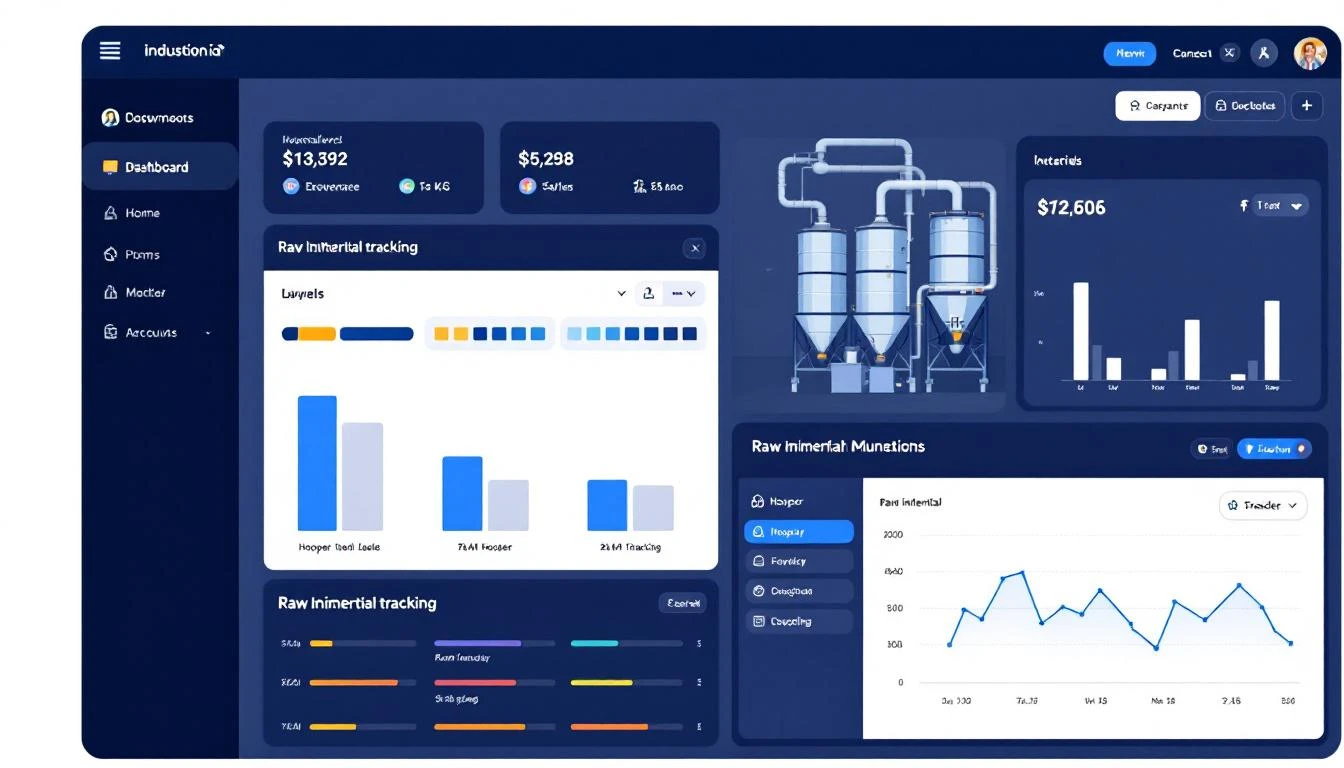
The Hidden Cost of Material Blind Spots
Material-related production losses are among the most frustrating in manufacturing because they're entirely preventable. Unlike a random bearing failure, running out of material is a management failure — the material existed somewhere, the consumption rate was predictable, and someone should have restocked before the machine stopped.
Yet it happens constantly. A study from the Aberdeen Group found that material availability issues account for 8-12% of total unplanned downtime in discrete manufacturing. At $100K per hour of downtime, a plant running 6,000 production hours per year could lose $4.8M-$7.2M annually to material-related stoppages.
The root cause is simple: most manufacturers track materials in ERP systems that update in batch mode — daily, shift-end, or when someone manually enters a transaction. Between those updates, nobody knows the actual material position on the floor. Is there enough resin in the hopper for the next 4-hour run? How many blanks are staged at the stamping press? When did we last use this lot of raw material?
How IIoT Transforms Materials Visibility
Connecting your production equipment to an IIoT platform doesn't just give you machine health data — it gives you real-time material consumption data that your ERP system can never provide at the same granularity.
Modern PLCs already track material-related parameters as part of their control functions:
- Hopper and silo levels — weight sensors or level sensors connected to the PLC report fill levels continuously
- Material feed rates — the PLC controls material feeders and knows exactly how much material is being consumed per cycle
- Cycle counts — every production cycle consumed raw material at a known rate
- Material changeover events — the PLC tracks when materials are loaded, changed, or purged
- Lot and batch tracking — serialization systems link material lots to production runs
When an IIoT platform reads these tags from the PLC, it creates a continuous, real-time picture of material positions across the entire plant — not the batch-mode snapshot your ERP provides.
Material Tracking That Actually Works
A comprehensive materials management system in an IIoT platform should handle five key functions:
1. Real-Time Material Location Tracking
Know where every material is, right now. Not where it was when someone last scanned it — where it actually is, based on machine consumption data and staging records.
This capability requires tracking materials at the location level: which warehouse zone, which staging area, which machine hopper. When material moves from warehouse to staging to machine, the system tracks each transition. When the machine consumes material, the system decrements automatically based on actual production data.
MachineCDN provides material location tracking across your facility hierarchy — from warehouse zones down to individual machine positions. Materials are tracked by type, by location, and by current inventory level.
2. Consumption-Based Inventory Reporting
Traditional inventory management counts what you have. IIoT-powered inventory management tells you how fast you're using it — and when you'll run out.
By correlating material consumption with actual production data, the system can calculate:
- Current consumption rate — pounds per hour, units per shift, liters per batch
- Projected depletion time — based on current rate, when will this material run out?
- Historical usage patterns — does consumption vary by product mix, shift, or season?
MachineCDN's job inventory reports and system inventory reports provide this consumption-based view. Select a specific machine or blender, and see exactly what materials were consumed during each production run, with quantities tied to actual machine data — not manual entries.
3. Hopper and Silo Monitoring
For processes that use bulk materials — plastics injection molding, food processing, chemical blending, concrete production — hopper and silo levels are the most critical material data points. Run a hopper dry, and you get a production stop plus potential equipment damage (extruder running without material, furnace without feedstock).
IIoT platforms that read PLC data can monitor hopper levels continuously, set threshold alerts for low levels, and track refill patterns. MachineCDN includes hopper monitoring with cleared-time tracking — so you know not just the current level, but the history of when hoppers were emptied and refilled, which reveals patterns that help optimize material staging.
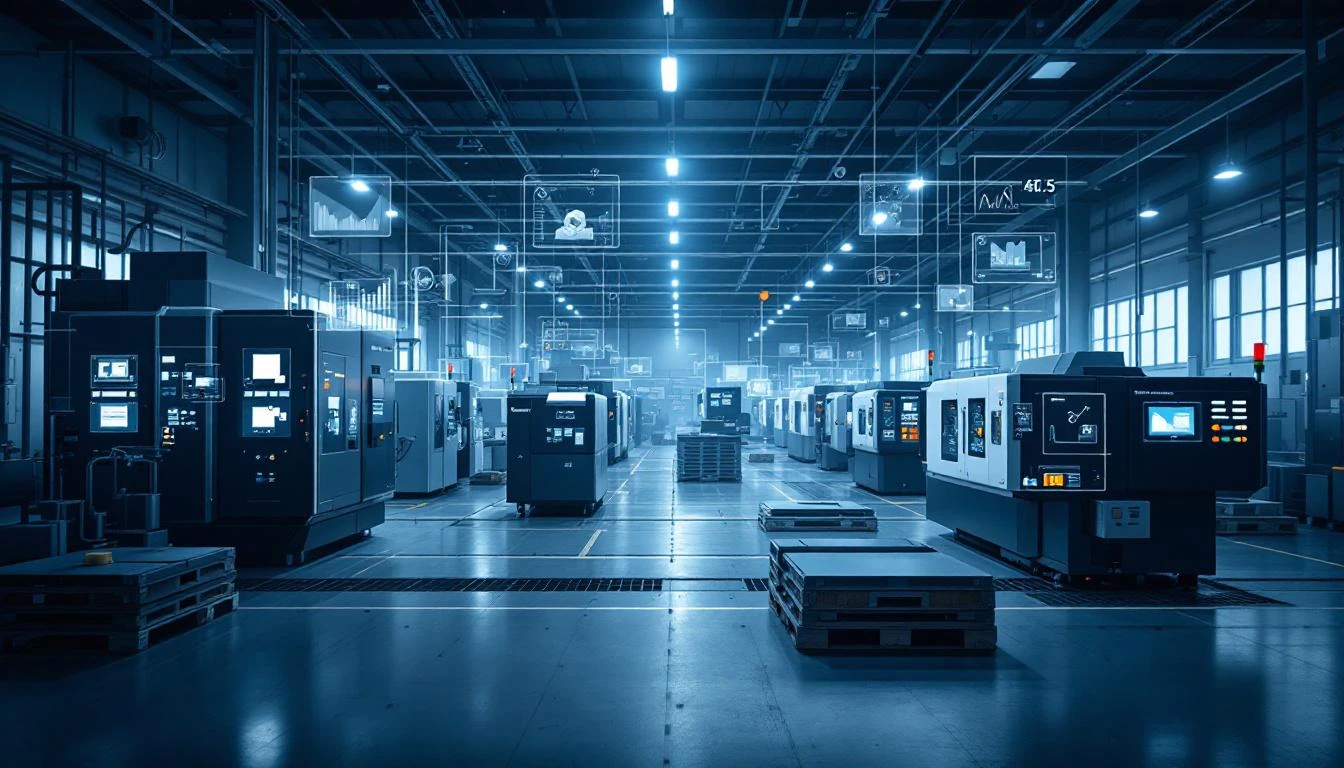
4. Material Usage Scheduled by Shift
Material consumption varies by shift for many reasons: different operators have different setup efficiencies, different product mixes run on different shifts, and scrap rates may vary. Understanding material consumption at the shift level helps production planning and purchasing.
MachineCDN tracks material usage by scheduled shift, giving production managers visibility into which shifts consume more material — and whether that's due to higher production output (good) or higher waste rates (fixable).
5. Export and Integration
Real-time material tracking is most valuable when it feeds your existing systems — ERP for purchasing, quality systems for lot traceability, and finance for cost accounting.
MachineCDN supports exporting material usage reports and inventory data, allowing integration with your ERP and quality management systems. This closes the loop: IIoT provides real-time visibility, ERP manages purchasing and planning, and both systems share the same ground truth.
Why Most IIoT Platforms Skip Materials Management
Here's an uncomfortable truth about the IIoT market: most platforms focus exclusively on machine health monitoring because that's the "sexy" use case that sells well in demos. Vibration analysis, predictive maintenance AI, and OEE dashboards make for compelling presentations.
But materials management is where many plants have bigger and more immediate ROI opportunities. Consider:
-
Material waste reduction — Real-time consumption tracking reveals exactly where material is wasted. If Machine A uses 15% more resin per part than Machine B for the same product, something is wrong. Without IIoT, you'd never notice this because ERP tracks material at the order level, not the machine level.
-
Just-in-time material staging — When you know exactly when each machine's hopper will need refilling (based on real-time level monitoring and consumption rate), you can stage materials just in time instead of overstocking at every machine.
-
Lot traceability — In regulated industries (pharmaceutical, food & beverage, medical devices), connecting raw material lots to specific production runs is a compliance requirement. Doing this manually is error-prone and labor-intensive. IIoT automates the connection between material lot and machine production data.
-
Inventory carrying cost reduction — Real-time consumption data means more accurate demand forecasting, which means lower safety stock requirements. For a plant carrying $2M in raw material inventory, a 15% reduction in safety stock saves $300K in working capital.
Platforms like IoTFlows, Augury, and MachineMetrics focus primarily on machine health and don't offer materials management capabilities. This means manufacturers using these platforms still need separate systems — often spreadsheets or disconnected ERP modules — to manage materials on the floor.
The Connection Between Materials and Maintenance
Materials management in an IIoT platform becomes even more powerful when it's connected to maintenance management. Consider these scenarios:
Spare parts tracking: When the predictive maintenance system identifies that Machine 5's servo drive will need replacement within 2 weeks, can you immediately confirm the replacement part is in your spare parts inventory? MachineCDN's spare parts tracking and machine parts availability views answer this question instantly — connecting the prediction to the inventory reality.
Material-related alarms: When a hopper level drops below threshold, the alarm system should trigger an alert. When material feed rate deviates from expected values, it might indicate a blockage or equipment issue. MachineCDN's threshold alerting system handles both machine health parameters and material-related parameters in the same framework.
Downtime categorization: When material-related downtime occurs, it should be categorized separately from equipment failures in your downtime tracking. This allows Pareto analysis to surface whether material management or equipment reliability deserves more attention. MachineCDN's downtime reason codes support this categorization.
Building a Materials-Aware IIoT Strategy
If you're evaluating IIoT platforms and materials management matters to your operation, here's what to look for:
-
Does the platform track materials at the machine level? ERP-level tracking isn't granular enough. You need machine-by-machine consumption data.
-
Does it support real-time hopper/silo monitoring? Batch-mode level checks miss the fast-moving situations that cause production stops.
-
Can it report material usage by shift, by product, and by machine? This granularity enables waste identification and process optimization.
-
Does it integrate materials with maintenance? Spare parts should live in the same system as PM scheduling and predictive maintenance alerts.
-
Does it support export for ERP integration? Real-time material data needs to flow back to purchasing and planning systems.
-
Does it track material locations across the facility? Knowing that you have 500 lbs of resin somewhere in the plant is less useful than knowing it's staged at Machine 12's hopper area.
The Bottom Line
Material availability is a prerequisite for production. No amount of predictive maintenance, OEE optimization, or AI-powered scheduling matters if your machines don't have the materials they need to run.
IIoT platforms that include materials and inventory management capabilities — like MachineCDN — close the gap between machine health monitoring and production readiness. You get one platform that tells you whether your machines can run (health), whether they are running (OEE), and whether they have what they need to run (materials).
That's the difference between monitoring your factory and actually managing it.
Want to see real-time materials tracking in action? Book a demo and we'll show you how MachineCDN connects machine health, materials, and maintenance in one platform.