Serial Number Tracking in Manufacturing: How IIoT Enables Complete Product Traceability

When a customer calls with a warranty claim, a regulator demands a recall, or a quality issue surfaces in the field, the first question is always the same: "Which production run made this unit?"
If your serial number tracking is a spreadsheet updated by hand at the end of each shift, you're guessing. If your MES captures serial numbers but not the machine conditions during production, you have traceability in name but not in substance. True product traceability means connecting every serial number to the complete story of how that unit was manufactured — which machine, which operating conditions, which materials, which operator, which shift.
IIoT platforms that capture real-time production data from PLCs are uniquely positioned to deliver this level of traceability, because the PLC already knows when each unit was produced and under what conditions. The question is whether your serialization system is connected to that data.
Why Serial Number Tracking Matters More Than Ever
Three converging trends are making product traceability a competitive requirement, not just a nice-to-have:
Regulatory Pressure
Industries with high traceability requirements keep expanding the scope of what must be tracked:
- Automotive: IATF 16949 requires full production traceability for safety-critical components. The trend is expanding to all components.
- Aerospace: AS9100 mandates serialization and batch traceability for every aircraft part.
- Medical devices: FDA 21 CFR Part 820 requires production records tied to device identifiers.
- Food & beverage: FSMA requires forward and backward traceability within 24 hours.
- Electronics: EU RoHS and REACH require material traceability through the supply chain.
Failing a traceability audit doesn't just mean a fine — it can mean losing your certification, losing customer contracts, or facing legal liability.
Customer Requirements
Large OEMs increasingly require suppliers to provide production data linked to serialized parts. When an automotive OEM receives a batch of machined components, they want to know the machine that produced them, the material lot used, and the in-process measurements recorded during production. "We made these last Tuesday on Machine 5" isn't sufficient anymore — they want timestamped, machine-parameter-level data.
Recall Cost Reduction
When a quality issue surfaces and you need to contain affected product, the precision of your traceability determines the scope — and cost — of the recall.
Without serialization connected to production data: "We need to recall all units produced between January and March because we're not sure when the problem started." That's potentially 500,000 units.
With serialization connected to real-time machine data: "The quality excursion occurred on Machine 7 between 2:15 PM and 3:42 PM on February 14th when hydraulic pressure dropped below 2,800 PSI. Units with serial numbers XXXX-0447 through XXXX-0523 are affected." That's 76 units.
The difference in recall cost between 500,000 units and 76 units is millions of dollars. Product traceability literally pays for itself with a single narrowed recall.
How IIoT Enables Real-Time Serial Number Tracking
Traditional serial number tracking systems capture the serial number at labeling or packaging — after the unit is complete. This tells you what was produced but not how it was produced. The production conditions that actually determine quality are missing from the record.
IIoT-connected serialization changes this by linking serial numbers to the real-time data stream from the PLC during production:
Encoding System for Structured Serial Numbers
A well-designed serialization system encodes production context directly into the serial number structure. MachineCDN implements a structured encoding approach where serial numbers incorporate manufacturing context — year, month, and unit sequence — creating identifiers that carry production intelligence within the number itself.
This isn't just cosmetic labeling. When you can decode a serial number and immediately know when and where it was produced, your first-pass triage of quality issues gets dramatically faster. A field return with serial number analysis tells you the production window before you even pull the production records.
Linking Serial Numbers to Machine Data
When a PLC produces a serialized unit, the IIoT platform captures:
- Serial number assigned — from the PLC's serialization sequence
- Timestamp — precise production time
- Machine identity — which machine, which zone, which location
- Operating parameters — the actual machine conditions during production (pressures, temperatures, speeds, forces, cycle time)
- Alarm states — whether any alarms were active during the unit's production cycle
- Material batch — which raw material lot was being used at that time
This creates a digital birth certificate for every serialized unit. When that unit surfaces with a quality issue months or years later, you pull its birth certificate and see exactly what happened during its production.
Machine-Level Serialization Tracking
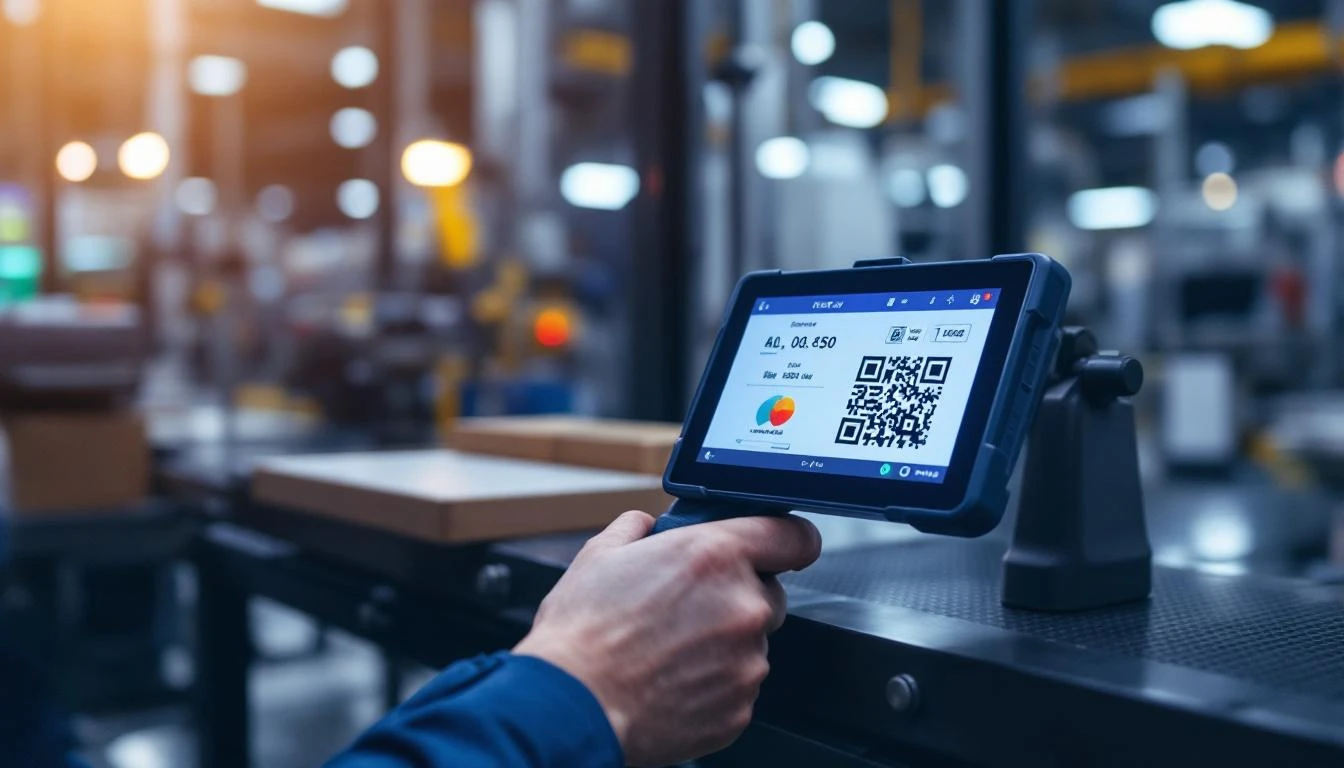
MachineCDN tracks serial number data at the machine level, connected to the same platform that monitors machine health, alarms, and operating parameters. This integration means you can:
-
Correlate quality escapes with machine conditions — If serial numbers XXXX-0200 through XXXX-0250 have field failures, you can pull the machine data for those production cycles and look for anomalies. Was temperature running high? Was an alarm intermittently active? Was cycle time inconsistent?
-
Identify machine-specific quality patterns — If Machine 3 consistently produces units with higher warranty claim rates than Machine 4, even though both machines are identical, the difference is in operating conditions — and the serialized production data shows you where.
-
Prove production compliance — When a customer or regulator asks "were these units produced within specification?", you have timestamped machine data linked to specific serial numbers. Not operator attestation — actual parametric data.
Serial Number Tracking Across the Manufacturing Operation
Comprehensive serialization isn't just about stamping numbers on parts. It's about tracking serial numbers through every stage of the manufacturing process:
Incoming Material Tracking
Raw materials arrive with lot numbers from suppliers. These lot numbers need to link forward to the finished product serial numbers that were produced from that material. If a material batch turns out to be defective, you need to identify every finished unit made from that batch — quickly.
MachineCDN's materials management system tracks material lots through the production process, creating the backward traceability link from finished product serial number to raw material lot number.
In-Process Tracking
As units move through multiple manufacturing steps — machining, assembly, testing, packaging — the serial number follows. At each station, the PLC records what happened to that unit. MachineCDN captures this data stream at every connected machine, building a complete process history for each serialized unit.
Spare Parts and Replacement Tracking
When a serialized component is replaced during maintenance, the serial number of the original part and the replacement part should both be recorded. MachineCDN's spare parts tracking system captures this replacement history, maintaining traceability through the equipment's service life.
Serialization Best Practices for Manufacturing
If you're building or improving a serialization system, these practices separate functional systems from excellent ones:
1. Serialize at the Earliest Possible Process Step
Assign the serial number as early in the production process as possible — ideally at raw material allocation or first machining operation. The earlier you serialize, the more production data you capture against that serial number. Serializing at final packaging misses all the upstream production conditions that actually determine quality.
2. Structured Serial Number Formats
Design serial number formats that encode useful information. A well-structured serial number tells you the production year, month, machine or line, and sequence — all decodable without looking up a database. MachineCDN's encoding system demonstrates this approach, with year, month, and unit components that make serial numbers self-documenting.
3. Automate Serial Number Capture
Manual serial number entry is error-prone. Barcode scanning, RFID, or PLC-assigned serial numbers eliminate transcription errors. The PLC should assign or read the serial number automatically as part of the production cycle, with the IIoT platform capturing it in real time.
4. Link Forward and Backward
Every serial number should link forward (to the customer/shipment) and backward (to raw materials and components). Forward traceability enables recalls: "Which customers received affected units?" Backward traceability enables root cause analysis: "What materials went into the defective units?"
5. Retain Production Data Long Enough
How long do you need to keep serialized production records? At minimum:
- Automotive: 15+ years (warranty + liability period)
- Aerospace: Life of aircraft (potentially 30+ years)
- Medical devices: Life of device + 2 years (FDA requirement)
- Consumer products: Warranty period + statute of limitations
Your IIoT platform's data retention policy needs to match your traceability requirements.
Why Most IIoT Platforms Don't Offer Serialization
Here's an uncomfortable truth: most IIoT platforms focus on machine health monitoring and treat production tracking as someone else's problem. They'll tell you your machine is running well — but not what it produced while it was running.
This gap exists because most IIoT companies were founded by software engineers, not manufacturing engineers. They think about machines as assets to be monitored, not as production systems that produce trackable, serialized output.
MachineCDN was built by people who understand manufacturing end-to-end — from raw material receipt through production, quality, and shipment. That's why serialization, materials tracking, spare parts management, and machine monitoring all live in the same platform. They're not separate problems — they're facets of the same manufacturing management challenge.
Platforms like IoTFlows focus on machine health through vibration sensors but don't offer serial number tracking capabilities. MachineMetrics captures CNC production data but doesn't provide a full serialization system with year/month/unit encoding. Litmus collects edge data but is a data platform, not a manufacturing management system with serialization built in.
The Bottom Line
Serial number tracking isn't just about compliance — it's about manufacturing intelligence. When every unit you produce has a digital birth certificate containing the complete story of its production, you can:
- Narrow recalls from months of production to hours or minutes
- Correlate quality issues with specific machine conditions
- Prove compliance with timestamped parametric data, not operator signatures
- Optimize production by comparing operating conditions for high-quality vs. low-quality batches
- Satisfy customer requirements for supplier traceability
The foundation is an IIoT platform that connects serialization to real-time machine data — not a standalone barcode system disconnected from production reality.
Want to see how connected serialization works? Book a demo and we'll show you product traceability built on real-time machine data.