How to Achieve IIoT ROI in 5 Weeks (Not 5 Months): A Practical Guide for Manufacturing Leaders

The IIoT industry has a dirty secret: most implementations take 6-18 months before anyone can point to a dollar of value. By month 9, the executive sponsor has moved on, the project champion has lost credibility, and the "transformational IIoT initiative" has become shelf-ware.
According to Cisco's IIoT research, 76% of IoT projects fail. Not because the technology doesn't work — but because the time to value is so long that organizations lose patience, budget, and executive support before results materialize.
It doesn't have to be this way. The difference between a 5-week ROI and a 5-month ROI isn't the technology itself — it's the deployment model, the data collection approach, and the focus on quick wins that generate immediate, measurable value.
Here's the playbook.
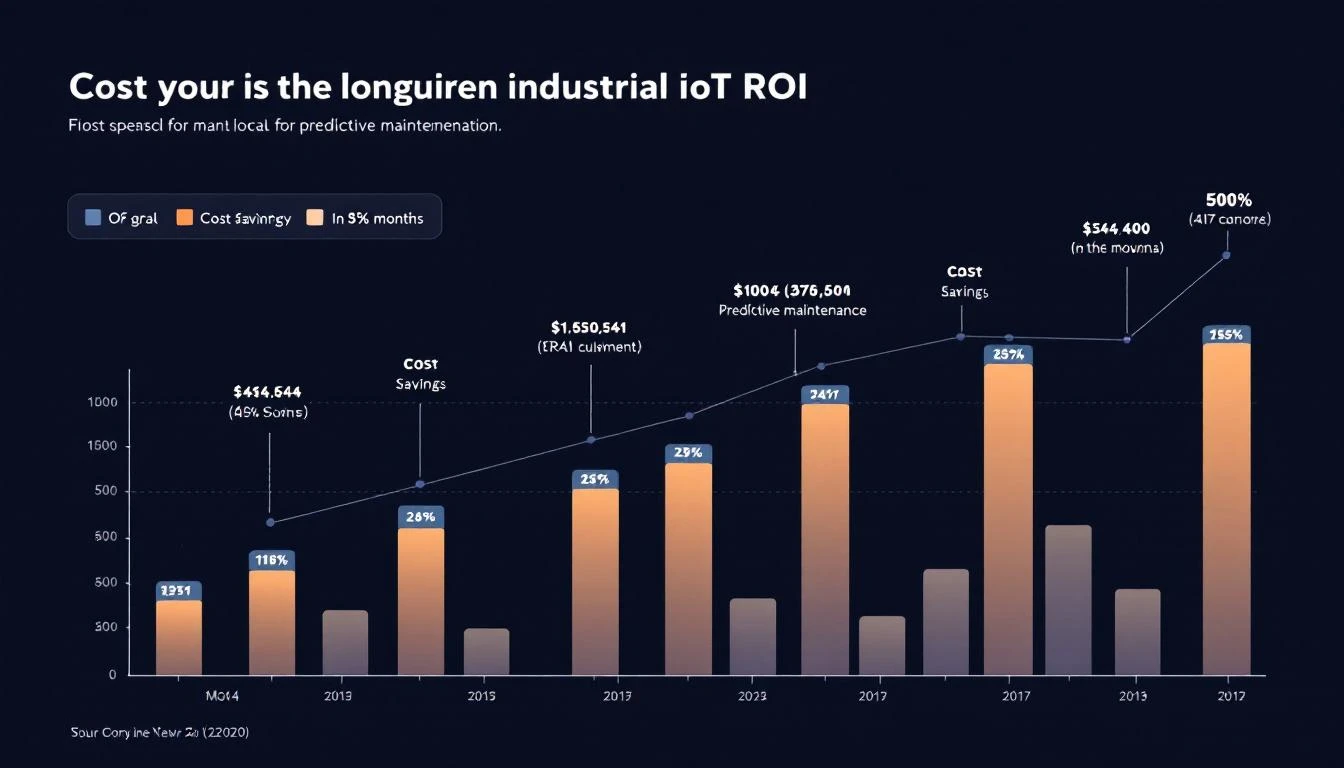
Why Most IIoT Projects Take Forever
Before we talk about going fast, let's understand why most projects go slow:
Problem 1: Infrastructure First, Value Later
Traditional IIoT deployments start with infrastructure: networking, servers, databases, middleware, integration layers, security architecture. Months of work before a single machine is connected. The project team is building a platform before they've demonstrated any value.
Problem 2: Boil the Ocean Scope
Enterprise IIoT projects try to connect every machine, every sensor, and every data point on day one. The scope overwhelms the team, the budget balloons, and the timeline extends. Meanwhile, the CFO is asking "what have we gotten for our $500K?"
Problem 3: IT/OT Convergence Delays
Getting IT to approve a new device on the plant network takes weeks to months. Security reviews, network architecture changes, firewall rules, vulnerability assessments. In plants with strict OT security policies (which is most plants), IT approval is the single biggest schedule killer.
Problem 4: Custom Integration Work
Many IIoT platforms require custom integration with each PLC brand, each SCADA system, and each historian. This means systems integrators, custom code, and extensive testing — all before you have usable data.
Problem 5: No Quick Wins Strategy
Teams spend months building infrastructure, then try to achieve transformational results (AI-powered predictive maintenance) before capturing obvious, immediate wins (knowing which machines are running right now).
The 5-Week Playbook
Here's how to achieve measurable IIoT ROI in 5 weeks. This isn't theoretical — it's based on the actual deployment model that MachineCDN customers use.
Week 1: Connect 10 Machines
Goal: Real-time visibility into your 10 most critical machines.
How:
- Deploy edge gateways with cellular connectivity — bypass IT entirely
- Connect to PLCs using standard industrial protocols
- Configure the critical data points: running/idle/alarm status, key operating parameters, and alarm states
Why 10 machines, not 200: You don't need to boil the ocean. Pick your top 10 machines by one criterion: revenue impact. The 10 machines whose downtime costs the most. In most plants, 10-20% of machines generate 80% of production value.
Why cellular connectivity matters: You're connected and streaming data in hours, not weeks. No IT tickets, no network changes, no security reviews, no firewall configurations.
Week 1 deliverable: A dashboard showing real-time status of your 10 most critical machines. Every person in the plant can see, from anywhere, which machines are running and which aren't. This alone is valuable — most plants don't have this visibility without walking the floor.
Week 2: Establish Downtime Baseline
Goal: Quantify exactly how much unplanned downtime your critical machines experience.
How:
- Configure alarm monitoring to capture every fault code and alarm state
- Set up downtime reason code categories that match your plant's vocabulary
- Start tracking: when machines stop, how long they're stopped, and why
Why this matters: You can't improve what you don't measure. Most plants think they know their downtime number — but when you actually measure it with second-level precision from PLC data, the real number is always higher than the perceived number. That gap is your opportunity.
Week 2 deliverable: A baseline downtime report showing exact unplanned downtime per machine, per shift, with reason code categorization. This report typically reveals that unplanned downtime is 20-40% higher than what the plant was reporting from manual log books.
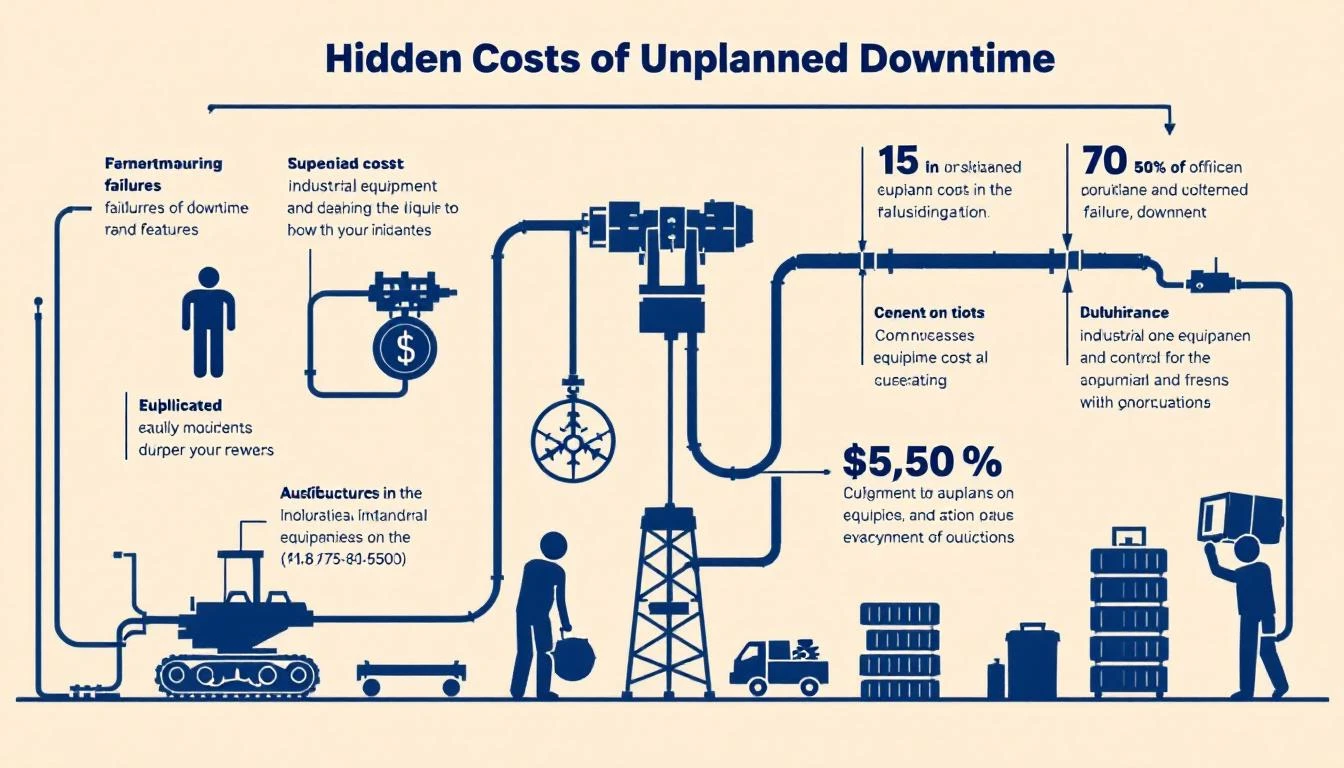
Week 3: Configure Threshold Alerts and Approaching Warnings
Goal: Catch problems before they become downtime events.
How:
- Set threshold limits on critical operating parameters (temperatures, pressures, currents, cycle times)
- Configure "approaching" thresholds at 80-90% of alarm limits — early warnings that give your team time to respond
- Set up notification routing so the right people get the right alerts
Why this matters: This is the simplest form of predictive maintenance — and it requires zero AI, zero machine learning, and zero data science. You're using the same principle that process engineers have used for decades: if a parameter is trending toward its limit, something is degrading, and you should investigate before it crosses the threshold and shuts the machine down.
Week 3 deliverable: Operating threshold alert system catching approaching-threshold conditions before they become alarms. The first time a maintenance technician catches a developing problem from an approaching threshold alert — a problem that would have caused a 4-hour shutdown — the ROI conversation changes completely.
Week 4: Implement PM Scheduling for Critical Equipment
Goal: Move your top 10 machines from calendar-based PM to data-informed PM.
How:
- Enter current PM schedules into the platform's PM scheduling system
- Assign spare parts requirements to each PM task
- Configure PM alerts for approaching and overdue tasks
- Assign technicians and notification routing
Why this matters: Now your PM program is connected to the same platform that shows real-time machine status, alarm history, and threshold trends. When a technician prepares for a PM task, they see the machine's current condition — not just the generic PM procedure. This makes every PM visit more productive.
Week 4 deliverable: PM compliance dashboard showing on-time task completion for critical equipment. Spare parts verified against inventory before each task.
Week 5: Measure, Report, and Expand
Goal: Quantify the value captured and build the case for expansion.
How:
- Compare downtime data from Weeks 2-5 against the pre-IIoT baseline
- Document every prevented downtime event (threshold alert → investigation → fix before failure)
- Calculate the dollar value of prevented downtime using your plant's $/hour downtime cost
- Present results to leadership
- Create expansion plan: which 20 machines to add next
Why this matters: By Week 5, you have hard data — not projections, not vendor promises, not consultant estimates. Actual prevented downtime events, actual dollars saved, actual improvement in PM compliance. This data makes the case for expansion far more effectively than any business case spreadsheet.
Week 5 deliverable: ROI report with documented savings, ready for executive review.
The Math: Why 5 Weeks Is Enough
Let's run the numbers for a typical manufacturing plant:
Starting conditions:
- 10 critical machines monitored
- Average unplanned downtime: 5 hours/week across all 10 machines
- Downtime cost: $10,000/hour (conservative for most discrete manufacturing)
- Weekly downtime cost: $50,000
Week 3 threshold alerts start catching problems:
- 1-2 prevented downtime events per week (conservative)
- Average prevented event duration: 3 hours
- Weekly savings: $30,000
Week 4 PM improvements reduce chronic issues:
- PM compliance improvement: 70% → 90%
- Additional downtime reduction: 10-15%
- Additional weekly savings: $5,000-$7,500
5-week total prevented downtime savings: $70,000-$100,000
Against a typical MachineCDN deployment cost of far less than this, the ROI is clear within the first month. Not the first year — the first month.
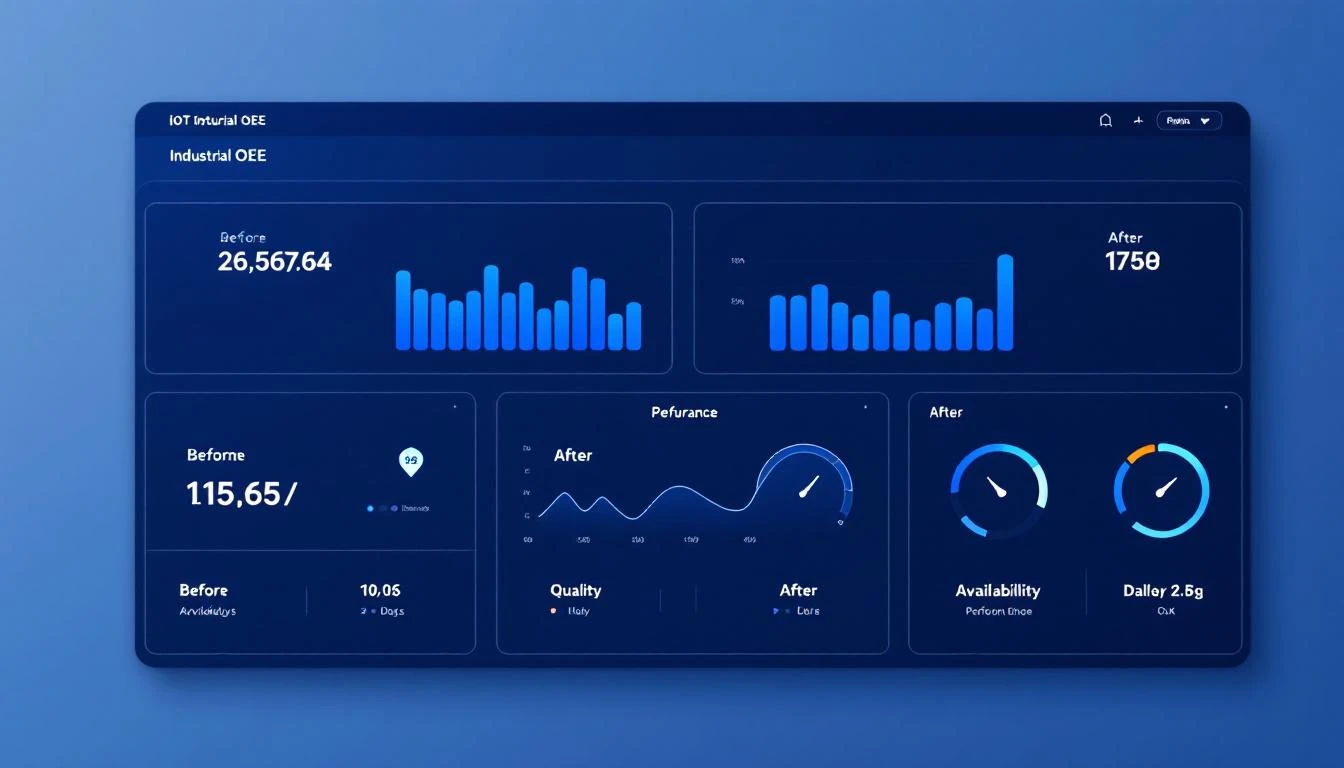
Why Most Platforms Can't Deliver 5-Week ROI
Most IIoT platforms can't achieve this timeline because of architectural decisions that create deployment friction:
Platforms requiring plant network access (Litmus, AWS IoT SiteWise, Azure IoT) need IT involvement before a single machine is connected. That alone adds 4-12 weeks to the timeline.
Platforms requiring proprietary sensors (IoTFlows, Augury) need physical sensor installation on every machine. For 10 machines, that's 1-2 weeks of sensor mounting, pairing, calibration, and baseline learning — before you get actionable data.
Platforms requiring systems integrators (PTC ThingWorx, Siemens MindSphere, GE iFIX) need SI engagements for PLC connectivity, data modeling, and dashboard configuration. SI project timelines start at 4-6 weeks for simple deployments.
Platforms without integrated maintenance (MachineMetrics, Samsara) can monitor machines but can't close the loop to PM scheduling, spare parts, and downtime categorization. You need a second system (CMMS) to complete the picture, which means a second implementation project.
MachineCDN's architecture — cellular-connected edge gateways, protocol-native PLC connectivity, and integrated monitoring + maintenance + materials management — eliminates all four of these bottlenecks.
Common Objections and How to Handle Them
"We need IT approval before connecting anything to our machines"
MachineCDN's edge gateway uses cellular connectivity. It doesn't touch your plant network. It communicates with PLCs through a one-way data read — it reads data but doesn't write to the PLC or control anything. Most OT security teams are comfortable with this architecture because it adds monitoring without modifying the control system.
"We should connect all 200 machines at once"
No. Start with 10. Prove value. Then expand. A 200-machine deployment that takes 12 months delivers zero value for 11 of those months. A 10-machine deployment that takes 1 week starts delivering value in Week 2.
"Our machines are too old for IIoT"
If your machines have PLCs that communicate via Ethernet/IP or Modbus — which covers most PLCs manufactured in the last 25 years — MachineCDN can read their data. You don't need "smart" machines. You need machines with controllers.
"We need to do a full RFP process first"
Run a pilot on 5 machines during the RFP process. By the time the RFP closes, you'll have real performance data to evaluate — not just vendor presentations.
What Comes After Week 5
Once you've proven ROI on 10 machines, the roadmap writes itself:
- Weeks 6-10: Expand to 30-50 machines, covering all critical production equipment
- Months 3-6: Add fleet management for multi-line or multi-plant visibility, implement materials tracking
- Months 6-12: Leverage accumulated data for AI-powered predictive maintenance — now you have enough data history for machine learning models to find meaningful patterns
- Year 2+: Full digital manufacturing platform with real-time monitoring, predictive maintenance, integrated PM scheduling, materials management, and fleet analytics
The key insight: AI and advanced analytics are the destination, not the starting point. Start with visibility (Week 1), add measurement (Week 2), implement basic prediction (Week 3), connect to maintenance (Week 4), and prove ROI (Week 5). Advanced AI capabilities become valuable after you have months of clean, contextualized machine data — not before.
The Bottom Line
The IIoT industry's biggest failure isn't technology — it's time to value. Too many manufacturers invest heavily, wait patiently, and lose faith before results arrive.
The antidote is a platform that deploys in days (not months), delivers visibility immediately (not eventually), and generates measurable savings within weeks (not years). That requires cellular connectivity (no IT delays), protocol-native PLC reading (no sensor installation), and integrated maintenance management (no second system needed).
Stop building infrastructure. Start preventing downtime. The ROI follows.
Ready to prove IIoT value in 5 weeks? Book a demo and we'll plan your first 10-machine deployment together.