MachineCDN vs Azure IoT: Which Industrial IoT Platform Is Right for Manufacturing?

If you're evaluating industrial IoT platforms for manufacturing, Azure IoT is probably on your shortlist. Microsoft's cloud reach and enterprise credibility make it a natural contender. But there's a meaningful difference between a general-purpose IoT cloud toolkit and a purpose-built manufacturing intelligence platform. That distinction matters when your goal is reducing unplanned downtime and improving OEE — not building a custom IoT application from scratch.
This comparison breaks down MachineCDN and Azure IoT across the dimensions that matter most to manufacturing engineers and plant managers: deployment speed, edge computing, predictive maintenance, total cost of ownership, and time to value.
What Is Azure IoT?
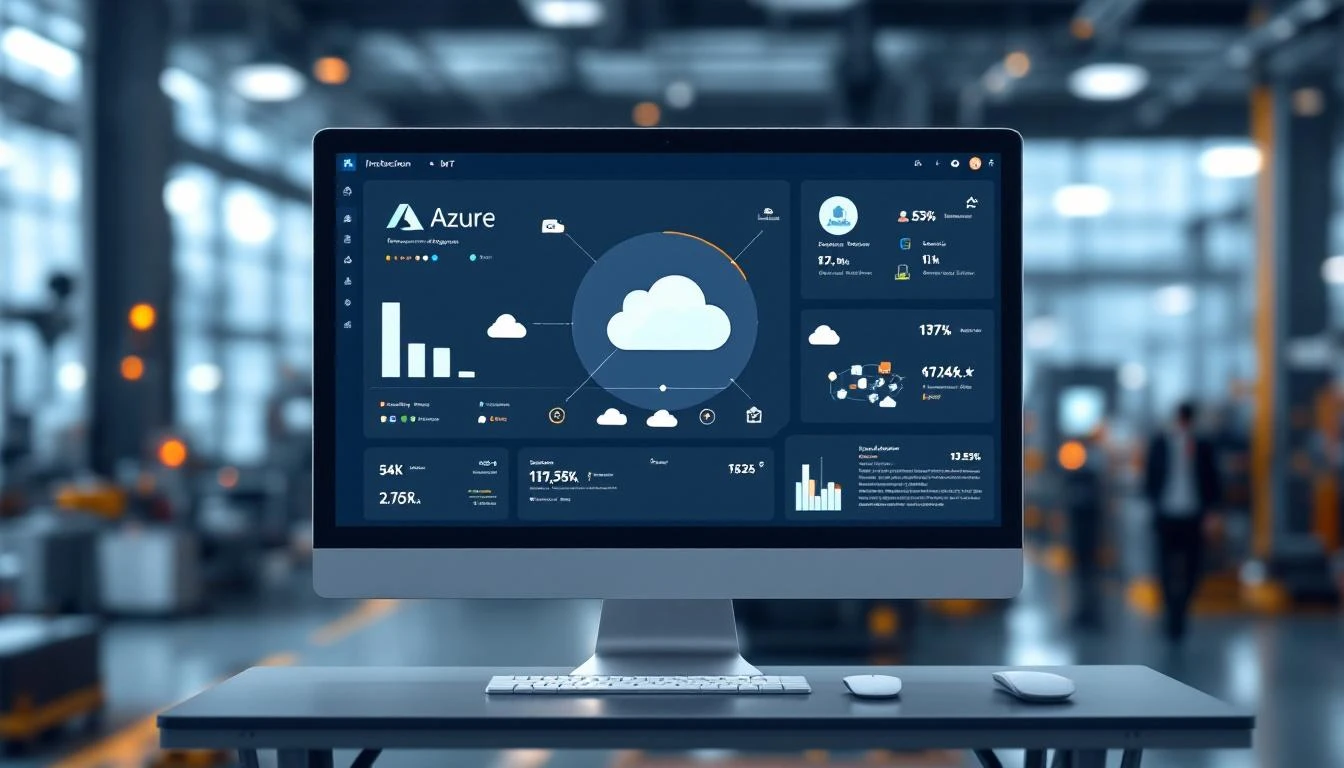
Azure IoT is Microsoft's cloud-based Internet of Things platform. It's a collection of services — IoT Hub, IoT Edge, IoT Central, Digital Twins, Time Series Insights, and Stream Analytics — that developers use to build IoT solutions. Think of it as a construction toolkit rather than a finished product.
Azure IoT Hub handles device-to-cloud messaging. IoT Edge runs containerized workloads on gateway devices. IoT Central provides a more managed experience with device templates. Together, they form a flexible but complex ecosystem.
The key word here is flexible. Azure IoT can power anything from smart agriculture to connected vehicles to industrial monitoring. That generality is both its strength and its weakness in a manufacturing context.
What Is MachineCDN?
MachineCDN is a purpose-built IIoT platform designed specifically for manufacturing environments. It connects directly to PLCs and industrial equipment via standard protocols like Ethernet/IP and Modbus, processes data at the edge, and delivers real-time monitoring, predictive maintenance, and OEE analytics through a ready-to-use dashboard.
The platform is designed around a single premise: manufacturing engineers shouldn't need a cloud engineering team to get visibility into their equipment. A device connects in minutes, data flows immediately, and the analytics layer is already configured for industrial use cases.
Deployment: Days vs. Months
This is where the comparison diverges most sharply.
Azure IoT requires a significant implementation effort. You'll need to:
- Provision IoT Hub and configure device identities
- Deploy IoT Edge runtime on gateway hardware
- Write or configure modules for PLC data ingestion (often custom code)
- Set up Stream Analytics or Azure Functions for data processing
- Build dashboards in Power BI or a custom frontend
- Configure alerting through Logic Apps or Event Grid
- Manage certificates, security policies, and network configurations
A typical Azure IoT manufacturing deployment takes 3-6 months with a team of cloud engineers. According to Microsoft's own case studies, enterprise IoT projects average 9-12 months from pilot to production.
MachineCDN takes a fundamentally different approach:
- Plug in an edge device to your plant network
- The device auto-discovers PLCs and begins reading data
- Data flows through cellular connectivity — no IT network changes
- Dashboard, alerts, and analytics are pre-configured
- Total setup: approximately 3 minutes per device
That's not a typo. Because MachineCDN handles the entire stack — edge hardware, data ingestion, cloud processing, and analytics — there's no integration work. The platform was designed to eliminate the deployment bottleneck that kills most IIoT projects.
Edge Computing Architecture
Azure IoT Edge runs Docker containers on gateway devices. You deploy modules — custom or from the marketplace — that process data locally before sending results to the cloud. This is powerful but requires container orchestration expertise. You're responsible for module development, testing, deployment pipelines, and updates.
Edge device management in Azure involves:
- Writing deployment manifests (JSON)
- Managing module images in Azure Container Registry
- Configuring routes between modules
- Monitoring module health through IoT Hub
- Handling OTA updates through layered deployments
MachineCDN's edge layer is purpose-built for industrial data. The edge device reads PLC tags at configurable intervals, applies intelligent data filtering (send-on-change or continuous modes), and transmits data efficiently. Configuration updates happen remotely with no physical access required.
The difference in philosophy: Azure IoT Edge gives you a container runtime and says "build what you need." MachineCDN gives you an industrial data pipeline that works out of the box.
Protocol Support and PLC Connectivity
Manufacturing environments run on industrial protocols. How each platform handles this matters enormously.
Azure IoT doesn't natively speak industrial protocols. To connect PLCs, you typically need:
- An OPC UA server (like KEPServerEX or Matrikon) running on a gateway
- A custom IoT Edge module to bridge OPC UA to Azure IoT Hub
- Or a third-party connector from the Azure IoT marketplace
This means additional software licenses, configuration, and maintenance. OPC UA servers alone can cost $5,000-$15,000 per gateway, depending on the vendor and tag count.
MachineCDN connects directly to PLCs using native industrial protocols — Ethernet/IP and Modbus (TCP and RTU). No middleware, no OPC UA servers, no additional software. The edge device handles protocol translation natively, which means fewer moving parts and fewer points of failure.
For plants running Siemens, Rockwell Allen-Bradley, ABB, or Mazak equipment, this native connectivity eliminates an entire layer of complexity.
Predictive Maintenance Capabilities
Azure IoT provides the building blocks for predictive maintenance but not the solution itself. You'd need to:
- Collect and store historical machine data (Azure Data Explorer or Time Series Insights)
- Build ML models in Azure Machine Learning
- Train models on your specific failure patterns
- Deploy models as Edge modules or cloud endpoints
- Build alerting and visualization layers
This is a data science project, not a configuration task. Most manufacturing companies don't have in-house ML teams, which means hiring consultants or managed service providers. Projects like these typically cost $200K-$500K and take 6-12 months.
MachineCDN includes AI-powered predictive maintenance as a core feature. The platform uses Azure OpenAI to analyze equipment patterns, detect anomalies, and predict potential failures before they cause unplanned downtime. Threshold alerting with approaching and active alert views gives maintenance teams early warning.
Combined with built-in spare parts tracking and preventive maintenance scheduling, MachineCDN provides a complete maintenance intelligence solution — not just raw data that someone needs to interpret.
OEE and Production Analytics
Azure IoT has no built-in concept of OEE. You'd calculate it yourself using custom Stream Analytics queries or Power BI reports. Defining availability, performance, and quality metrics requires understanding your specific production process and encoding that logic in queries.
MachineCDN calculates OEE automatically based on machine status data. The platform tracks availability (running vs. idle vs. alarm), monitors production throughput, and provides capacity utilization views. Downtime tracking with reason codes and root cause analysis is built in.
For a deeper dive into OEE methodology, see our complete guide to calculating OEE and our review of OEE monitoring software.
Total Cost of Ownership
Azure IoT's pricing is notoriously complex. You're paying separately for:
- IoT Hub: $25-$250/month per unit (each unit supports limited daily messages)
- Stream Analytics: $0.11/hr per streaming unit
- Azure Storage: Variable based on volume
- Time Series Insights: $0.00014-$0.000175 per event
- Power BI Pro: $10/user/month
- Azure Machine Learning: Variable based on compute
- OPC UA software licenses: $5,000-$15,000 per gateway
- Development and integration costs: $100,000-$300,000+
For a mid-sized manufacturing plant with 50-100 machines, the first-year cost of an Azure IoT deployment — including development — typically lands between $250,000 and $500,000. Annual recurring costs (cloud services + maintenance) run $50,000-$100,000.
MachineCDN bundles everything — edge hardware, connectivity, cloud platform, analytics, predictive maintenance — into a single predictable subscription. No hidden costs, no development budgets, no surprise cloud bills. Most manufacturers see ROI within 5 weeks, not 5 quarters.
Security and Network Architecture
Azure IoT uses certificate-based authentication, TLS encryption, and Azure Active Directory integration. Security is robust but requires proper configuration. Misconfigured IoT Hub policies are a common source of vulnerabilities.
One underappreciated concern: Azure IoT typically requires devices to connect through your plant's IT network. This means firewall rules, network segmentation, and IT approval — a process that can add weeks or months to deployment timelines. According to a 2024 IoT Analytics survey, IT/OT convergence challenges are the #1 barrier to IIoT adoption.
MachineCDN uses cellular connectivity, which bypasses the plant network entirely. This isn't just a convenience — it's a fundamental architectural advantage. There's no IT involvement required, no firewall changes, no risk of IIoT traffic affecting production networks. Data is encrypted end-to-end from edge device to cloud.
When Azure IoT Makes Sense
Azure IoT is the better choice when:
- You have a dedicated IoT engineering team (5+ developers)
- Your use case is highly custom or non-manufacturing
- You need to integrate with other Azure services extensively
- You're building a multi-vertical IoT product (not just using it)
- You have 12+ months and $300K+ budget for the project
Azure IoT's flexibility is genuinely valuable for companies building IoT products or platforms. If you're a system integrator or ISV, the toolkit approach lets you build differentiated solutions.
When MachineCDN Makes Sense
MachineCDN is the better choice when:
- You need production visibility this month, not next year
- Your team includes manufacturing engineers, not cloud architects
- You want predictive maintenance without a data science project
- You need to monitor equipment across multiple plants
- You can't or don't want to involve IT for network changes
- You need clear, predictable pricing
For manufacturers who need an IIoT solution — not an IIoT development project — MachineCDN eliminates months of complexity.
Making the Decision
The Azure IoT vs. MachineCDN decision often comes down to one question: Do you want to build an IoT solution, or deploy one?
Azure IoT is a powerful set of cloud services. For organizations with the engineering resources and timeline to leverage it, there's very little it can't do. But for manufacturing companies whose core competency is making products — not building software — the time and cost to turn Azure IoT services into a working manufacturing intelligence platform is substantial.
MachineCDN was built for the second group. Purpose-built for manufacturing, ready to deploy in minutes, and designed around the assumption that every week spent in "implementation" is a week of unplanned downtime you could have prevented.
For more platform comparisons, explore our analyses of MachineCDN vs AWS IoT SiteWise, MachineCDN vs Siemens MindSphere, and MachineCDN vs PTC ThingWorx.
Ready to see MachineCDN in action? Book a demo and get your first machines connected in minutes, not months.