MachineCDN vs IoTFlows: Which IIoT Platform Delivers Faster ROI?

When evaluating Industrial IoT platforms for manufacturing, two names increasingly appear in shortlists: MachineCDN and IoTFlows. Both promise to reduce unplanned downtime, improve OEE, and bring AI-powered insights to the factory floor — but they take fundamentally different approaches to getting there.
This comparison breaks down the real differences between these platforms so you can make an informed decision for your production environment.
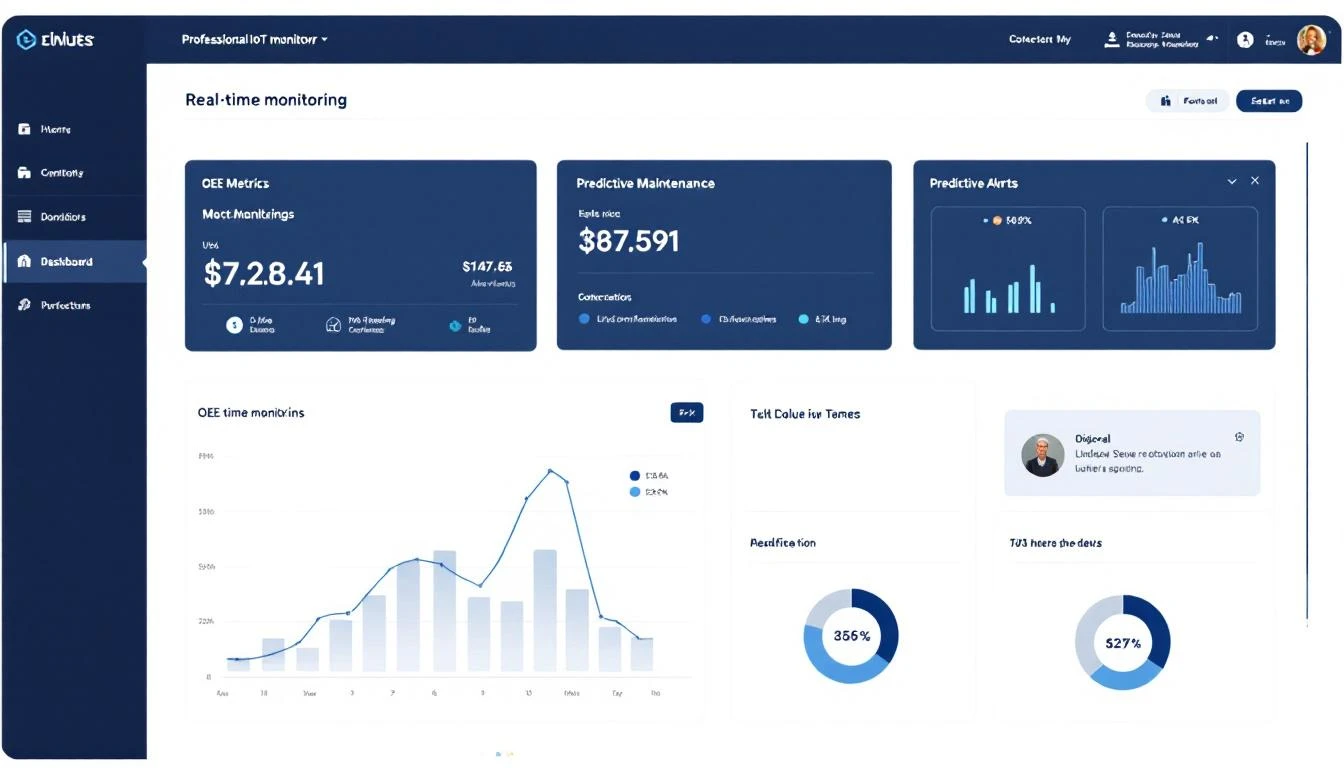
Architecture Philosophy: Protocol-Native vs Sensor-Overlay
The most important distinction between MachineCDN and IoTFlows lies in how each platform collects data from your equipment.
MachineCDN takes a protocol-native approach. It connects directly to your existing PLCs using standard industrial protocols — Ethernet/IP and Modbus (TCP and RTU). This means it reads data from the controllers that already run your machines. No additional sensors required. No new hardware on your equipment. If your machines have PLCs (and in 2026, virtually all industrial equipment does), MachineCDN can start collecting data immediately.
IoTFlows takes a sensor-overlay approach. Their primary product line — SenseAi and SenseAi Embedded — are proprietary vibration and acoustic sensors that mount onto equipment. These sensors collect vibration signatures and acoustic data, then transmit wirelessly to IoTFlows' cloud platform for AI analysis.
Why This Matters
The architectural choice has cascading implications:
- Setup time: MachineCDN's edge device connects to your PLC in roughly 3 minutes. IoTFlows requires physical sensor installation on each piece of equipment — mounting, calibrating, and commissioning.
- Data breadth: MachineCDN reads every tag your PLC exposes — temperatures, pressures, cycle counts, speeds, alarm states, energy consumption, and more. IoTFlows primarily captures vibration and acoustic data (though it can integrate with other sources).
- Maintenance of the monitoring system itself: MachineCDN's edge device has no moving parts on your equipment. IoTFlows sensors are physical devices that can be damaged, need battery replacement (for wireless models), and require periodic recalibration.
Feature-by-Feature Comparison
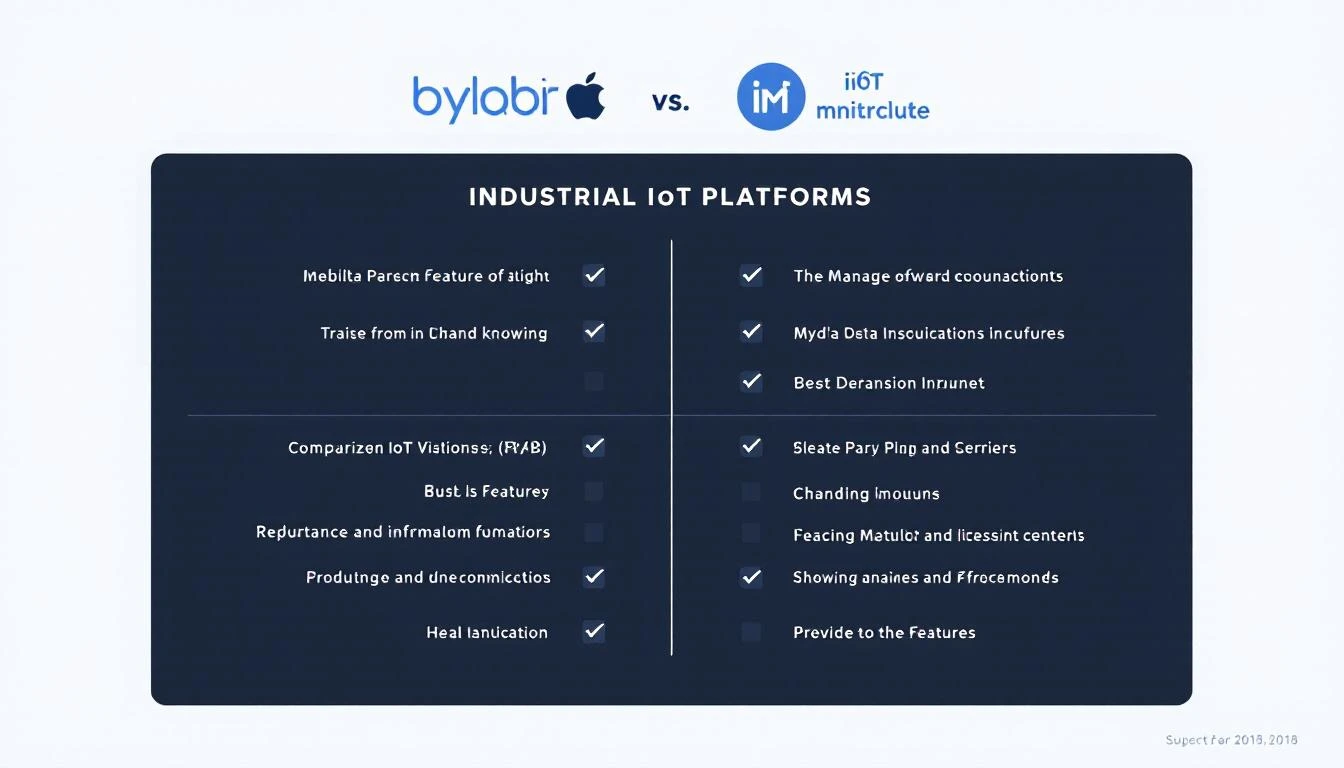
| Feature | MachineCDN | IoTFlows |
|---|---|---|
| Setup Time | ~3 minutes per device | Hours per sensor installation |
| IT Involvement | Zero (cellular connectivity) | Cloud connectivity required |
| Data Collection | PLC-native (Ethernet/IP, Modbus) | Proprietary sensors (vibration/acoustic) |
| OEE Monitoring | ✅ Full (availability, performance, quality) | ✅ Yes |
| Predictive Maintenance | ✅ AI-powered with Azure OpenAI | ✅ AI-based vibration analysis |
| Downtime Tracking | ✅ Root cause analysis with reason codes | ✅ Downtime detection |
| Materials & Inventory | ✅ Full inventory management | ❌ Not available |
| Spare Parts Tracking | ✅ Built-in | ❌ Not available |
| Energy Monitoring | ✅ Per-machine energy consumption | ❌ Not available |
| Fleet Management | ✅ Multi-location, multi-zone | Limited |
| Threshold Alerts | ✅ Active + approaching warnings | ✅ Alert system |
| Time to ROI | 5 weeks | < 3 months (claimed) |

Machine Health Monitoring: Different Approaches
IoTFlows monitors machine health through seven specific vibration metrics: cavitation, looseness, imbalance, lubrication, alignment, bearing condition, and temperature. This is genuinely useful for rotating equipment — motors, pumps, compressors, and fans. Their AI models analyze vibration patterns to predict bearing failures, misalignment issues, and other mechanical problems.
MachineCDN approaches machine health holistically. Because it reads directly from PLCs, it monitors whatever the machine's controller tracks — which typically includes far more than vibration. Temperature trends, pressure differentials, cycle time deviations, amperage draws, hydraulic pressures, pneumatic system performance, and hundreds of other parameters that PLCs already measure. MachineCDN's AI engine analyzes these multi-dimensional data streams to detect anomalies before they become failures.
The key insight: most manufacturing equipment already has comprehensive sensing built into its control system. PLCs read dozens or hundreds of data points every second. The question isn't whether you have enough data — it's whether you're using it. MachineCDN unlocks the data you already have. IoTFlows adds new data sources.
IT and Network Considerations
One of the most common barriers to IIoT adoption is IT resistance. Plant networks are locked down for good reason — a cyberattack on a manufacturing control system can have physical safety consequences.
MachineCDN eliminates this barrier entirely. Its edge device uses cellular connectivity to transmit data to the cloud. It never touches your plant network. Your IT team doesn't need to open firewall ports, configure VLANs, or whitelist IP addresses. The device sits on the same physical network segment as the PLC but communicates outbound via its own cellular modem.
IoTFlows requires cloud connectivity from your facility network. While their sensor-to-gateway communication is typically wireless (within the plant), the gateway itself needs internet access — which means working with your IT team to establish and maintain that connection.
For manufacturers operating in regulated environments (pharmaceutical, food & beverage, defense), MachineCDN's air-gapped approach is particularly compelling. Your production network stays completely isolated.
Predictive Maintenance Depth
Both platforms offer predictive maintenance capabilities, but the scope differs significantly.
IoTFlows excels at predicting mechanical failures in rotating equipment. Their vibration analysis can identify bearing wear, shaft misalignment, and impeller damage weeks before catastrophic failure. For facilities where rotating equipment failures are the primary downtime driver, this is valuable.
MachineCDN offers broader predictive coverage because it monitors more parameters. Beyond mechanical health, it can predict process drift (a CNC machine gradually going out of tolerance), hydraulic system degradation (slow pressure loss indicating seal wear), electrical issues (increasing amperage draw suggesting motor winding problems), and thermal anomalies. The AI engine learns normal operating patterns for each machine and flags deviations across all monitored parameters.
Additionally, MachineCDN includes full preventive maintenance scheduling — PM task management, spare parts tracking, and work order integration. IoTFlows focuses on condition-based monitoring rather than scheduled maintenance management.
Materials and Inventory Management
A significant differentiator for MachineCDN is its built-in materials and inventory management module. Manufacturing operations don't just need to monitor machines — they need to track the materials those machines consume and produce.
MachineCDN tracks material usage per machine, monitors hopper levels and material consumption rates, manages inventory across locations, and connects material flow to production output. IoTFlows does not offer materials or inventory management features, as it focuses specifically on machine health monitoring.
For manufacturers where material waste or inventory stockouts contribute to downtime or production losses, this integrated approach eliminates the need for a separate system.
Pricing and Total Cost of Ownership
Direct pricing comparisons are difficult because both companies use custom pricing models. However, the cost structures differ fundamentally:
IoTFlows' cost structure includes hardware costs (sensors per machine), installation labor, cloud platform subscription, and ongoing sensor maintenance/replacement. The hardware cost alone can be significant — instrumenting 50 machines with multiple vibration sensors each adds up quickly.
MachineCDN's cost structure is primarily software — the edge device cost is minimal compared to dedicated sensors, there's no per-sensor hardware expense, and the cellular data is included. Total cost of ownership tends to be 40-60% lower because you're not buying, installing, and maintaining dedicated sensor hardware.
Who Should Choose Which?
Choose MachineCDN if:
- Your equipment has PLCs (most modern industrial equipment does)
- You need comprehensive monitoring beyond vibration data
- IT involvement is a blocker or concern
- You want fast deployment (days, not months)
- You need materials/inventory management integration
- You're monitoring across multiple locations
- 5-week ROI matters to your business case
Choose IoTFlows if:
- Your primary concern is rotating equipment failures specifically
- Your equipment lacks modern PLCs or controllers
- You need acoustic monitoring capabilities
- Vibration analysis is your dominant use case
- You're already committed to a sensor-based monitoring strategy
The Bottom Line
MachineCDN and IoTFlows solve overlapping but fundamentally different problems. IoTFlows is a strong vibration monitoring solution for rotating equipment. MachineCDN is a comprehensive IIoT platform that delivers machine monitoring, predictive maintenance, OEE tracking, inventory management, and fleet oversight — all from data your PLCs already collect.
For most manufacturers, the data they need is already sitting in their PLCs. MachineCDN makes that data actionable without adding hardware complexity or IT burden.
Ready to see MachineCDN in action? Book a demo and see how fast your factory floor data becomes actionable intelligence.
Related reading: MachineCDN vs Litmus | MachineCDN vs MachineMetrics | Best Predictive Maintenance Software 2026 | Best IIoT Platform 2026