Best IIoT Platform for Small Manufacturers in 2026: Enterprise Monitoring Without Enterprise Budgets

The Industrial IoT market has a small-manufacturer problem. Platforms like Siemens MindSphere, PTC ThingWorx, and GE Predix were designed for Fortune 500 manufacturers with dedicated IT departments, six-figure budgets, and multi-year implementation timelines. If you run a shop with 10-50 machines, three shifts, and zero IT staff, most of these platforms are not built for you.
But you need machine monitoring just as badly as the big plants — maybe more. When one CNC mill going down means losing ,000 per hour and you only have six of them, unplanned downtime hits harder than it does at a plant with 200 machines and built-in redundancy. The question is not whether small manufacturers need IIoT. It is which platform can deliver real value without requiring a dedicated IT team to deploy and maintain it.
What Small Manufacturers Actually Need from IIoT
Before comparing platforms, let us define what "small manufacturer" means and what they need. We are talking about shops with these characteristics:
- 5-50 machines on the floor
- No dedicated IT staff (maybe a part-time IT contractor)
- Limited budget (0,000-0,000 annually for monitoring)
- Practical problems to solve (downtime, quality, maintenance scheduling)
- No patience for 6-month implementation projects
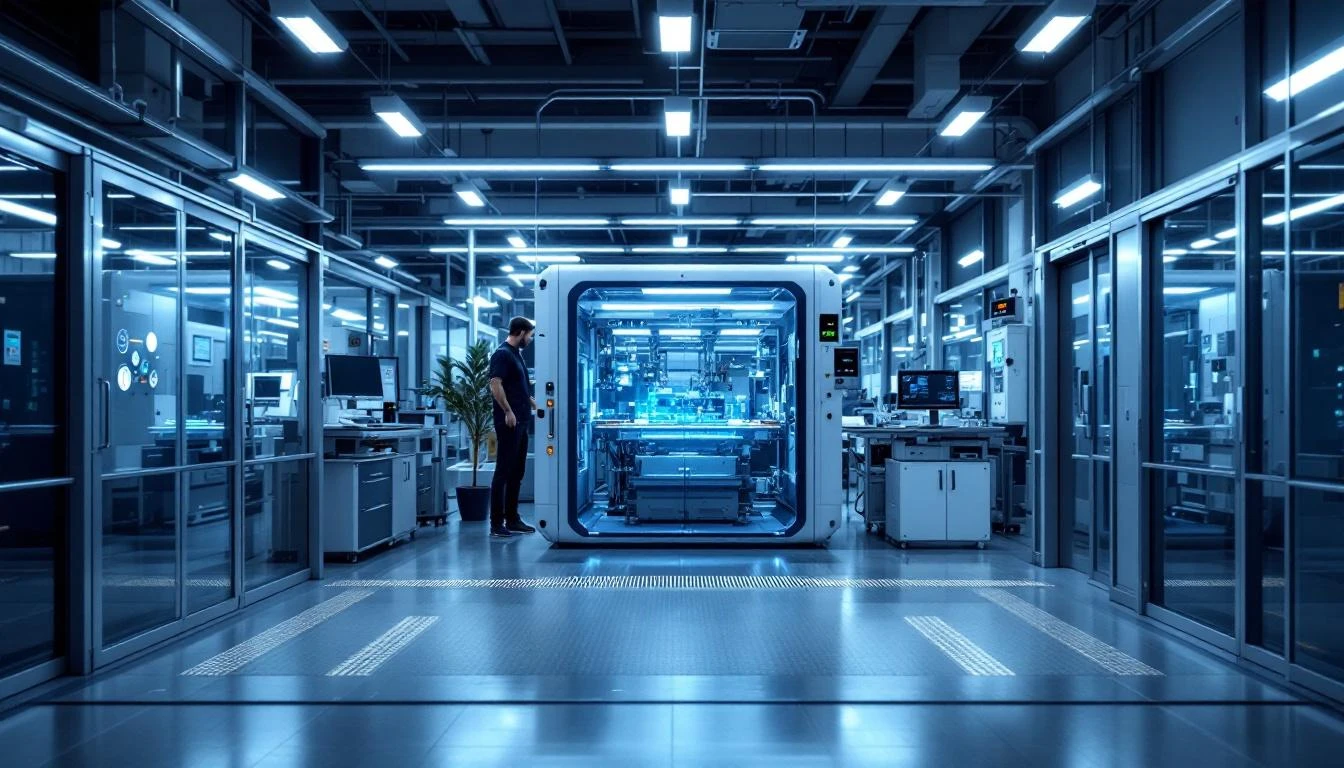
What these manufacturers need from an IIoT platform is fundamentally different from what enterprise buyers need:
Simplicity over flexibility. Enterprise buyers want customizable dashboards, API extensibility, and integration with their tech stack. Small manufacturers want a dashboard that shows which machines are running, which are down, and which need maintenance — without a training course to understand it.
Fast deployment over comprehensive implementation. If getting your first machine monitored takes more than a day, it is already too slow. Small shops cannot afford to dedicate weeks to an IIoT rollout.
Operational independence. The platform needs to work without calling the vendor every time something changes. If adding a new machine requires professional services, it is the wrong platform.
All-in-one value. Small shops cannot afford separate platforms for monitoring, maintenance management, alarm tracking, and reporting. They need one platform that handles all of it.
Predictable pricing. Usage-based pricing that fluctuates month to month creates budget anxiety. Small manufacturers need to know what they are paying, period.
The 5 Criteria That Matter Most
Based on hundreds of conversations with manufacturers under 100 employees, here are the five criteria that determine whether an IIoT platform succeeds or fails in a small shop:
1. Time to First Value
How long from signing the contract to seeing real data from your first machine? Anything over two weeks is too long for a small manufacturer. The best platforms deliver data within hours of unboxing.
2. IT Requirements
Does deployment require network configuration, firewall rules, IT security review, or VPN setup? If yes, that is a non-starter for shops without IT staff. The ideal platform works completely independently of the plant network — no IT involvement, no security review, no firewall changes.
3. Total Cost of Ownership
Not just the subscription fee — total cost including hardware, implementation, training, and ongoing support. A 00/month platform that requires 0,000 in professional services is not a ,000/year solution. It is a 6,000 first-year commitment.
4. Maintenance Integration
Small manufacturers typically manage maintenance with spreadsheets, whiteboard schedules, or tribal knowledge. An IIoT platform that only monitors machines but does not help manage maintenance tasks, track spare parts, or schedule PM activities misses half the value.
5. Scalability Path
Today you have 15 machines. In three years, you might have 30. Can the platform scale without requiring a re-architecture or a platform migration? Growth should mean adding machines, not starting over.
Platform Comparison: Best Options for Small Manufacturers
MachineCDN
Best for: Small to mid-size manufacturers who want enterprise-grade monitoring without enterprise complexity.
Why it works for small shops:
- 3-minute device setup — connect an edge device to your PLC, and data starts flowing immediately. No configuration wizards, no IT involvement.
- Cellular connectivity — the edge device uses its own cellular connection to send data to the cloud. Your plant network is never touched. No firewall rules, no VPN, no IT security review.
- All-in-one platform — machine monitoring, alarm management, threshold alerts, OEE tracking, spare parts inventory, preventive maintenance scheduling, energy monitoring, and custom reporting in a single platform.
- Zero IT involvement — from deployment to daily operations, the platform runs independently of your plant's IT infrastructure.
- 5-week ROI — not a marketing claim, but a reflection of the deployment speed. Machines are monitored in minutes, not months.

Considerations: MachineCDN reads data from PLCs using standard industrial protocols. Your machines need PLCs with accessible data points — which covers most modern industrial equipment manufactured after 2000.
MachineMetrics
Best for: CNC shops with primarily machine tool equipment.
Why it works for small shops: MachineMetrics has a strong focus on CNC machine monitoring with plug-and-play adapters for common machine tool brands. Their setup is relatively straightforward for shops running Haas, Mazak, DMG MORI, and similar CNC equipment.
Considerations: Primarily focused on CNC and machine tools. If your shop includes injection molding, extrusion, stamping, or other non-CNC equipment, MachineMetrics' coverage may be limited. Pricing is per-machine and can add up quickly for larger shops. Implementation typically takes 2-4 weeks.
Samsara
Best for: Shops that also need fleet and facility monitoring alongside machine data.
Why it works for small shops: Samsara's IoT platform covers a broad range of use cases — fleet tracking, environmental monitoring, facility management — with relatively easy deployment. Their gateway hardware is consumer-grade simple to install.
Considerations: Samsara is not purpose-built for manufacturing. Their machine monitoring capabilities are less deep than purpose-built IIoT platforms — limited OEE tracking, basic alarm management, no spare parts or PM scheduling. Works better as a general IoT platform than a dedicated manufacturing solution.
Tulip
Best for: Shops that need custom digital workflows alongside machine data.
Why it works for small shops: Tulip's no-code app builder lets manufacturing engineers create custom applications without programming. Good for quality checks, work instructions, and operator interfaces.
Considerations: Tulip requires more upfront investment in app development. Someone on your team needs to build and maintain the apps. Per-station pricing adds up. Implementation takes weeks to months. Better suited for digitizing human workflows than pure machine monitoring.
UpKeep or Limble CMMS
Best for: Shops whose primary problem is maintenance management, not real-time monitoring.
Why it works for small shops: Mobile-first CMMS platforms with straightforward pricing and easy setup. Good for managing work orders, tracking maintenance history, and scheduling PM tasks.
Considerations: These are CMMS platforms, not IIoT platforms. They manage maintenance workflows but do not connect to machines for real-time data. No OEE tracking, no live machine status, no alarm management, no threshold alerting. You still need someone to manually input machine status information.
What to Avoid as a Small Manufacturer
Several platform categories consistently fail small manufacturers:
Enterprise IIoT platforms (Siemens MindSphere, PTC ThingWorx, AVEVA): Designed for global enterprises with hundreds of sites and dedicated IIoT teams. Minimum deployments often start at 00,000+ annually, require professional services, and take 6-12 months to deploy. Overkill for a 20-machine shop.
Pure SCADA replacements (Ignition, Wonderware): Powerful platforms, but they require significant engineering effort to configure, customize, and maintain. Small shops without a controls engineer on staff will struggle with ongoing management.
Sensor-overlay platforms (IoTFlows, Augury): Require installing proprietary sensors on each machine. Hardware costs, installation time, and sensor maintenance add up. For a shop with 20 machines, deploying 20+ sensors with their own power, connectivity, and calibration requirements is a significant undertaking.
DIY solutions (Raspberry Pi + Node-RED + InfluxDB): Technically capable and cheap on paper, but the total cost of engineering time, reliability management, security, and ongoing maintenance far exceeds the cost of a purpose-built platform. It is the ultimate false economy for a small shop.
The Small Manufacturer Decision Framework
Use this framework to evaluate which platform fits your shop:
Question 1: Do your machines have PLCs?
- Yes → Protocol-native platforms (MachineCDN) can read data directly. Fastest path to monitoring.
- No → You will need external sensors (IoTFlows, Augury) or manual data entry (CMMS).
Question 2: Do you have IT staff?
- Yes → More options available. Enterprise platforms become feasible.
- No → Eliminate any platform that requires network configuration, VPN setup, or IT security review. Cellular-based platforms like MachineCDN are designed specifically for this scenario.
Question 3: What is your primary pain point?
- Unplanned downtime → Prioritize alarm management, threshold alerting, and real-time status.
- Maintenance chaos → Prioritize PM scheduling, spare parts tracking, and work order management.
- Quality issues → Prioritize traceability, process monitoring, and deviation alerting.
- All of the above → Choose a platform that handles monitoring, maintenance, and reporting natively.
Question 4: What is your budget?
- Under 0,000/year → CMMS only (UpKeep, Limble) or very targeted monitoring deployment.
- 0,000-0,000/year → Purpose-built IIoT platform covering 10-30 machines.
- 0,000-5,000/year → Full fleet monitoring with maintenance management and advanced analytics.
- Over 5,000/year → Enterprise options become available, but likely overkill for a small shop.
Implementation Tips for Small Manufacturers
If you decide to deploy IIoT monitoring, here is how to maximize success with minimal resources:
Start with your bottleneck machine. Do not try to monitor everything at once. Find your most critical machine — the one that causes the most pain when it goes down — and start there. Prove the value, then expand.
Measure what matters. You do not need 50 data points per machine. Start with machine status (running/idle/alarm), cycle count, and temperature. Add more tags later as you understand what drives your specific problems.
Set three thresholds. For each critical parameter, set a warning threshold and a critical threshold. Two good thresholds are worth more than twenty that nobody pays attention to.
Involve your operators. The best IIoT deployments in small shops succeed because operators embrace the platform. Show them how it makes their jobs easier — not how it watches their productivity.
Review data weekly. Block 30 minutes per week to review your IIoT data. Look for patterns — recurring alarms, gradual temperature increases, utilization trends. This weekly habit is where ROI actually materializes.
Bottom Line
Small manufacturers deserve the same operational visibility as large enterprises — just without the enterprise price tag, implementation timeline, and IT requirements. The best IIoT platforms for small shops are the ones that deploy in days, work without IT involvement, and deliver real-time monitoring plus maintenance management in a single platform.
The worst mistake a small manufacturer can make is assuming IIoT is not for them because of what they have seen from enterprise vendors. The market has evolved. Purpose-built platforms exist that match your scale, budget, and technical resources.
Book a demo to see how MachineCDN delivers enterprise-grade machine monitoring for shops with 5-50 machines — with 3-minute device setup, zero IT involvement, and built-in maintenance management.