Best Energy Monitoring Software for Manufacturing in 2026: Track Consumption, Cut Costs, Hit ESG Targets

Energy costs are the second-largest operating expense for most manufacturers — right behind labor. In 2026, with industrial electricity rates rising 4–8% annually across most markets and ESG reporting requirements tightening, the ability to monitor energy consumption at the machine level has shifted from "nice-to-have" to "operationally critical."
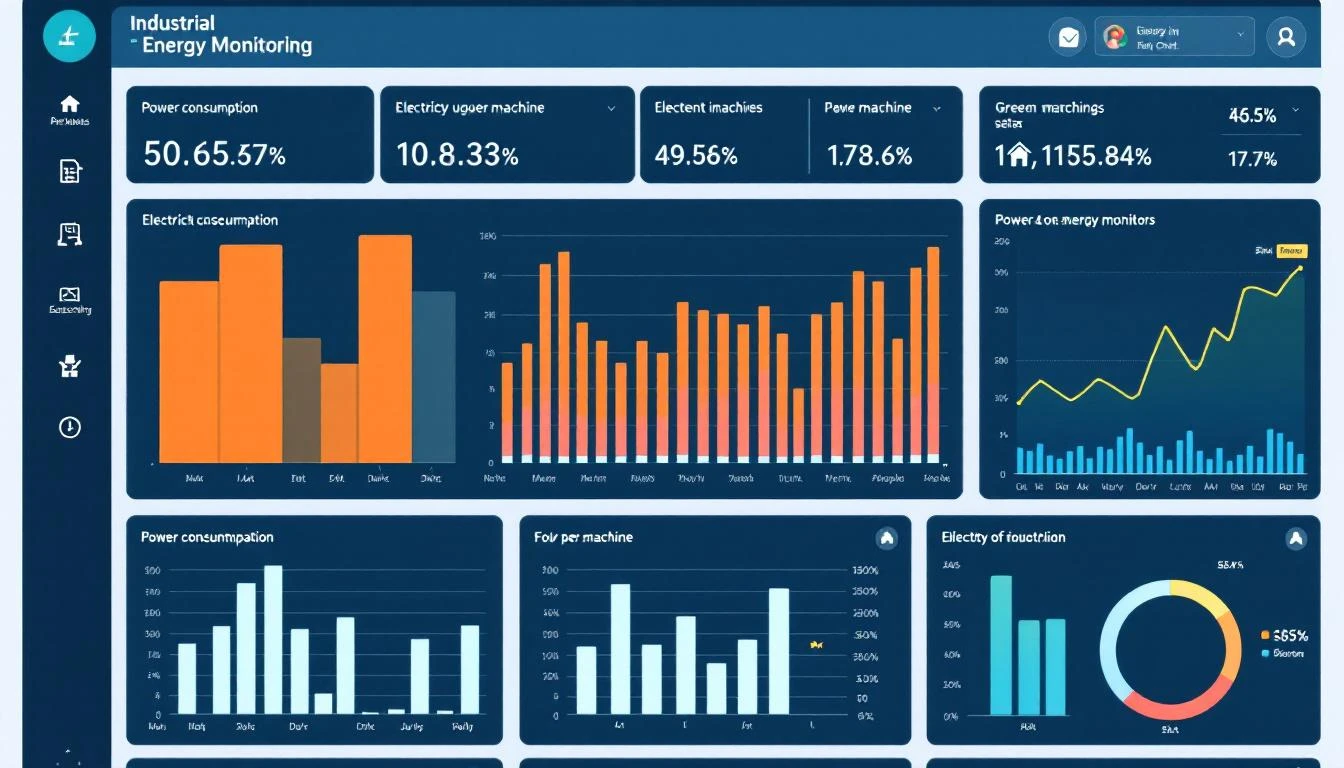
Yet most manufacturing plants still receive a single utility bill for the entire facility. They know they spent $180,000 on electricity last month, but they can't tell you how much each production line — let alone each machine — consumed. This guide covers the best energy monitoring software for manufacturing in 2026 and how to implement machine-level energy tracking that actually moves the needle.
Why Machine-Level Energy Monitoring Matters
The Facility-Level Blind Spot
Your utility bill tells you total consumption. That's like running a business and only knowing your total expenses — no breakdown by department, project, or vendor. Without machine-level data, you can't answer basic questions:
- Which machine consumes the most energy per unit produced?
- Is Machine 7's power draw increasing over time (indicating bearing wear or motor degradation)?
- How much energy do we waste during idle time between production runs?
- Which shift runs more efficiently from an energy perspective?
- Are our air compressors cycling too frequently?
The Financial Impact
According to the U.S. Department of Energy, manufacturers can typically reduce energy consumption by 10–25% through visibility and optimization alone — no equipment upgrades required. For a plant spending $2M annually on electricity, that's $200K–$500K in savings.
Common energy waste patterns that monitoring reveals:
- Idle equipment running at 40–60% power draw — machines left running between jobs, air compressors cycling without demand, hydraulic systems pressurized during breaks
- Peak demand charges — a single 15-minute spike can set your demand charge for the entire month in many utility rate structures
- Compressed air leaks — the DOE estimates that 25–30% of compressed air is wasted through leaks in typical plants
- Motor degradation — a motor drawing 15% more current than baseline is heading for failure AND wasting energy
The ESG and Compliance Driver
In 2026, energy monitoring isn't just about cost savings:
- EU CSRD (Corporate Sustainability Reporting Directive) — requires detailed energy and emissions reporting for companies operating in or selling to the EU
- SEC Climate Disclosure Rules — US public companies must report Scope 1 and Scope 2 emissions
- Customer requirements — large OEMs increasingly require suppliers to report energy intensity per unit produced
- ISO 50001 — energy management certification that requires systematic monitoring and continuous improvement
Without machine-level energy data, you can't accurately calculate emissions per product, per line, or per facility — and your ESG reports are based on estimates rather than measurements.
What to Look for in Manufacturing Energy Monitoring Software
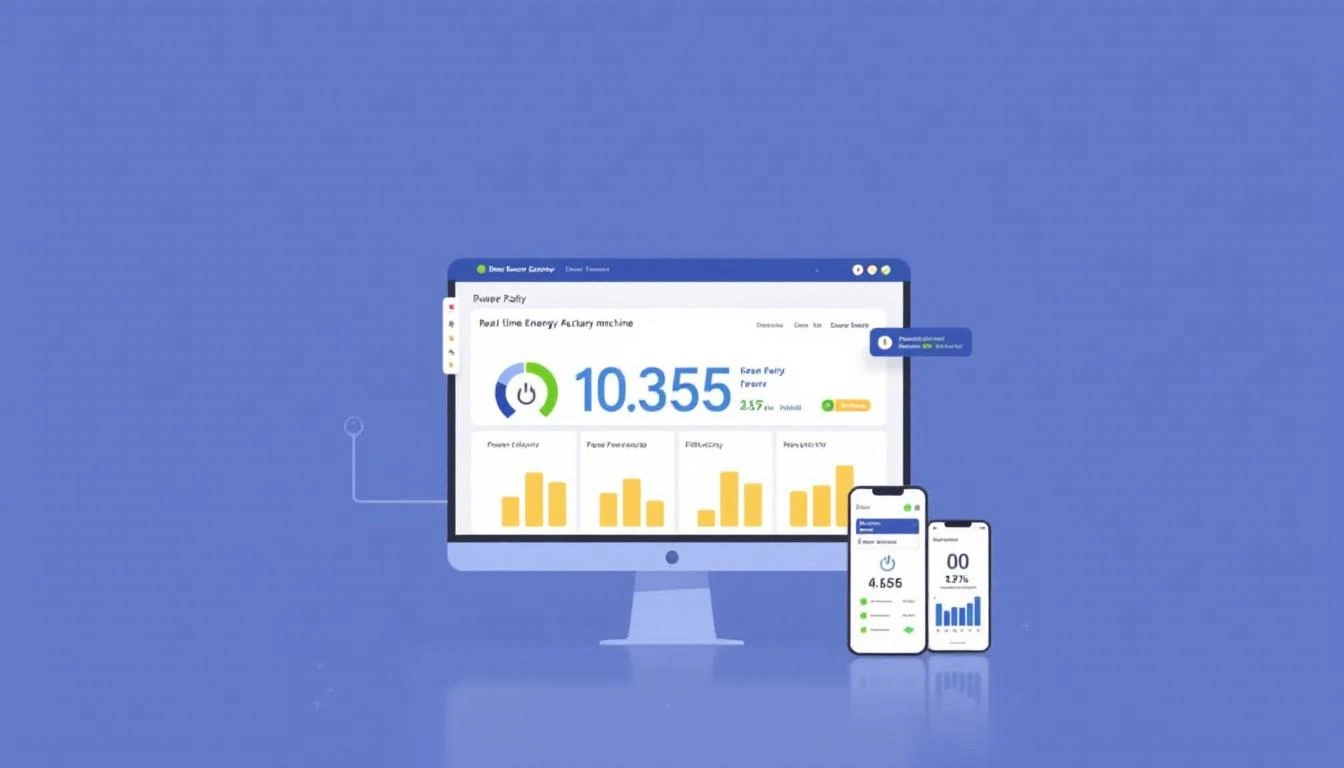
1. Machine-Level Granularity
The platform should monitor individual machines, not just circuits or panels. You need to know that Machine 12 consumed 847 kWh last shift, not that "Production Line B used 12,000 kWh."
2. Real-Time and Historical Views
Real-time power draw for immediate decisions (is that machine running abnormally hot?), plus historical trends for analysis (how has consumption changed over 6 months?).
3. Integration with Production Data
Energy per unit produced is the metric that matters most. That requires correlating energy consumption with production counts, OEE data, and cycle times. A platform that does both — like one combining OEE monitoring with energy tracking — delivers far more insight than standalone energy monitoring.
4. Anomaly Detection
AI or threshold-based alerting when a machine's energy consumption deviates from its baseline. A motor drawing 20% more power than normal is both an energy waste problem and a predictive maintenance signal.
5. Demand Management
Peak demand management tools that help you stagger equipment startups, shift loads to off-peak hours, and avoid demand charge spikes.
6. Reporting for ESG and ISO 50001
Pre-built reports that map energy data to ESG frameworks, emissions calculations, and compliance requirements. Manual report generation from raw data is a tax on your engineering team.
Best Energy Monitoring Software for Manufacturing
1. MachineCDN — Best for Integrated Energy + Production Monitoring
Why it stands out: MachineCDN includes built-in energy consumption monitoring as part of its IIoT platform. Because it's already connected to your PLCs for production monitoring and predictive maintenance, adding energy tracking requires zero additional infrastructure. The platform reads power data from the same PLC connection used for machine status, OEE, and alarms.
Key energy features:
- Per-machine energy tracking — consumption data from PLC-connected power meters
- Energy per unit produced — automatic correlation with production counters
- Baseline and anomaly detection — identifies when a machine's energy profile changes (often a predictive maintenance signal)
- Shift and job-level analysis — compare energy efficiency across shifts, operators, and product types
- Multi-site benchmarking through fleet management
- Zero additional hardware for energy if your PLCs already meter power (many modern PLCs include current/voltage inputs)
What makes it different: Most energy monitoring solutions require dedicated sub-meters, CT clamps, and their own communication infrastructure. MachineCDN leverages your existing PLC infrastructure — the same data path used for production monitoring also carries energy data. 3-minute setup, cellular connectivity, zero IT involvement.
Best for: Manufacturers who want energy monitoring integrated with their production and maintenance data — not as a separate system.
2. Schneider Electric EcoStruxure — Best for Schneider-Heavy Facilities
Schneider Electric's EcoStruxure platform integrates with their power distribution equipment (PowerLogic meters, Modbus energy meters, building management systems). Strong for facilities already invested in Schneider electrical infrastructure.
Strengths:
- Deep integration with Schneider power monitoring hardware
- Building-to-machine energy management
- Demand response and peak shaving tools
- Strong sustainability reporting
Limitations:
- Best with Schneider hardware ecosystem — expensive to retrofit non-Schneider facilities
- Complex deployment requiring specialized integrators
- Limited production data integration (energy-only focus)
- Enterprise pricing ($100K+/year for mid-size deployments)
3. Siemens SIMATIC Energy Manager — Best for Siemens PLC Environments
SIMATIC Energy Manager connects to Siemens PLCs and power analyzers for energy monitoring within the Siemens ecosystem. Integrated with TIA Portal and MindSphere for cloud analytics.
Strengths:
- Native integration with Siemens automation
- KPI-based energy management
- ISO 50001 compliance tools
- Good visualization for energy flows
Limitations:
- Siemens-centric (expensive to use with non-Siemens equipment)
- Requires MindSphere for advanced analytics (additional licensing)
- Complex setup and configuration
- Limited to energy (no integrated production/maintenance monitoring)
4. EnergyCAP — Best for Utility Bill Management
EnergyCAP is an enterprise energy accounting platform focused on utility bill tracking, rate analysis, and budget management. Good for facilities management but limited for machine-level manufacturing use.
Strengths:
- Utility bill parsing and validation
- Rate optimization analysis
- Multi-site portfolio management
- Budget forecasting
Limitations:
- Facility-level only — no machine-level granularity
- No real-time monitoring
- No production data integration
- Not built for manufacturing operations
5. Powerit Solutions — Best for Demand Response
Powerit focuses specifically on demand management — automatically curtailing non-critical loads during peak periods to reduce demand charges. Narrow but effective for that specific use case.
Strengths:
- Automatic demand response
- Real-time load shedding
- Integration with utility demand response programs
- Strong ROI on demand charge reduction
Limitations:
- Demand management only — not comprehensive energy monitoring
- Limited analytics beyond peak management
- Requires direct control of equipment (BMS integration)
Implementing Machine-Level Energy Monitoring
Step 1: Audit Your Current Energy Infrastructure
Before selecting software, understand what you're working with:
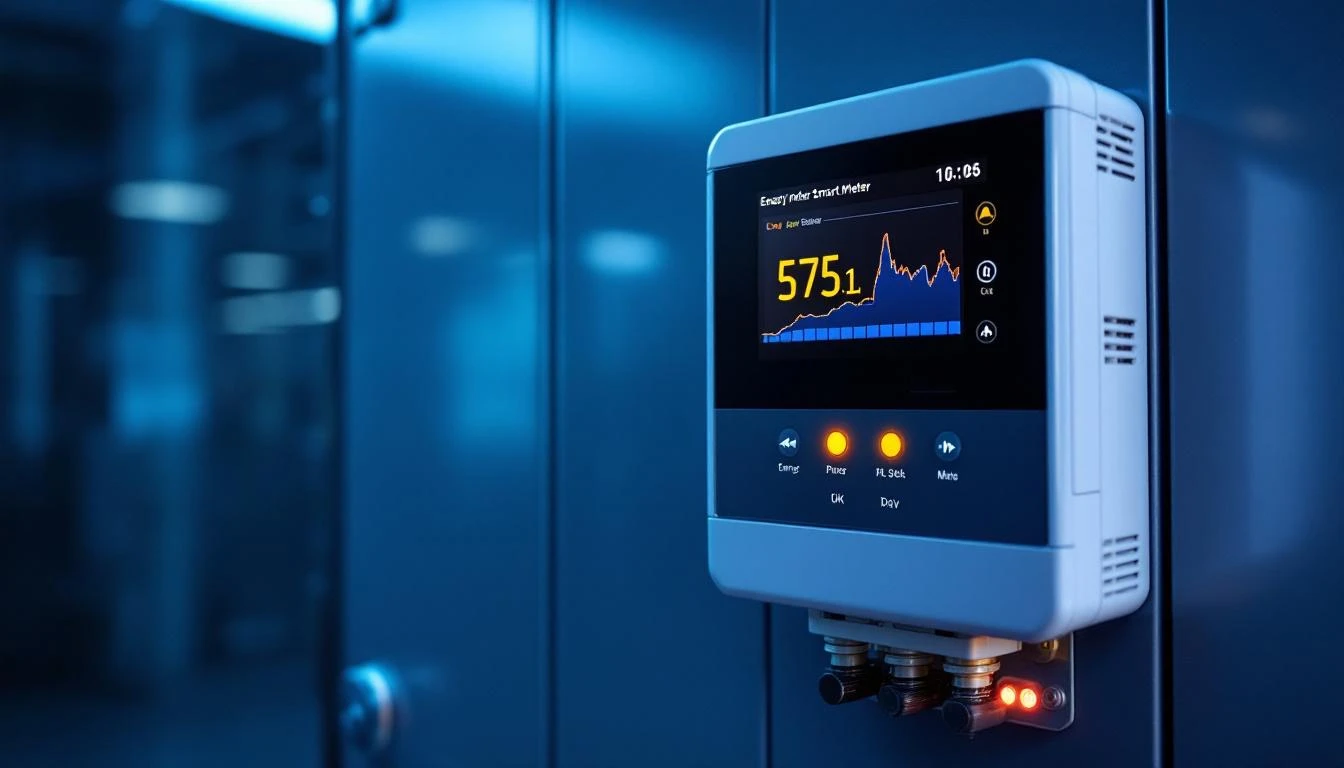
- Do your PLCs have power metering inputs? Many modern PLCs (Allen-Bradley, Siemens S7, etc.) include analog inputs connected to current transformers. If so, you might already have energy data available — you're just not reading it.
- Do you have sub-meters on individual circuits? If your facility has sub-metering per machine or per circuit, that data might be accessible via Modbus or other protocols.
- What's your utility rate structure? Understanding demand charges vs. consumption charges determines which monitoring features matter most.
Step 2: Start with Your Biggest Consumers
Don't try to monitor everything at once. Apply the 80/20 rule:
- Identify the top 10 energy consumers on your floor (motors, compressors, furnaces, CNC machines, injection molders)
- Install monitoring on those first — this covers the majority of your consumption
- Use the data to justify expanding to remaining equipment
Step 3: Establish Baselines
Collect 30–60 days of data before trying to optimize anything. You need baselines for:
- Energy consumption per machine per hour at different operating states (running, idle, setup, off)
- Energy per unit produced for each product type
- Peak demand patterns by time of day and day of week
- Shift-level comparisons
Step 4: Implement Quick Wins
The first round of savings comes from visibility alone:
- Shut down idle equipment — if Machine 5 draws 15 kW idle and you leave it running through lunch, that's $10/day wasted. Across 50 machines, it adds up fast.
- Stagger startups — don't start all machines simultaneously at shift start. Sequential startup reduces peak demand spikes.
- Fix compressed air leaks — if your compressor duty cycle increases 10% over 3 months, you likely have leaks. Energy monitoring makes this visible.
- Identify degrading motors — rising power consumption at constant load is a classic sign of bearing wear, misalignment, or insulation breakdown. Fix it before it fails.
Step 5: Connect Energy to Maintenance
This is where energy monitoring transforms from a cost-saving tool to a predictive maintenance signal. When energy consumption correlates with equipment condition, you get a non-invasive health indicator that doesn't require additional sensors.
A motor that normally draws 35A drawing 42A at the same load is telling you something. A hydraulic system whose pump runs 40% more to maintain pressure has an internal leak. A compressor with increasing cycle frequency has a demand or leak problem.
The platforms that integrate energy data with equipment health monitoring and predictive maintenance deliver the most value — because every kilowatt of waste is both a cost problem and a reliability signal.
The ROI of Energy Monitoring
For a typical mid-size manufacturer ($150M revenue, $2M annual energy cost):
| Improvement Area | Savings Potential |
|---|---|
| Idle equipment shutdown | $80,000–$150,000/year |
| Peak demand management | $40,000–$100,000/year |
| Compressed air optimization | $30,000–$60,000/year |
| Motor/drive efficiency | $20,000–$50,000/year |
| Process optimization | $30,000–$80,000/year |
| Total potential | $200,000–$440,000/year |
Against a software investment of $30,000–$100,000/year, the payback period is typically 2–6 months.
Add the value of predictive maintenance signals derived from energy data, and the ROI compounds further — every prevented unplanned downtime event saves $10,000–$100,000+ depending on your operation.
Bottom Line
Energy monitoring in manufacturing has evolved from facility-level bill tracking to machine-level intelligence that drives both cost savings and equipment reliability. The best platforms in 2026 don't treat energy as a standalone metric — they integrate it with production data, maintenance workflows, and predictive analytics.
If you're still working from monthly utility bills, you're leaving 10–25% of your energy spend on the table. And you're missing early warning signs of equipment degradation that energy signatures provide for free.
Ready to see your energy consumption at the machine level? Book a demo with MachineCDN and start tracking consumption, cutting costs, and building the data foundation your ESG team needs.