IIoT for Electronics Manufacturing: How to Monitor SMT Lines, Reflow Ovens, and Test Equipment in Real Time

Electronics manufacturing operates at the intersection of high precision and high volume. A surface-mount technology (SMT) line placing 50,000 components per hour needs every placement to be accurate to within 0.05mm. A reflow oven running a temperature profile with five distinct zones needs each zone to hold within 2°C of its setpoint. An automated optical inspection (AOI) system needs to catch every defect without generating false positives that slow the line.
When any of these parameters drift, the consequences compound fast. A single SMT nozzle running slightly off calibration can misplace 5,000 components before anyone notices. A reflow oven zone that is 8°C too hot produces solder joints that pass visual inspection but fail under thermal cycling six months later. These are the kinds of problems that IIoT monitoring was designed to catch — before they become quality escapes that reach your customers.
This guide covers how to deploy IIoT monitoring across an electronics manufacturing facility, which parameters matter most, and how real-time data changes the way electronics manufacturers manage quality, throughput, and equipment health.
Why Electronics Manufacturing Needs IIoT Differently
Electronics manufacturing is not like metal stamping or injection molding. The equipment is more complex, the tolerances are tighter, and the failure modes are subtler. A stamping press either makes a good part or a visibly bad one. An SMT line can produce boards that look perfect but harbor latent defects — cold solder joints, tombstoned components, bridged pins — that only manifest weeks or months later in the field.
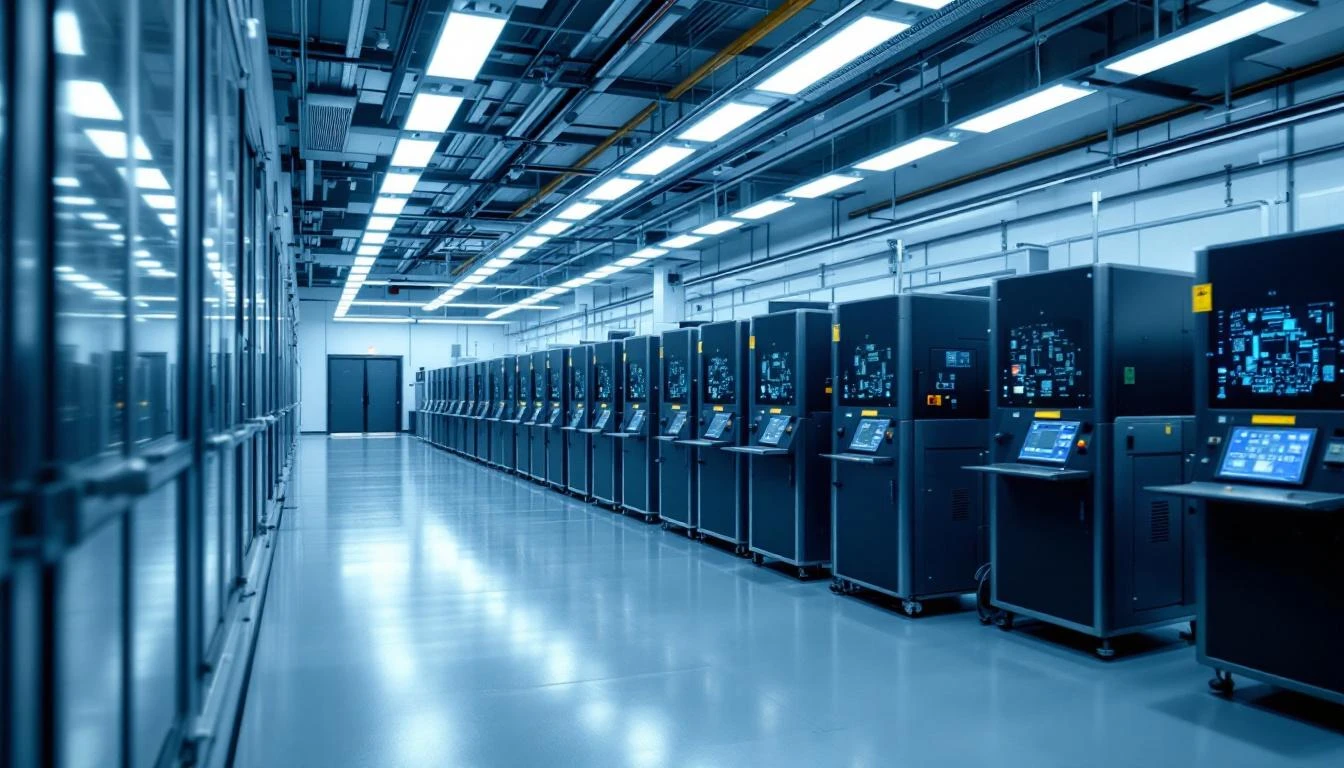
This makes real-time process monitoring in electronics manufacturing not just about equipment uptime (though that matters) — it is fundamentally about quality assurance. The data you collect from your SMT machines, reflow ovens, wave soldering systems, and test equipment is the difference between catching a process drift at 100 boards and catching it at 10,000.
Traditional approaches to electronics manufacturing quality — operator visual inspection, periodic profile validation, end-of-line testing — catch problems after they have already created defective product. IIoT monitoring catches them as they happen, or ideally, before they cause defects at all.
Critical Equipment to Monitor
SMT Pick-and-Place Machines
SMT placement machines are the heart of modern electronics manufacturing. High-speed machines from Fuji, Panasonic, Yamaha, JUKI, and Samsung place components at rates of 20,000-80,000 components per hour. Monitoring these machines provides insight into:
Placement accuracy trends. Even within specification, tracking placement accuracy over time reveals calibration drift. A nozzle that was placing at ±0.02mm last month and is now at ±0.04mm is still within spec — but the trend tells you calibration is needed before you hit the ±0.05mm limit.
Nozzle performance. Pick-up failures, placement failures, and nozzle-specific error rates identify worn or contaminated nozzles before they cause line stoppages. The best operators track this intuitively; IIoT data makes it visible to everyone.
Feeder performance. Feeder jams, mis-feeds, and component verification failures account for a significant percentage of SMT line stoppages. Monitoring feeder performance by position identifies feeders that need maintenance or replacement.
Cycle time analysis. Machine cycle time per board type reveals optimization opportunities. If Board A runs at 95% of theoretical maximum and Board B runs at 72%, the difference often points to suboptimal placement sequence programming.
Reflow Ovens
Reflow soldering is one of the most critical processes in electronics manufacturing. The temperature profile — the precise sequence of heating zones that melts solder paste and creates permanent connections — must be tightly controlled for every board.
Zone temperatures. Each heating zone in the reflow oven has a target temperature and a tolerance band. Monitoring zone temperatures in real time catches drift before it affects solder quality. A zone that creeps 5°C high over a shift might not trigger an oven alarm but will affect joint quality.
Belt speed. The speed at which boards travel through the oven directly affects the time spent in each zone. Even small variations in belt speed change the effective temperature profile. Monitoring belt speed alongside zone temperatures gives you the complete picture.
Conveyor loading. Board-to-board spacing affects heat transfer. When boards are too close together, they can shadow each other from heating elements, creating localized cool spots. Monitoring board spacing or oven loading helps maintain consistent profiles.
Nitrogen atmosphere (if applicable). Reflow ovens running in nitrogen atmosphere need consistent oxygen levels — typically under 500 ppm. Monitoring O2 levels catches leaks or supply issues before they affect soldering quality.
Wave Soldering Systems
For through-hole components and mixed-technology boards, wave soldering remains essential. Key monitoring parameters include:
Solder pot temperature. Must be maintained within ±2-3°C of setpoint. Temperature variations change solder fluidity and wetting behavior.
Wave height and geometry. Consistent wave contact is essential for reliable joints. Variations in wave height indicate pump wear or nozzle fouling.
Flux application. Flux spray density and coverage directly affect solder joint quality. Too little flux causes poor wetting; too much causes residue problems and potential reliability issues.
Preheat temperatures. Boards must reach specific preheat temperatures before contacting the solder wave. Insufficient preheat causes thermal shock; excessive preheat damages components.
Automated Test Equipment (ATE)
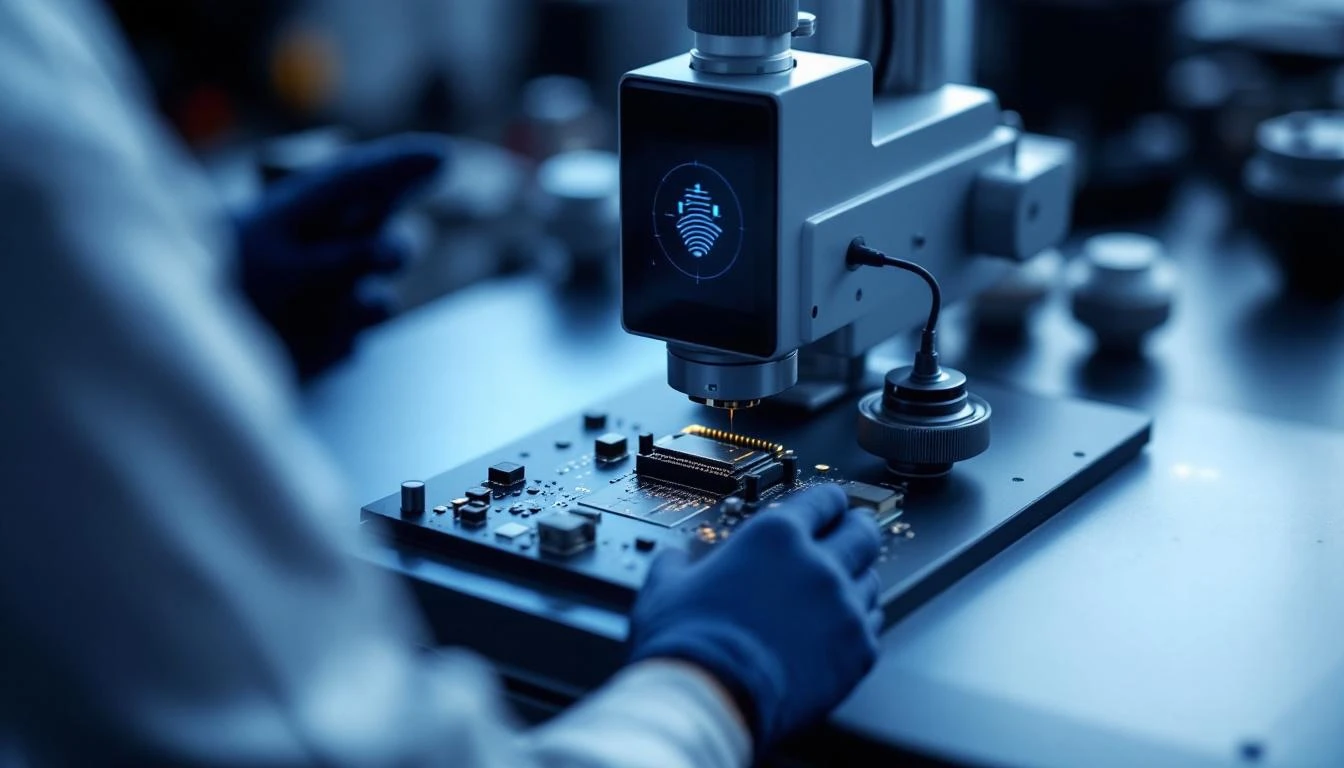
In-circuit test (ICT) systems and functional test equipment generate enormous amounts of data — test results, pass/fail rates, measurement values, test duration. Monitoring this data in an IIoT platform enables:
First-pass yield tracking by board type, by shift, and by production line. Yield drops signal upstream process issues — a reflow oven drift or an SMT placement problem that is creating defects caught at test.
Test duration trends. When test times increase gradually, it often indicates contact probe wear, fixture degradation, or measurement equipment drift. Catching this early prevents test throughput bottlenecks.
Failure mode analysis. Aggregating test failure data by component, by board location, and by failure type reveals patterns that point back to specific process parameters. If 80% of failures are open solder joints on QFP components, the reflow profile for those components needs attention.
Setting Up IIoT Monitoring for Electronics Manufacturing
Step 1: Identify Data Sources
Electronics manufacturing equipment typically exposes data through several interfaces:
PLC-based equipment (conveyors, handling systems, ovens) — data available through standard industrial protocols like Ethernet/IP and Modbus. IIoT platforms like MachineCDN read these directly.
SECS/GEM equipped tools — semiconductor and advanced electronics equipment often uses SECS/GEM (SEMI Equipment Communication Standard). Integration requires protocol-specific connectors.
Equipment vendor software APIs — many SMT machines expose data through vendor-specific software (Fuji Nexim, Panasonic PanaCIM, etc.). Integration varies by vendor.
Direct sensor data — temperature sensors, flow meters, and environmental monitors on support equipment often connect through simple analog or digital I/O.
Step 2: Prioritize by Impact
You cannot monitor everything at once. Start with the equipment that has the highest impact on quality and throughput:
- Reflow ovens — most common root cause of latent solder defects
- SMT placement machines — highest throughput and most complex failure modes
- Wave soldering — critical for through-hole quality
- AOI and ATE — quality data that validates upstream processes
- Support equipment — chillers, compressors, nitrogen generators
Step 3: Define Thresholds
For each monitored parameter, set warning and critical thresholds:
- Warning thresholds — parameter is drifting but still within specification. Alert maintenance to investigate during the next scheduled break.
- Critical thresholds — parameter has exceeded specification. Alert immediately — the line may be producing defective product.
Example for a reflow oven zone:
- Setpoint: 250°C
- Warning: ±4°C (triggers investigation)
- Critical: ±7°C (triggers line stop and immediate review)
Step 4: Build Correlation Views
The real power of IIoT in electronics manufacturing is correlating data across equipment:
- Reflow profile data + AOI defect data — does a zone temperature drift correlate with an increase in solder defects?
- SMT placement accuracy + ICT failure data — do placement accuracy degradation and test failures track together?
- Environmental data + quality data — do humidity or temperature changes in the facility correlate with process variations?
These correlations are nearly impossible to establish manually but emerge naturally when all equipment data flows into a single IIoT platform.
Quality Traceability and Compliance
Electronics manufacturers, especially those serving automotive, aerospace, medical, and defense markets, face stringent traceability requirements. IIoT monitoring directly supports these requirements:
Process parameter logging. Every board that passes through a monitored reflow oven has a time-stamped record of the exact temperatures it experienced. If a field failure occurs, you can retrieve the process conditions for that specific board.
Serial number correlation. By linking machine serial number tracking with process data, you can trace any unit back to its exact production conditions — which SMT machine placed the components, which reflow oven soldered them, and what the test results were.
Audit trails. Real-time process data stored in an IIoT platform provides the continuous process monitoring evidence that auditors require. Instead of showing periodic profile validation reports, you can show continuous monitoring data for every hour of production.
SPC integration. Statistical Process Control charts generated from real-time IIoT data replace manual SPC data collection. Automatic Cpk calculations, Western Electric rules violations, and trend analysis happen continuously rather than at scheduled intervals.
ROI for Electronics Manufacturers
The ROI of IIoT in electronics manufacturing comes from three main areas:
Reduced quality escapes. Even a small improvement in first-pass yield — say from 97% to 98.5% — saves significant cost at high volumes. For a line producing 5,000 boards per day at 0 per board, improving yield by 1.5% saves ,750 per day in rework and scrap.
Reduced downtime. Catching equipment issues before they cause line stoppages reduces unplanned downtime. For an SMT line running at ,000 per hour in throughput value, preventing even one 4-hour stoppage per month saves 8,000 annually.
Faster root cause analysis. When a quality issue arises, having real-time process data available reduces investigation time from days to hours. Instead of theorizing about what might have caused a defect, engineers can look at actual process data and identify the exact parameter that drifted.
Bottom Line
Electronics manufacturing's tight tolerances and complex process interactions make it an ideal application for IIoT monitoring. The key is monitoring the right parameters — reflow oven zones, SMT placement accuracy, wave solder temperatures, and test equipment performance — and correlating that data to identify process drifts before they become quality escapes.
The equipment is already generating the data. The question is whether you are capturing it in real time and using it to drive decisions, or whether it disappears into equipment logs that nobody reads until something goes wrong.
Book a demo to see how MachineCDN connects to your electronics manufacturing equipment and delivers real-time process monitoring, threshold alerting, and quality-correlated analytics — with a 3-minute setup per connected device.