Sustainability Through IIoT: How Smart Manufacturing Reduces Environmental Impact

Sustainability in manufacturing isn't a PR initiative anymore — it's a business requirement. Customers demand it, regulators mandate it, and energy costs make it financially necessary. The EU's Carbon Border Adjustment Mechanism (CBAM) begins full enforcement in 2026. The SEC's climate disclosure rules require public companies to report Scope 1 and Scope 2 emissions. Major OEMs like Toyota, BMW, and Apple are pushing emissions reduction requirements down their entire supply chain.
For manufacturers, the question has shifted from "Should we care about sustainability?" to "How do we actually measure and reduce our environmental impact?" The answer, increasingly, is Industrial IoT. Not because IIoT is a sustainability technology — it isn't, inherently — but because you can't reduce what you can't measure, and IIoT provides the measurement infrastructure that makes sustainability initiatives actionable.
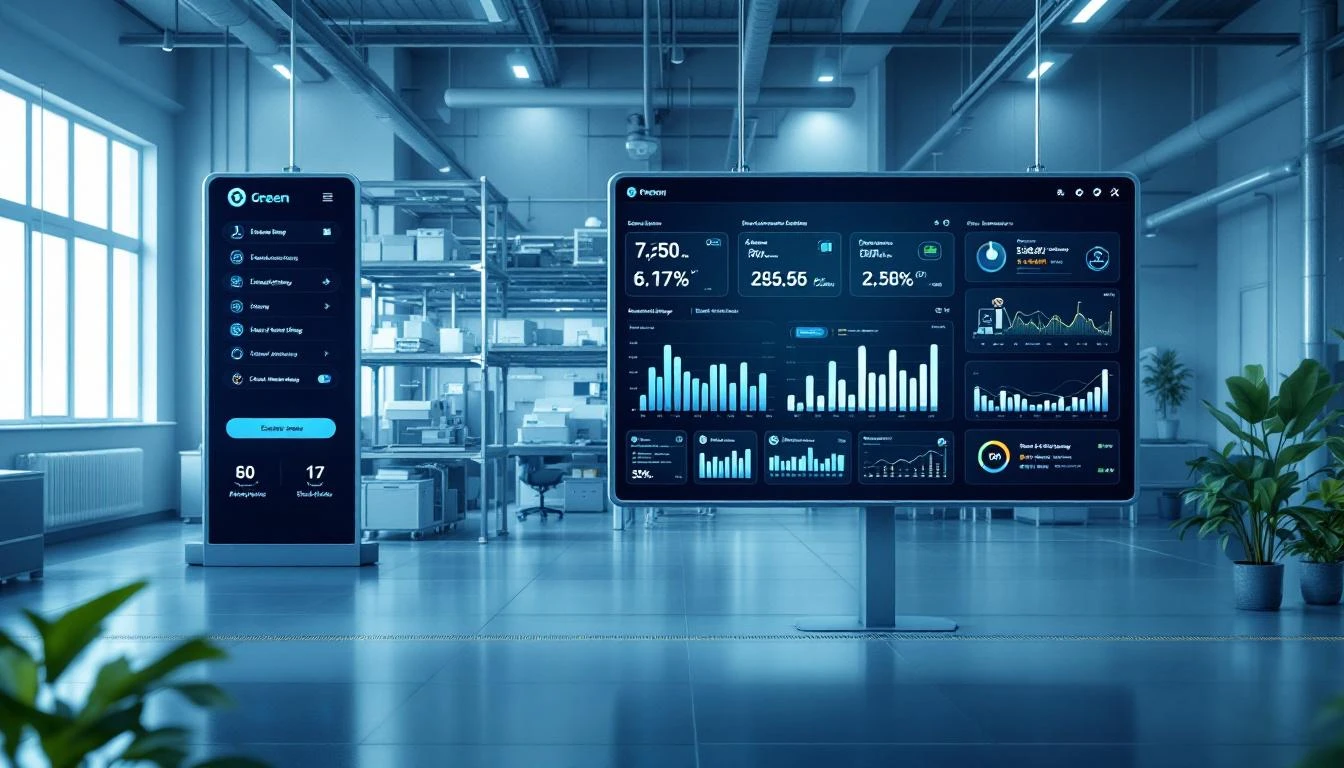
The Sustainability Challenge in Manufacturing
Manufacturing accounts for approximately 21% of global greenhouse gas emissions and consumes 54% of the world's energy, according to the International Energy Agency (IEA). Within individual plants, energy typically represents 20-30% of operating costs — second only to raw materials.
But here's what makes the manufacturing sustainability problem uniquely solvable: the waste is measurable. Unlike abstract corporate sustainability pledges, manufacturing waste shows up in specific, quantifiable forms:
- Energy waste — Machines running idle, compressed air leaks, HVAC inefficiency, lighting during non-production hours
- Material waste — Scrap, rework, overprocessing, yield losses
- Water waste — Cooling water inefficiency, process water overuse, treatment system optimization
- Emissions — Direct combustion, process emissions, fugitive releases
- Downtime-driven waste — Emergency repairs require rush shipping (carbon cost), scrapped in-process inventory, energy consumed during startup/shutdown cycles
Each of these waste categories can be measured by sensors, tracked by IIoT platforms, and reduced through data-driven decisions. The technology exists. The gap is implementation.
How IIoT Drives Manufacturing Sustainability
1. Energy Monitoring and Optimization
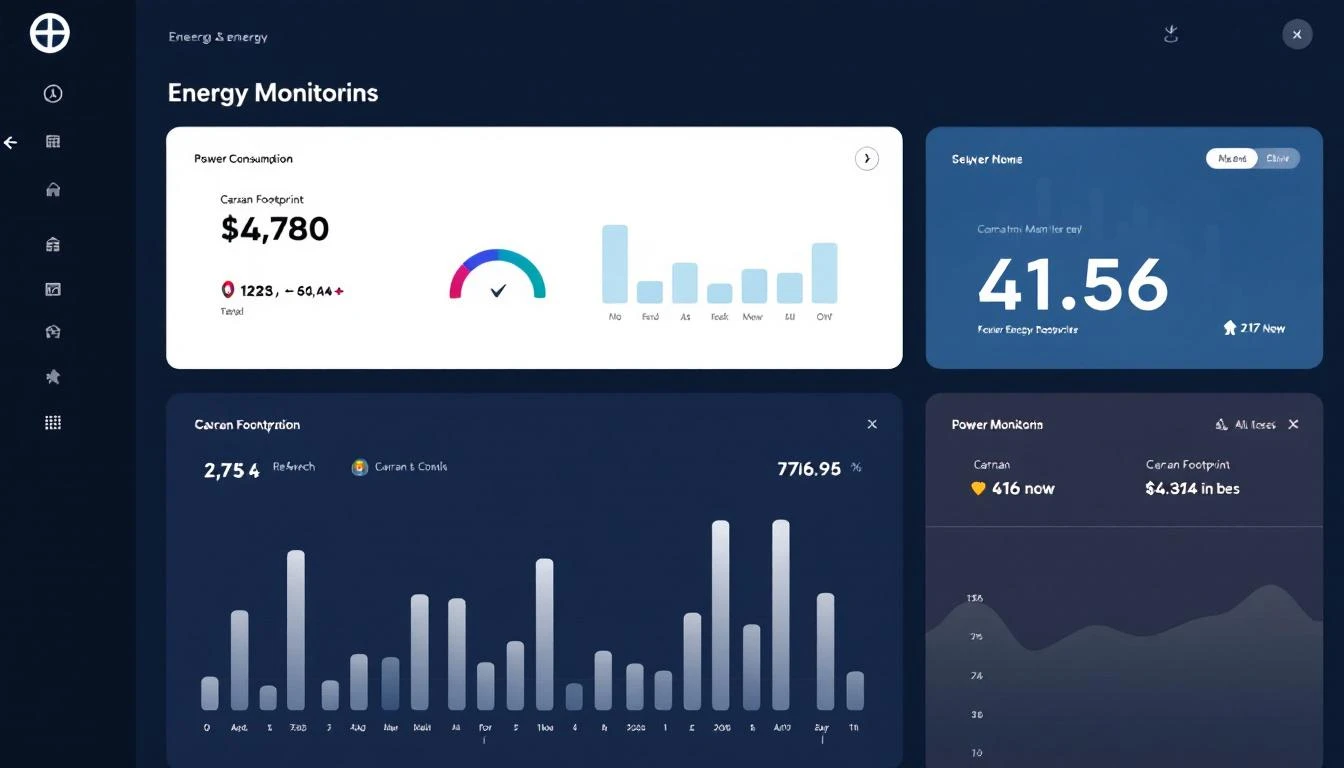
Energy monitoring is the foundation of manufacturing sustainability. You can't optimize what you don't measure, and most manufacturers have surprisingly coarse energy data — a monthly utility bill that tells them total consumption but nothing about where the energy goes.
What IIoT enables:
Machine-level energy metering. By monitoring power consumption at each machine, manufacturers can:
- Identify energy-intensive equipment running during non-production hours
- Compare energy-per-unit across shifts, operators, and recipes
- Detect equipment degradation through rising energy consumption (a motor consuming 15% more power than baseline likely has a mechanical issue)
- Optimize production scheduling to reduce peak demand charges
MachineCDN includes built-in energy consumption monitoring per machine, tracked alongside production data. This means you can calculate energy per unit produced — the metric that matters for both cost and carbon reporting.
Compressed air leak detection. Compressed air systems typically waste 25-30% of generated air through leaks, according to the U.S. Department of Energy. An IIoT platform monitoring compressor run time, pressure, and flow can detect system leaks by identifying increasing compressor duty cycles for the same production output.
HVAC and lighting optimization. Sensors monitoring occupancy, temperature, and production schedules can drive intelligent HVAC and lighting control — reducing energy consumption during non-production periods without manual intervention.
2. Waste Reduction Through OEE Improvement
OEE (Overall Equipment Effectiveness) is inherently a sustainability metric, even though it's rarely framed that way. Consider:
- Availability losses mean machines consumed energy during startup and changeover without producing output
- Performance losses mean more energy, time, and overhead were consumed per unit than necessary
- Quality losses mean materials, energy, and labor were consumed to produce scrap or rework
Improving OEE from 65% (industry average) to 85% (world-class) doesn't just increase output — it reduces the resource consumption per unit of saleable product by approximately 24%. That's a sustainability win expressed in language that CFOs understand.
IIoT platforms enable OEE improvement by providing the data foundation:
- Automated downtime tracking reveals the biggest availability losses
- Cycle time monitoring identifies performance degradation
- Quality event tracking links defects to specific conditions (machine, recipe, material batch)
For detailed OEE methodology, see our guide to calculating OEE and our OEE monitoring software comparison.
3. Predictive Maintenance and Resource Conservation
Unplanned equipment failures are sustainability disasters:
- Emergency repairs require rush-shipped parts (often air freight — massive carbon footprint)
- Collateral damage turns a $2,000 bearing failure into $50,000 of scrapped components
- Startup waste — restarting a production line generates scrap during the stabilization period
- Overstock buffers — plants compensate for unreliable equipment by carrying excess inventory (materials that may never be used)
Predictive maintenance, powered by IIoT data and AI, converts unplanned failures into planned maintenance:
- Parts ordered through standard logistics (ground shipping vs. air freight)
- Maintenance scheduled during planned downtime (no production waste)
- Collateral damage prevented (fix the bearing before it damages the shaft)
- Leaner inventory possible because equipment reliability is predictable
MachineCDN's AI-powered predictive maintenance connects anomaly detection directly to spare parts tracking and PM scheduling, creating a closed loop that minimizes the resource waste associated with reactive maintenance. Learn more in our predictive maintenance implementation guide.
4. Material Flow and Inventory Optimization
IIoT platforms that track material consumption alongside production data enable:
Yield optimization. By monitoring material input vs. finished output at granular intervals, manufacturers can identify recipes, conditions, or equipment that produce higher waste rates — and adjust.
Inventory reduction. Real-time visibility into material consumption rates eliminates the need for safety stock buffers. Materials sitting in warehouses have already consumed resources to produce and transport — reducing them is a direct sustainability win.
Batch tracking. Linking material batches to quality outcomes helps manufacturers identify raw material sources that produce the best yield, reducing trial-and-error waste.
MachineCDN includes materials and inventory management as a core feature, tracking material consumption alongside machine data and production metrics.

5. Fleet-Level Sustainability Management
For manufacturers operating multiple facilities, IIoT fleet management enables cross-plant sustainability optimization:
Benchmarking. Compare energy per unit, waste rates, and OEE across facilities to identify best practices and underperforming plants.
Production allocation. Route production to the most efficient facility when multiple plants can produce the same product. A 10% energy efficiency difference between plants is a 10% carbon difference per unit.
Centralized reporting. ESG reporting requires consolidated data across all operations. A fleet management platform provides this automatically, eliminating the manual data collection that makes sustainability reporting painful.
MachineCDN's fleet management provides centralized visibility across all locations and zones, making cross-plant sustainability analysis possible from a single dashboard.
Building a Sustainability-Driven IIoT Strategy
Step 1: Measure Your Baseline
Before setting targets, understand where you stand:
- Total energy consumption per month (by source: electricity, gas, diesel)
- Energy per unit of production (kWh/unit or BTU/unit)
- Scrap and rework rates (material waste as % of input)
- Water consumption per unit (if applicable)
- Waste-to-landfill volume
Most manufacturers don't have this data at a granular level. That's exactly why IIoT implementation is the first step.
Step 2: Identify Largest Impact Areas
Use the Pareto principle. Typically:
- 20% of machines consume 60-80% of energy
- 3-5 downtime causes account for 70% of production waste
- One or two process steps generate the most scrap
Focus IIoT monitoring and improvement efforts on these high-impact areas first.
Step 3: Deploy IIoT for Data Collection
Connect equipment to an IIoT platform that captures energy, production, downtime, and quality data. MachineCDN's 3-minute deployment and cellular connectivity means you can instrument an entire plant in days, not months — critical for sustainability programs that need to show progress quickly.
Step 4: Set Data-Driven Targets
With baseline data and continuous monitoring, set specific, measurable targets:
- Reduce energy per unit by 15% within 12 months
- Reduce scrap rate from 4.2% to 2.5%
- Eliminate 80% of unplanned downtime-related waste
- Reduce peak demand charges by 20%
Step 5: Automate and Optimize Continuously
Use IIoT data to:
- Automatically alert when energy consumption anomalies occur
- Track progress toward targets on real-time dashboards
- Identify new optimization opportunities as data accumulates
- Generate sustainability reports for ESG disclosure
The Business Case: Sustainability Pays
Sustainability through IIoT isn't a cost center — it's a profit driver:
| Initiative | Typical Savings | Payback Period |
|---|---|---|
| Energy monitoring + optimization | 10-25% energy cost reduction | 3-12 months |
| OEE improvement (65% → 80%) | 15-20% capacity increase | 2-6 months |
| Predictive maintenance | 20-40% maintenance cost reduction | 3-9 months |
| Waste reduction | 30-50% scrap reduction | 3-6 months |
| Peak demand management | 10-15% demand charge reduction | 1-3 months |
Combined, these initiatives typically deliver 5-15% total operating cost reduction — which for a $50M/year manufacturing operation means $2.5M-$7.5M in annual savings. And those savings compound as continuous improvement programs leverage increasingly granular data.
Regulatory Drivers: What's Coming
Manufacturers ignoring sustainability data collection today will scramble tomorrow:
- EU CBAM (2026): Carbon pricing on imports to the EU. Manufacturers exporting to Europe must document carbon intensity per product.
- SEC Climate Disclosure (2026-2028): Public companies must report Scope 1 (direct) and Scope 2 (electricity) emissions. Scope 3 (supply chain) reporting follows.
- Corporate sustainability due diligence: Major OEMs are requiring sustainability data from suppliers as a procurement condition.
- ISO 50001 (Energy Management): Increasingly required by enterprise customers and some regulatory frameworks.
All of these require granular, auditable energy and emissions data. IIoT platforms provide the measurement infrastructure that makes compliance possible without manual data collection.
The Bottom Line
Sustainability and operational efficiency aren't competing priorities — they're the same priority measured differently. Every watt of wasted energy, every scrapped part, and every unplanned failure represents both an environmental impact and a cost. IIoT platforms make these wastes visible, measurable, and actionable.
The manufacturers leading in sustainability aren't doing it through carbon offsets and marketing campaigns. They're doing it by instrumenting their operations, measuring their waste, and systematically eliminating it. That's what IIoT enables — not sustainability as a compliance exercise, but sustainability as continuous improvement.
For related reading, see our guides on edge computing in manufacturing, getting started with IIoT, and building a smart factory roadmap.
Ready to measure your manufacturing sustainability impact? Book a MachineCDN demo and start capturing the energy and production data that drives real environmental results.