How to Monitor Vibration in Manufacturing: A Practical Guide for Maintenance Engineers

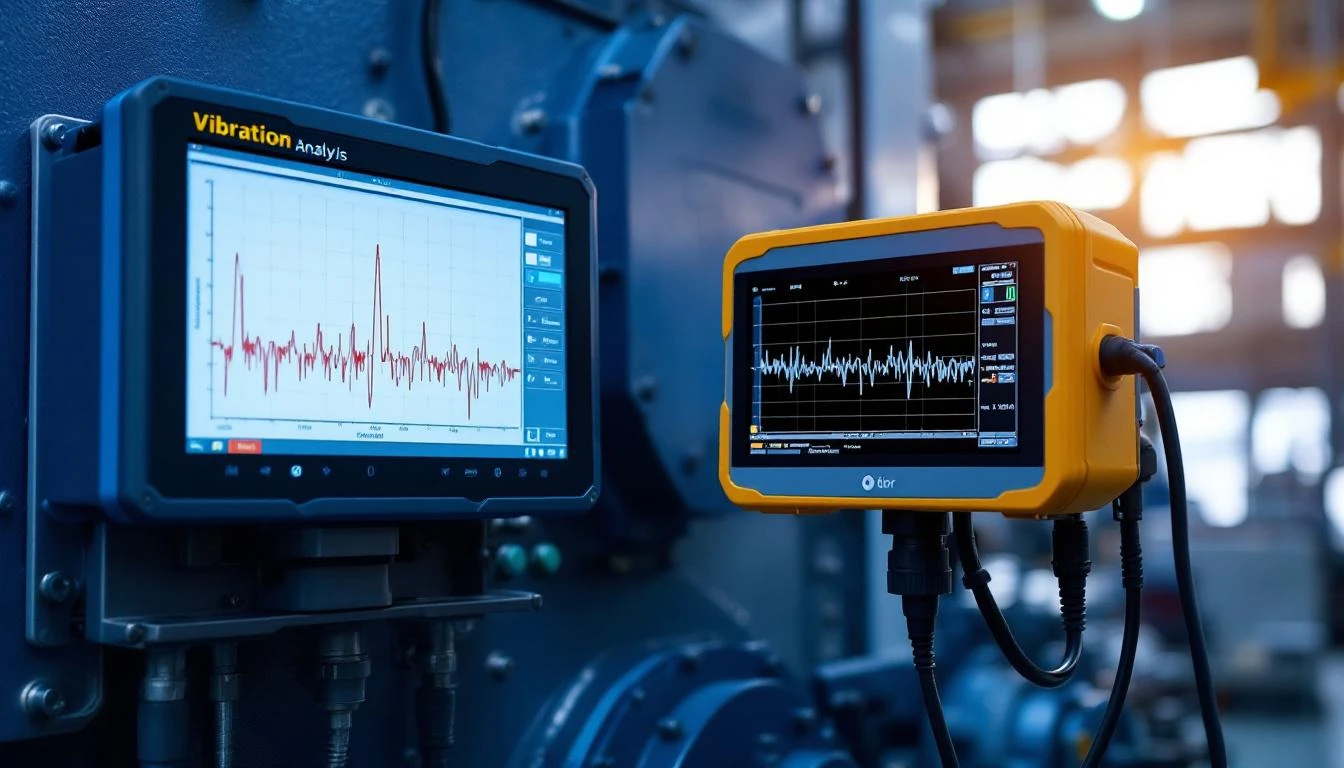
Every rotating machine tells you it's failing before it fails. The language it speaks is vibration. A bearing developing a defect produces a specific frequency signature weeks before it seizes. An unbalanced shaft creates characteristic patterns that worsen gradually. A misaligned coupling generates forces that accelerate wear on seals, bearings, and couplings simultaneously.
The question isn't whether vibration monitoring works — it's been proven for 40+ years. The question is how to implement it in a way that's practical for your plant, integrates with your existing systems, and actually drives maintenance decisions. This guide covers the fundamentals, sensor selection, analysis techniques, and how modern IIoT platforms make vibration monitoring accessible beyond the small circle of certified vibration analysts.
Why Vibration Monitoring Matters
Rotating equipment — motors, pumps, fans, compressors, gearboxes, spindles — represents the majority of critical assets in most manufacturing plants. According to a study by the Electric Power Research Institute (EPRI), bearing failures account for approximately 40% of all rotating equipment failures, and the vast majority of bearing failures produce detectable vibration changes 1-3 months before catastrophic failure.
The economics are straightforward:
- Planned bearing replacement: $2,000-$5,000 (parts + scheduled maintenance labor)
- Unplanned bearing failure: $50,000-$500,000 (parts + emergency labor + production loss + potential collateral damage)
- Vibration monitoring equipment: $500-$5,000 per monitoring point (one-time)
A single avoided unplanned failure pays for a vibration monitoring program many times over. The challenge isn't justifying the investment — it's implementing it effectively.
Vibration Fundamentals for Manufacturing Engineers
You don't need a PhD in vibration analysis to implement effective monitoring. But you do need to understand the basics.
What Creates Vibration
Every rotating machine produces vibration. In a perfectly balanced, perfectly aligned machine, vibration would be minimal. In reality, all machines have:
- Imbalance — uneven mass distribution in the rotor
- Misalignment — shaft centerlines that don't coincide
- Looseness — mechanical play in bearings, mounts, or foundations
- Bearing defects — wear or damage on inner race, outer race, rolling elements, or cage
- Gear mesh — tooth engagement patterns in gearboxes
- Electrical — electromagnetic forces in motors (often at line frequency)
- Flow-related — cavitation, turbulence, or recirculation in pumps and fans
Each fault type produces vibration at characteristic frequencies. This is what makes vibration analysis powerful — you can identify not just that something is wrong, but what's wrong and where.
Key Vibration Measurements
Overall vibration level — The total vibration energy across all frequencies. Measured in velocity (mm/s or in/s) or acceleration (g). ISO 10816 provides severity guidelines based on machine type and size:
- Good: under 1.8 mm/s (most machines)
- Acceptable: 1.8-4.5 mm/s
- Alert: 4.5-11.2 mm/s
- Danger: >11.2 mm/s
Frequency spectrum — Vibration decomposed into individual frequency components using FFT (Fast Fourier Transform). This reveals which fault type is causing elevated vibration.
Time waveform — The raw vibration signal in the time domain. Useful for identifying impacts (bearing defects), looseness (clipping), and transient events.
Envelope (demodulated) spectrum — A technique that extracts bearing fault frequencies from the high-frequency carrier signal. Essential for early-stage bearing fault detection.
Bearing Fault Frequencies
The most common vibration monitoring target is bearing health. Each bearing fault location produces vibration at a specific frequency:
- BPFO (Ball Pass Frequency, Outer Race): Defect on the outer race
- BPFI (Ball Pass Frequency, Inner Race): Defect on the inner race
- BSF (Ball Spin Frequency): Defect on a rolling element
- FTF (Fundamental Train Frequency): Cage defect
These frequencies depend on bearing geometry and shaft speed. Most vibration analysis software calculates them automatically from the bearing model number. SKF, NSK, and FAG all publish databases of bearing dimensions for this purpose.
Sensor Selection and Placement
Sensor Types
Accelerometers — The standard sensor for machine vibration monitoring. Piezoelectric accelerometers measure acceleration and are suitable for frequency ranges from 1 Hz to 10+ kHz.
- Industrial grade ($200-$800): Permanently mounted, 4-20mA or IEPE output
- MEMS-based ($50-$200): Lower cost, suitable for moderate frequency ranges
- Wireless ($300-$1,500): Battery-powered, transmit data via WiFi, Bluetooth, or proprietary protocols
Velocity sensors — Direct velocity measurement, naturally weighted toward frequencies most relevant to machine health. Less common in modern installations as accelerometers can mathematically derive velocity.
Proximity probes — Non-contact displacement sensors for measuring shaft vibration relative to the bearing housing. Standard for large rotating machinery (turbines, compressors) per API 670, but less common in general manufacturing.
Placement Guidelines
Sensor placement directly affects measurement quality. Follow these principles:
- Mount on the bearing housing — As close to the bearing as possible, on a machined flat surface
- Measure in three axes — Horizontal, vertical, and axial to capture all fault types
- Consistent mounting — Stud mount for permanent installations (best); magnetic for walkabout routes; adhesive for semi-permanent
- Avoid structural resonances — Test the mounting resonance; it should be above your analysis frequency range
- Protect the sensor — Industrial environments are harsh. Use armored cables, protective covers, and strain relief
For a comprehensive overview of vibration monitoring systems and platforms, see our vibration monitoring systems guide.
Analysis Techniques: From Basic to Advanced
Level 1: Overall Vibration Trending
What it tells you: Whether a machine's condition is changing over time.
How to do it: Measure overall vibration velocity (mm/s RMS) at regular intervals. Plot the trend. Set alarm levels based on ISO 10816 or machine-specific baselines.
Who can do it: Any maintenance technician with a handheld vibration meter.
Limitation: Tells you something is wrong but not what or where.
Level 2: Frequency Spectrum Analysis
What it tells you: Which fault type is developing (imbalance, misalignment, bearing, etc.)
How to do it: Capture FFT spectra at monitoring points. Compare current spectra to baseline. Look for amplitude increases at known fault frequencies (1X, 2X, bearing frequencies, gear mesh, etc.)
Who can do it: Maintenance engineers with basic vibration analysis training (ISO 18436-2 Category I or equivalent).
Limitation: Requires knowledge of fault frequency patterns and machine operating speeds.
Level 3: Advanced Diagnostics
What it tells you: Specific fault severity and remaining useful life estimates.
Techniques include:
- Envelope analysis for early-stage bearing faults
- Order analysis for variable-speed equipment
- Cross-channel phase analysis for misalignment diagnosis
- Cepstrum analysis for gearbox faults
- Modal analysis for structural resonance identification
Who can do it: Certified vibration analysts (ISO 18436-2 Category II-III).
Level 4: AI-Powered Automated Analysis
What it tells you: Automated fault detection and severity assessment without human analyst involvement.
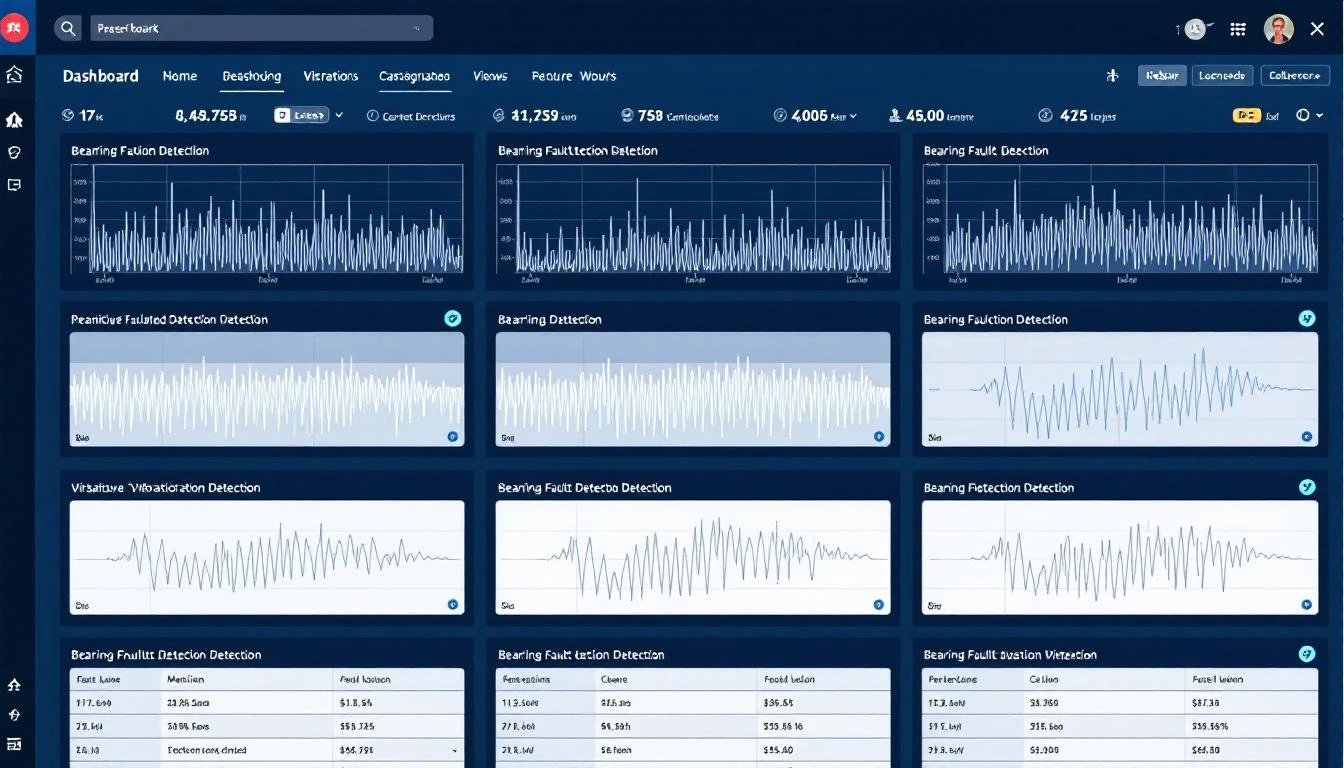
Modern IIoT platforms like MachineCDN use AI to:
- Detect pattern changes that indicate developing faults
- Classify fault types based on trained models
- Estimate severity and recommend maintenance timing
- Reduce false alarms through contextual analysis
- Alert maintenance teams through integrated alarm management
Who can do it: The software does it — maintenance engineers receive actionable alerts rather than raw data. This democratizes vibration monitoring, making it practical for plants without dedicated vibration analysts.
Integration with IIoT and Maintenance Systems
Vibration monitoring in isolation is a data collection exercise. Integrated with an IIoT platform, it becomes part of a comprehensive maintenance intelligence system.
What Integration Looks Like
- Vibration data feeds into the IIoT platform alongside other machine data (temperatures, pressures, cycle counts, power consumption)
- AI analyzes multiple data streams together — a bearing developing a fault often shows correlated changes in temperature and power consumption before the vibration signature becomes obvious
- Alerts flow to maintenance teams through the same system that manages spare parts, PM schedules, and work orders
- Downtime events link back to predictions — closing the loop on prediction accuracy
MachineCDN handles this integration natively. Equipment data from PLCs (including vibration sensors wired to analog inputs) flows through the same edge-to-cloud pipeline as all other machine data. Threshold alerts with approaching and active states give maintenance teams graduated warnings. Spare parts tracking ensures the right parts are available when maintenance is needed.
Connecting to Existing Equipment
Most manufacturing equipment already has vibration data available — it's just not being collected. Modern PLCs can read analog signals from accelerometers wired to 4-20mA input cards. Many variable frequency drives (VFDs) measure motor vibration internally and make it available via Modbus or Ethernet/IP.
MachineCDN connects to PLCs via Ethernet/IP and Modbus, which means vibration data from PLC-connected sensors or VFDs flows automatically alongside all other machine data. No separate vibration monitoring system, no additional software licenses, no parallel infrastructure.
Building Your Vibration Monitoring Program
Phase 1: Identify Critical Assets
Not every machine needs continuous vibration monitoring. Use a criticality ranking based on:
- Production impact: What happens if this machine stops? (Line down vs. single station vs. redundant)
- Repair cost: How expensive is an unplanned failure?
- Failure history: Which machines fail most often?
- Replacement lead time: How long to get parts?
Focus your initial monitoring on the top 10-20% most critical rotating equipment.
Phase 2: Establish Baselines
Before you can detect changes, you need to know what "normal" looks like. Collect vibration data from each monitoring point under normal operating conditions. Record:
- Operating speed
- Load condition
- Temperature
- Overall vibration level
- Frequency spectrum
Multiple measurements over 2-4 weeks establish a reliable baseline.
Phase 3: Set Alert Thresholds
Configure two-level alerting:
- Warning level (approaching threshold): Typically 2-3X baseline. Indicates condition change — schedule inspection at next opportunity
- Alarm level (active threshold): Typically 5-10X baseline. Indicates significant deterioration — take action within days, not weeks
MachineCDN's threshold alerting system supports both approaching and active alert levels, giving maintenance teams lead time before conditions become critical.
Phase 4: Integrate and Automate
Connect vibration monitoring to your broader maintenance strategy:
- Link alerts to PM task scheduling
- Track spare parts availability for likely repairs
- Record maintenance actions and correlate with vibration improvements
- Use AI to refine detection and reduce false positives over time
The Bottom Line
Vibration monitoring is one of the highest-ROI maintenance technologies available. The physics is well-understood, the sensors are affordable, and the analysis techniques range from simple trending to sophisticated AI. The biggest shift in the last decade isn't the technology — it's accessibility. Modern IIoT platforms integrate vibration monitoring into the same infrastructure that handles all your equipment data, eliminating the need for separate systems, separate software, and dedicated vibration analysts.
For manufacturing plants protecting rotating equipment — which is virtually all of them — vibration monitoring isn't optional. It's the difference between planning your maintenance and having your equipment plan it for you.
For related maintenance strategies, explore our guides on equipment health monitoring, implementing predictive maintenance, and reducing unplanned downtime.
Ready to protect your rotating equipment with AI-powered monitoring? Book a MachineCDN demo and start monitoring your most critical assets in minutes.