IoTFlows vs MachineCDN for Materials and Inventory Tracking: The Missing Feature in Most IIoT Platforms

Most IIoT platforms obsess over machine health and OEE — and for good reason. Unplanned downtime costs manufacturers an average of $260,000 per hour according to Aberdeen Research. But there's a massive blind spot in the IIoT market: materials and inventory tracking. When your injection molder runs out of resin at 2am, perfect OEE scores don't matter. Here's how IoTFlows and MachineCDN handle materials — and why this gap could cost you more than you think.
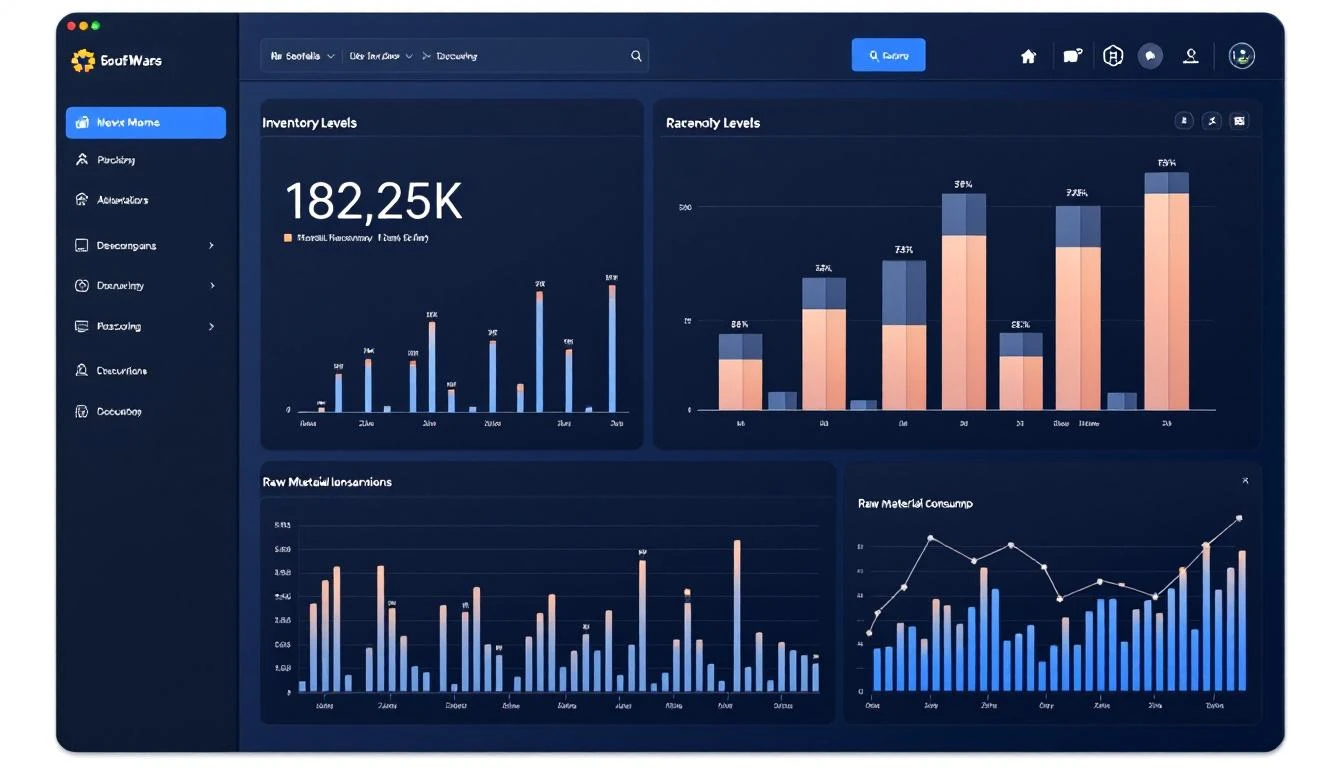
The Materials Visibility Problem
Manufacturing runs on three things: machines, people, and materials. IIoT platforms have become excellent at monitoring machines. Workforce management systems handle people. But materials — the raw inputs that actually become your product — often fall into a visibility gap between ERP systems (which track what you ordered) and the factory floor (where materials are actually consumed).
This gap creates real problems:
- Material stockouts during production — A hopper runs empty during second shift, but nobody knows until the machine faults
- Phantom inventory — ERP says you have 500 kg of polymer, but 200 kg was wasted from bad processing parameters last week
- Shift-based consumption mysteries — Third shift consistently uses 15% more material than first shift, but without granular tracking, you can't figure out why
- Cross-plant material imbalances — One plant is sitting on six months of safety stock while another is emergency-ordering the same material
IoTFlows and Materials: The Gap
IoTFlows is a strong platform for machine health monitoring. Their SenseAi sensors excel at vibration analysis, acoustic monitoring, and AI-powered health scoring. Their OEE tracking captures availability, performance, and quality metrics.
But IoTFlows does not include a materials and inventory tracking module.
This means:
- No hopper monitoring: IoTFlows can't tell you real-time fill levels on your material hoppers, bins, or silos
- No material consumption reports: You can't see how much raw material each machine consumed during a shift
- No inventory tracking: Material levels across your plant aren't visible in the IoTFlows dashboard
- No material location management: You can't track where materials are stored within your facility
For plants where material costs represent 40-70% of cost of goods sold (common in plastics, food & beverage, chemical, and paper manufacturing), this is a significant limitation.
The workaround? Most IoTFlows users supplement with a separate ERP system (SAP, Oracle, or custom) for materials tracking. This means two systems, two sets of data, two dashboards — and the gap between machine data and material data persists.
MachineCDN Materials and Inventory Management
MachineCDN includes materials and inventory tracking as a built-in module, not a bolt-on or integration. The platform reads material-related data points directly from PLCs — the same way it reads machine health data — and presents it alongside your production and maintenance information.
Material Usage Reports
MachineCDN generates detailed material usage reports that show:
- Which machines consumed which materials during a specified time period
- Consumption by shift — compare first, second, and third shift material usage for the same machine
- Consumption by zone — aggregate material use across production areas
- Historical trends — see consumption patterns over weeks and months to spot waste
These reports are generated from actual PLC data — weights measured by load cells, counts from material feeders, flow rates from meters — not estimates or ERP transactions entered hours after the fact.
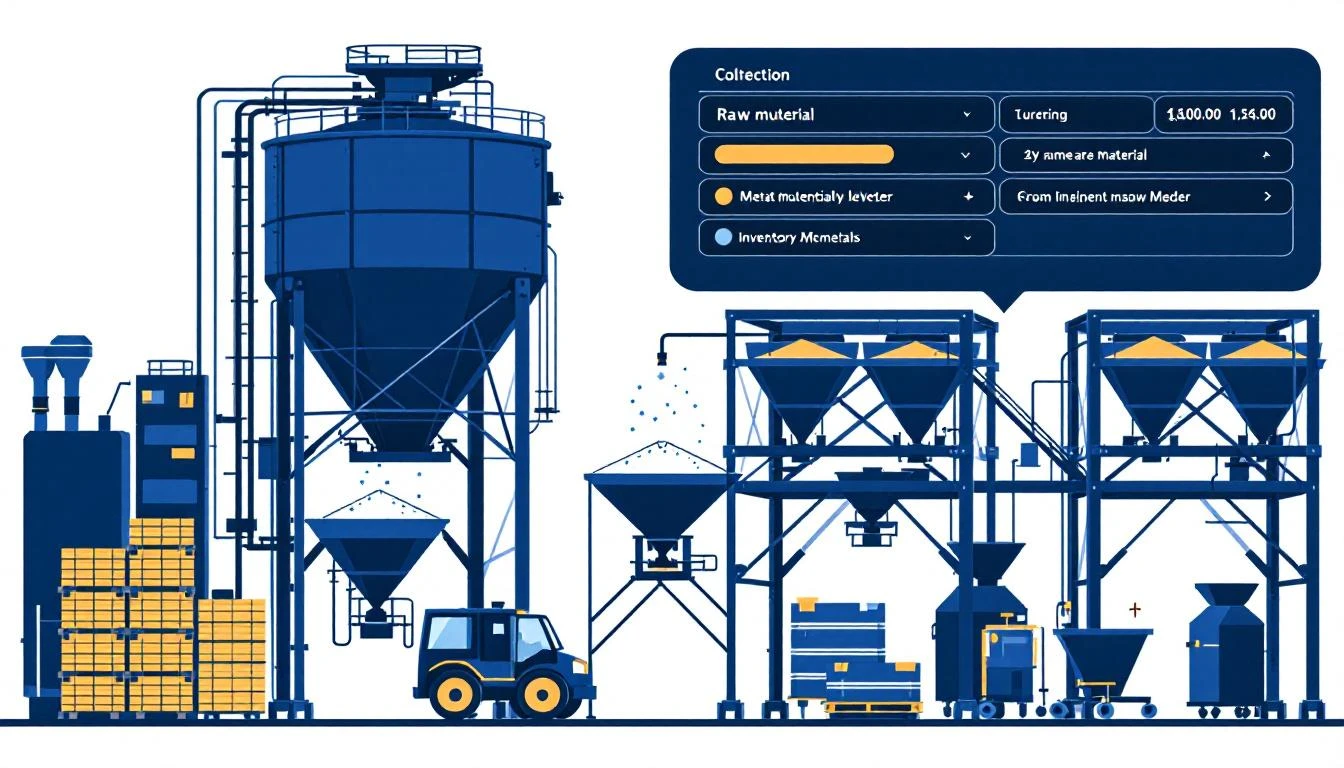
System Inventory Reports
The system inventory view provides a real-time picture of material levels across your facility:
- Current inventory by material type — see exactly what's on hand right now
- Consumption rate tracking — how fast are you burning through each material?
- Reorder point alerts — get notified before you hit minimum stock levels
- Historical inventory reports — track inventory changes over time
Scheduled Shift Reports
MachineCDN's scheduled shift reporting connects material consumption directly to production output:
- Material consumed per shift — quantified from PLC data, not manual entry
- Output vs. consumption ratios — identify which shifts have higher scrap rates based on material efficiency
- Shift handover data — incoming shift knows exactly what material levels they're inheriting
Reports appear automatically 15-20 minutes after each shift ends — no manual data collection required.
Hopper and Silo Monitoring
For continuous process manufacturers (plastics, food, cement, chemicals), MachineCDN monitors material storage levels in real time:
- Fill level percentage per hopper/silo
- Consumption rate — how fast is the level dropping?
- Predicted empty time — at current consumption rate, when will this hopper need refilling?
- Cross-hopper comparison — see all hoppers across a zone or location
This data comes directly from PLC-connected level sensors (ultrasonic, load cell, or capacitive) that are typically already installed on modern material handling equipment.
Material Location Management
The materials module includes location awareness:
- Where materials are stored within your facility (warehouse, staging area, line-side)
- Material movement tracking — when materials move between locations
- Job-level tracking — which job order consumed which material batch
Head-to-Head: Materials and Inventory
| Materials Feature | IoTFlows | MachineCDN |
|---|---|---|
| Material usage reports | ❌ | ✅ By machine, shift, zone |
| System inventory tracking | ❌ | ✅ Real-time |
| Hopper/silo level monitoring | ❌ | ✅ With prediction |
| Scheduled shift material reports | ❌ | ✅ Auto-generated |
| Material consumption by shift | ❌ | ✅ |
| Material location tracking | ❌ | ✅ |
| Reorder point alerts | ❌ | ✅ |
| Historical consumption trends | ❌ | ✅ |
| Integration with machine health data | N/A | ✅ Same platform |
| PLC-based material data | N/A | ✅ Direct from sensors |
Why Materials Tracking Belongs in Your IIoT Platform
Some manufacturers argue that materials tracking belongs in ERP, not IIoT. Here's why that's changing:
Real-Time vs. Transactional
ERP systems track materials through transactions — purchase orders, receipts, production orders, consumption entries. These transactions happen hours or days after the actual material movement. IIoT platforms read material data in real time from sensors already connected to PLCs.
The difference: your ERP might say you have 1,000 kg of resin. Your IIoT platform shows you have 650 kg — because 350 kg was consumed since the last ERP transaction was entered.
Machine-Material Correlation
When you combine machine health data with material consumption data in one platform, you unlock insights that neither system provides alone:
- Material waste from machine issues: A worn screw on an extruder wastes 8% more material than a healthy one. MachineCDN shows the correlation between screw wear indicators and material consumption spikes.
- Quality impact: Temperature drift on a process machine changes material properties. Seeing temperature data alongside material batch data reveals which batches were affected.
- Energy-material optimization: Some materials process more efficiently at specific parameters. Combined energy and material monitoring helps find the sweet spot.
One Dashboard, Not Two
Manufacturing engineers don't want to check IoTFlows for machine health, then switch to SAP for material levels, then check a spreadsheet for shift reports. MachineCDN puts machine status, materials, spare parts, energy, and maintenance on one platform — because on the factory floor, these things aren't separate problems.
Industries Where This Matters Most
Materials tracking is especially critical in:
- Plastics manufacturing: Resin costs are the largest cost of goods. Tracking consumption per machine, per job, per shift directly impacts profitability.
- Food and beverage: Ingredient tracking has regulatory implications. Real-time monitoring prevents overfill and underfill.
- Chemical processing: Batch tracking with material ratios is critical for quality and safety.
- Packaging: Film usage, adhesive consumption, and substrate tracking drive per-unit costs.
- Building materials: Cement, aggregate, and additive ratios affect product quality and cost.
The Bottom Line
IoTFlows is a capable platform for vibration-based machine health monitoring. But if materials represent a significant portion of your cost structure — and for most manufacturers, they do — the absence of materials and inventory tracking means you'll need a second system.
MachineCDN provides materials management, inventory tracking, hopper monitoring, and shift-based consumption reporting alongside machine health, maintenance, and fleet management — all from the same PLC data your equipment is already collecting.
Your machines don't run without materials. Your IIoT platform shouldn't ignore them.
See materials tracking in action. Book a demo with MachineCDN and bring your material cost breakdown — we'll show you how real-time visibility reduces waste and prevents stockouts.