IoTFlows vs MachineCDN for Spare Parts and Maintenance Management: Which Platform Keeps Your Parts Room Organized?

Every maintenance engineer knows the feeling: a critical machine goes down, the fault is identified in minutes, but the repair takes four hours because the right spare part is sitting in a warehouse 200 miles away. Or worse — it is on the shelf six feet from the machine, but nobody knew it was there because the parts inventory lives in a spreadsheet that was last updated three months ago.
Spare parts management and preventive maintenance scheduling are where IIoT platforms prove their value beyond simple monitoring. Both IoTFlows and MachineCDN offer machine monitoring capabilities, but their approaches to connecting real-time data with maintenance workflows differ significantly. This comparison breaks down which platform actually closes the loop between detecting a problem and fixing it.
The Spare Parts Problem in Manufacturing
According to a Plant Engineering survey, 36% of unplanned downtime events are extended by at least two hours because the correct spare part was not immediately available. For a plant running at ,000 per hour in downtime costs, that is 0,000 per incident — not from the failure itself, but from poor parts management.
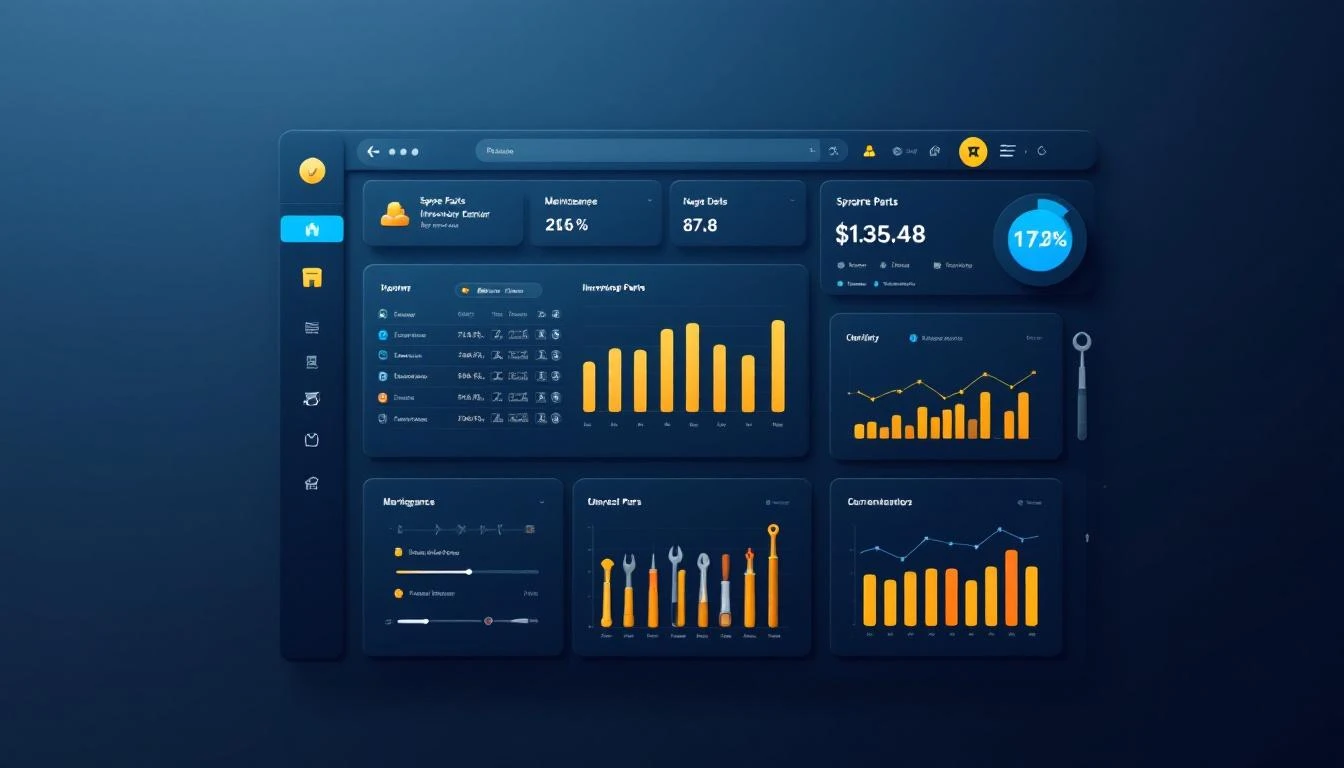
The root cause is almost always disconnected systems. The monitoring tool knows the machine is failing. The CMMS knows what parts are in stock. But nothing connects the two. When a bearing shows early signs of wear, nobody checks whether the replacement bearing is on the shelf. When it finally fails three weeks later, the parts room is empty because the last one was used on a different machine and never reordered.
Modern IIoT platforms have the opportunity to fix this by connecting real-time machine health data to spare parts inventory and maintenance scheduling. The question is: do IoTFlows and MachineCDN actually deliver on that promise?
IoTFlows: Strong Monitoring, Limited Maintenance Management
IoTFlows excels at machine health monitoring. Their SenseAi sensors detect seven machine health metrics — cavitation, looseness, imbalance, lubrication issues, alignment problems, bearing wear, and temperature anomalies. Their AI generates health scores and can flag machines that need attention.
However, IoTFlows does not include built-in spare parts tracking or inventory management. When the platform detects that a bearing is degrading, it alerts your maintenance team — but it does not:
- Check whether a replacement bearing is in your parts inventory
- Show which other machines use the same bearing
- Track consumption history to predict when you will run out
- Link the spare part to a scheduled preventive maintenance task
- Notify purchasing when stock falls below reorder thresholds
To get these capabilities with IoTFlows, you need a separate CMMS (Computerized Maintenance Management System) like Fiix, UpKeep, or Limble — plus a custom integration between IoTFlows alerts and your CMMS work orders. That integration typically requires middleware, API development, and ongoing maintenance.
This is a common pattern in the IIoT space: platforms that monitor machines brilliantly but leave the last mile of the maintenance workflow — parts, scheduling, task management — to external systems. It works, but it adds cost, complexity, and the ever-present risk of integration drift.
MachineCDN: Spare Parts and PM Scheduling Built In
MachineCDN takes a different approach by including spare parts tracking and preventive maintenance scheduling as native features of the platform. These are not bolt-on modules or premium add-ons — they are part of the same system that handles machine monitoring, alarms, and OEE tracking.
Here is what that means in practice:
Spare Parts Inventory: MachineCDN maintains a spare parts catalog tied to your machine fleet. Each spare part is associated with the specific machines that use it, so when a machine needs attention, your team can instantly see which parts are available, where they are stored, and how many are in stock.
Machine Parts Mapping: Every machine in MachineCDN has a parts list — the components that machine uses and that might need replacement. When a machine starts showing alarm patterns consistent with a specific component failure, the platform shows you exactly which part is needed and whether it is in inventory.
Parts Consumption History: MachineCDN tracks when spare parts are used, on which machines, and by whom. Over time, this builds a consumption profile that helps you predict future demand. If you have been replacing motor bearings on Machine 7 every 90 days, the platform has the data to show that pattern and prompt proactive reordering.
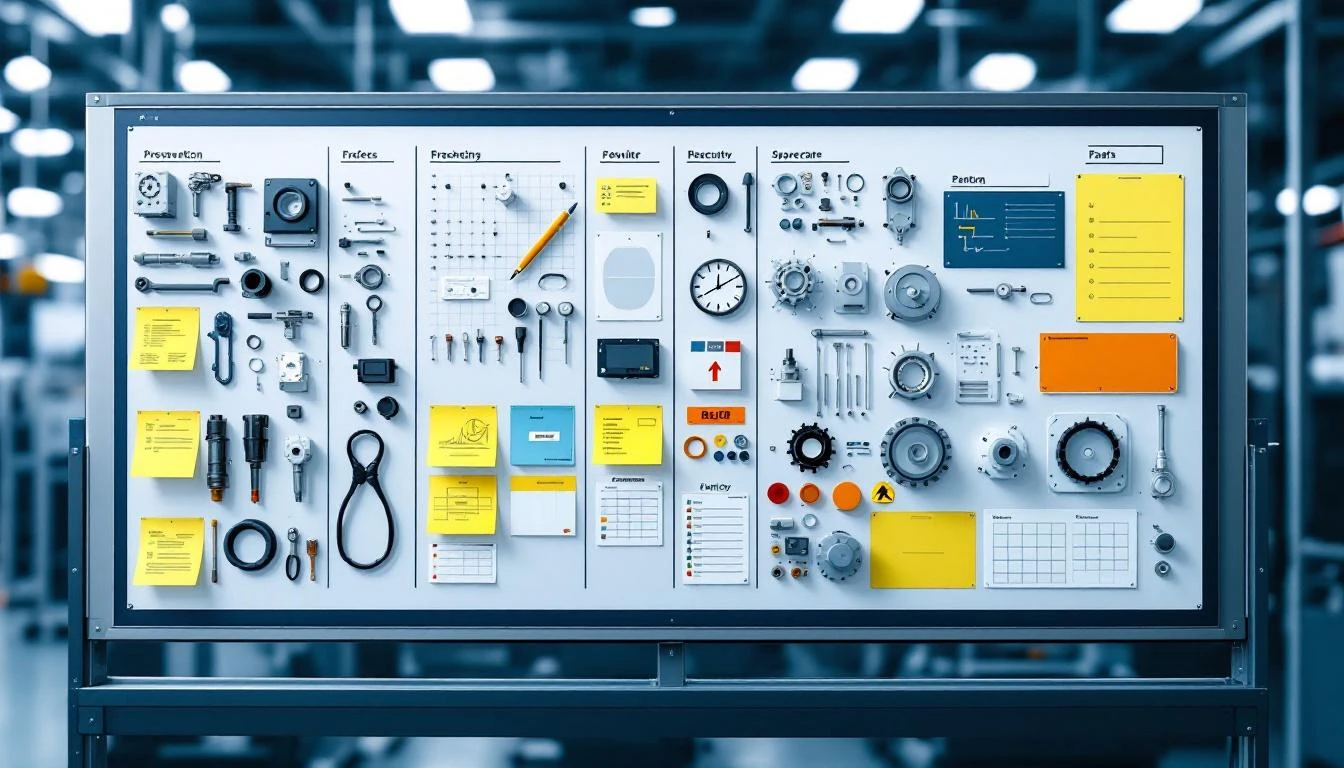
Preventive Maintenance Task Scheduling: MachineCDN includes a full PM scheduling system. You can create recurring maintenance tasks — oil changes, filter replacements, belt inspections — and assign them to specific technicians. Each task can include a parts list showing exactly which spare parts are needed.
PM Alerts and Notifications: When a PM task comes due, MachineCDN notifies the assigned technician and highlights which parts are needed. If a required part is out of stock, the system flags it before the task is due — not when the technician shows up with a wrench and discovers the part is missing.
Task Comments and Attachments: Technicians can add notes, photos, and documents to PM tasks. Over time, this builds institutional knowledge that survives employee turnover — a critical advantage in an industry where the average maintenance technician tenure is under three years.
Head-to-Head: Maintenance Management Comparison
Spare Parts Inventory:
- IoTFlows: Not included. Requires separate CMMS.
- MachineCDN: Built-in. Parts catalog with machine associations, stock levels, and location tracking.
Machine-to-Parts Mapping:
- IoTFlows: Not available natively.
- MachineCDN: Yes. Every machine has an associated parts list showing which components it uses.
Preventive Maintenance Scheduling:
- IoTFlows: Basic AI scheduling for production jobs. Not a PM task management system.
- MachineCDN: Full PM scheduling with recurring tasks, assignees, due dates, and parts requirements.
Task Assignment and Tracking:
- IoTFlows: Not a feature of the platform. Requires CMMS integration.
- MachineCDN: Native. Assign tasks to technicians, track completion, add comments and attachments.
Parts Consumption Reporting:
- IoTFlows: Not available.
- MachineCDN: Built-in reports showing parts usage by machine, by period, and by technician.
Automated PM Notifications:
- IoTFlows: Limited to machine health alerts. No PM task notifications.
- MachineCDN: PM alerts with parts availability checks and technician notifications.
Work Order Documentation:
- IoTFlows: Not available natively.
- MachineCDN: Task comments, photo attachments, and document uploads per PM task.
Why Built-In Spare Parts Tracking Changes the Game
The value of having spare parts management inside your IIoT platform — rather than in a separate CMMS — comes down to context. When your monitoring system and your parts system are the same system, the connections happen automatically:
Alarm-to-Parts Connection: When a machine triggers an alarm that is historically associated with a specific component failure, your team does not have to cross-reference between two systems. The alarm, the machine, the affected component, and the current parts inventory all appear in the same view.
PM-to-Parts Verification: When a PM task is scheduled, the system can verify that all required parts are in stock before the task comes due. No more showing up for a scheduled maintenance window only to discover that the filter you need was used last week and nobody reordered it.
Consumption-to-Procurement Feedback: As parts are consumed through PM tasks and corrective maintenance, the consumption data feeds back into inventory planning. Over time, you build an accurate model of which parts you need, how often, and in what quantities — replacing gut-feel purchasing with data-driven procurement.
Fleet-Wide Parts Sharing: For multi-plant operations, MachineCDN's fleet management shows spare parts inventory across all locations. If your Chicago plant is out of a specific motor but your Detroit plant has three in stock, that visibility prevents a 00 part from causing 0,000 in downtime.
The Total Cost of Separate Systems
Running IoTFlows for monitoring plus a separate CMMS for maintenance management is a viable approach, but it carries real costs:
Software Licensing: Two platform subscriptions instead of one. A mid-tier CMMS like Fiix or UpKeep runs 5-75 per user per month on top of IoTFlows licensing.
Integration Development: Connecting IoTFlows alerts to CMMS work orders requires API development, typically 40-80 hours of engineering time for initial setup.
Integration Maintenance: APIs change, authentication tokens expire, data schemas evolve. Budget 10-20 hours per quarter for integration maintenance.
Training Burden: Your maintenance team now needs to learn two platforms instead of one. Training costs are real — not just the formal sessions, but the ongoing cognitive load of context-switching between systems.
Data Reconciliation: When machine records live in one system and maintenance records live in another, discrepancies are inevitable. Which system is the source of truth for machine location? For parts inventory? For maintenance history? Every reconciliation effort burns hours.
For a plant running 50 machines with 10 maintenance staff, the annual cost of running separate monitoring and CMMS platforms versus a unified system can easily reach 0,000-00,000 when you include all of the above.
When IoTFlows Plus CMMS Makes Sense
The separate-systems approach works best when:
- You already have a mature CMMS deployment with years of maintenance history
- Your primary need is vibration-based condition monitoring for rotating equipment
- Your IT team has bandwidth to build and maintain custom integrations
- Energy monitoring and materials tracking are handled by other systems
- You are willing to trade simplicity for best-of-breed specialization in each area
If your CMMS is deeply embedded in your operations and switching would be more disruptive than integrating, the IoTFlows-plus-CMMS path makes sense.
When MachineCDN Makes More Sense
The unified approach works best when:
- You are deploying IIoT for the first time and do not have an existing CMMS
- Your current maintenance management is spreadsheet-based or paper-based
- You want a single platform for monitoring, maintenance, parts, and reporting
- Your IT resources are limited and custom integrations are not realistic
- You need to be operational quickly — days, not months
- Multi-plant operations where parts sharing and fleet visibility matter
For plants where maintenance management and machine monitoring are both greenfield opportunities, starting with a unified platform eliminates the integration tax permanently.
The Maintenance Loop: From Detection to Resolution
The ultimate measure of a maintenance platform is how quickly it closes the loop from problem detection to resolution. Consider a scenario:
With IoTFlows + CMMS: SenseAi detects bearing vibration signature → IoTFlows generates alert → alert triggers integration → CMMS creates work order → technician opens CMMS → technician checks parts inventory in CMMS → technician goes to parts room → technician performs repair → technician closes work order in CMMS. Time from detection to resolution: depends on integration reliability and cross-system workflow.
With MachineCDN: Alarm triggers in MachineCDN → technician sees alarm with associated machine parts list → parts availability shows two replacement bearings in stock → technician grabs the part → performs repair → closes the alarm and logs parts usage → inventory auto-updates. Time from detection to resolution: limited only by physical repair time.
The difference is not seconds — it is the elimination of system-hopping, integration delays, and the cognitive load of working across multiple platforms.
Bottom Line
IoTFlows delivers excellent machine health monitoring through vibration and acoustic analysis. But when it comes to the full maintenance workflow — spare parts tracking, PM scheduling, task management, parts consumption reporting — you need to add a separate CMMS and build custom integrations.
MachineCDN includes spare parts management and preventive maintenance scheduling as built-in features, connected directly to the same machine monitoring data that drives your alarms and OEE calculations. The result is a shorter loop from problem detection to resolution, lower total system cost, and simpler operations for your maintenance team.
Book a demo to see how MachineCDN connects real-time machine health data to spare parts inventory and PM scheduling — all in one platform, with the same 3-minute device setup.