IoTFlows vs MachineCDN for Energy Monitoring: Which IIoT Platform Tracks Real Power Consumption?

Energy costs now rank as the second-largest operating expense for most manufacturers, right behind labor. With industrial electricity rates climbing 12-18% year over year across North America and Europe, plant managers need granular visibility into exactly where power is being consumed — not just a monthly utility bill that tells them nothing actionable.
Both IoTFlows and MachineCDN offer industrial monitoring platforms, but their approaches to energy tracking differ fundamentally. This comparison breaks down how each platform handles energy consumption data, where the gaps are, and which one gives your maintenance and operations teams the data they actually need to cut costs.
Why Energy Monitoring Matters More Than Ever in Manufacturing
The days of treating electricity as a fixed overhead cost are over. According to the U.S. Energy Information Administration, industrial electricity prices have risen 23% since 2020, and manufacturers consuming over 1 MW face demand charges that can double their effective rate during peak periods.
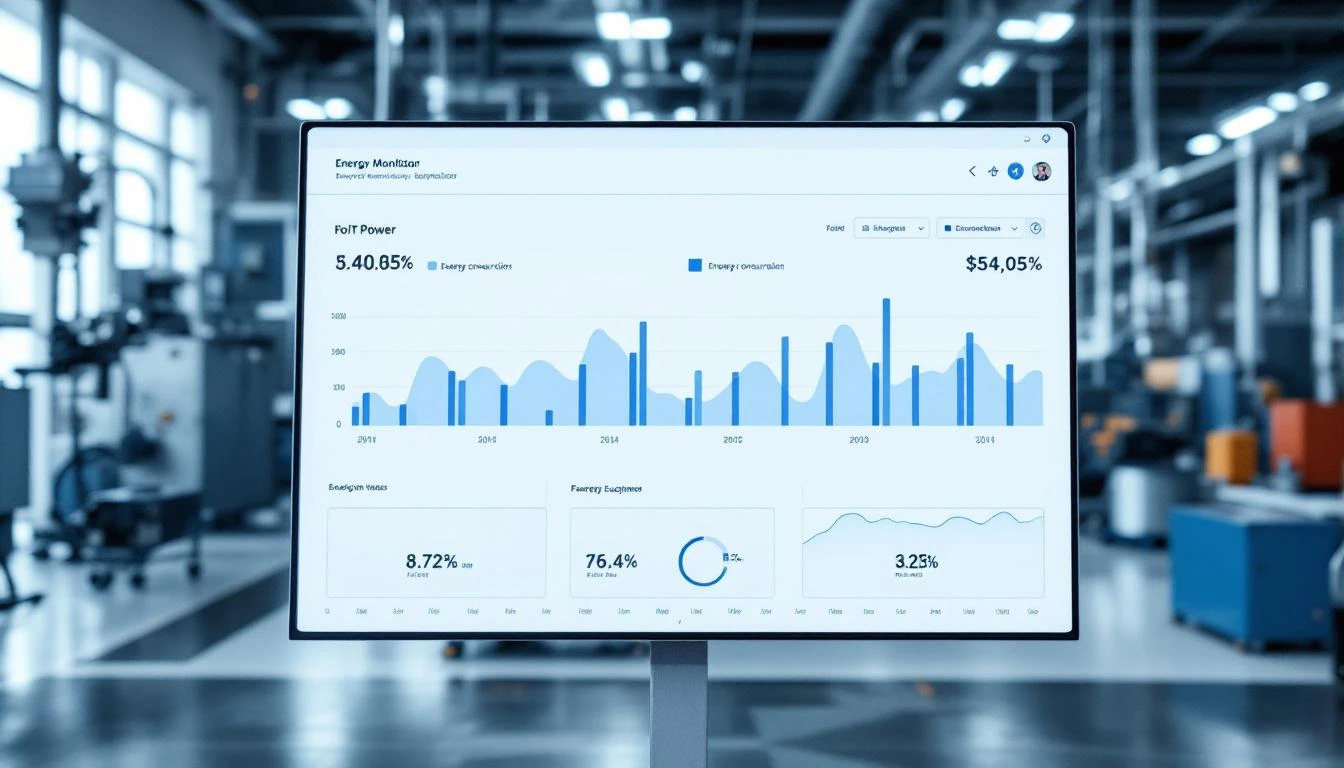
But the real problem is not the cost itself — it is the invisibility. Most plants know their total monthly power bill. Almost none can tell you which specific machine consumed how much power during which shift, or whether that CNC mill running overnight is drawing 40% more energy than it should because of a failing spindle bearing.
That gap between knowing your total bill and understanding your per-machine consumption is where IIoT energy monitoring platforms earn their ROI. The question is: which platform closes that gap more effectively?
IoTFlows Energy Monitoring: What You Get
IoTFlows built its platform around vibration and acoustic sensor data, using their proprietary SenseAi hardware to monitor machine health. Their core strength is condition monitoring — detecting cavitation, looseness, bearing wear, and misalignment through vibration signatures.
When it comes to energy monitoring specifically, IoTFlows takes an indirect approach. Their platform can correlate machine health data with operational patterns, helping you identify when a degrading machine is likely consuming more energy due to mechanical inefficiency. If a motor bearing is failing, for example, the motor draws more current to maintain speed — and IoTFlows can flag that bearing degradation.
However, IoTFlows does not provide dedicated energy consumption tracking as a built-in feature. There is no native kWh-per-machine dashboard, no energy cost allocation by zone or production line, and no direct integration with power metering hardware. If you want actual power data, you would need to add external energy monitoring hardware and integrate that data separately.
This is not a knock on IoTFlows — their SenseAi sensors excel at what they are designed to do. But if your primary goal is tracking and reducing energy consumption across your plant, you will need to layer additional tools on top of the IoTFlows platform.
MachineCDN Energy Monitoring: Built-In, Per-Machine Tracking
MachineCDN takes a fundamentally different approach. Energy consumption tracking is a native feature of the platform, built into the same data pipeline that handles machine status, alarms, and utilization metrics.
Here is what that means in practice:
Per-Machine Energy Data: MachineCDN tracks energy consumption at the individual machine level. Each device in your fleet reports power consumption data alongside its operational tags — temperature, pressure, cycle count, whatever your PLC is monitoring. That energy data appears in the same dashboard where you check machine status and OEE.
Time-Series Visualization: Energy data is not just a snapshot. MachineCDN stores consumption data over time, so you can see trends — daily, weekly, monthly. You can identify which machines are your biggest energy consumers, when peak consumption occurs relative to production schedules, and whether consumption per unit is increasing (often an early indicator of mechanical degradation).
Zone and Location Filtering: Because MachineCDN organizes machines into locations and zones, you can filter energy data by physical area of your plant. Want to compare energy consumption between your injection molding zone and your CNC zone? That is a single filter selection, not a custom report build.
No Additional Hardware for PLC-Connected Equipment: Since MachineCDN reads data directly from your PLCs using standard industrial protocols, if your PLC is already monitoring power draw (which most modern PLCs do via current transformers or power analyzers), that data flows into MachineCDN automatically. No additional sensors required.
Head-to-Head: Energy Monitoring Feature Comparison
Direct Power Measurement:
- IoTFlows: Not a native feature. Requires external power monitoring hardware and integration.
- MachineCDN: Built-in. Reads energy data from existing PLCs and power monitoring tags.
Per-Machine Consumption Tracking:
- IoTFlows: Not available natively. Can infer energy waste from vibration-detected mechanical issues.
- MachineCDN: Yes. Every machine reports individual consumption data in the same dashboard.
Historical Energy Trends:
- IoTFlows: Limited to vibration and machine health trends. No dedicated energy time-series views.
- MachineCDN: Full time-series energy data with configurable date ranges and export capability.
Zone-Level Energy Comparison:
- IoTFlows: Would require manual data aggregation across multiple sensor deployments.
- MachineCDN: Native. Filter by location, zone, or machine group for instant comparison.
Energy Cost Allocation:
- IoTFlows: Not available.
- MachineCDN: Energy consumption data can be correlated with production output to calculate cost-per-unit energy metrics.
ESG and Sustainability Reporting:
- IoTFlows: Limited. Energy data is not a primary output of the platform.
- MachineCDN: Energy consumption data supports sustainability reporting requirements, including per-unit and per-facility carbon footprint calculations.
The Protocol-Native Advantage for Energy Data
The reason MachineCDN can offer built-in energy monitoring while IoTFlows cannot comes down to architecture. MachineCDN connects directly to your existing PLCs and reads whatever tags they expose — including power monitoring tags. If your PLC is already connected to a current transformer, power analyzer, or energy meter, that data is immediately available in MachineCDN with zero additional hardware.
IoTFlows, by contrast, connects through proprietary SenseAi sensors that measure vibration and acoustic signatures. These sensors are excellent at detecting mechanical problems, but they are not designed to measure electrical power consumption. To get energy data into IoTFlows, you would need to deploy separate power monitoring hardware, set up a separate data integration, and potentially build custom dashboards to combine energy data with your SenseAi health metrics.
This is a significant consideration for plants prioritizing energy cost reduction. With MachineCDN, energy monitoring is a configuration step, not a project. With IoTFlows, it is a separate integration effort that adds cost, complexity, and time.
Real-World Energy Savings: What the Data Shows
Manufacturers who deploy granular energy monitoring typically see 10-25% energy cost reductions within the first year, according to the Department of Energy's Industrial Assessment Centers. The savings come from three main areas:
1. Identifying Energy Waste During Non-Production Hours Many plants discover that machines left in standby or idle states consume 15-30% of their running power draw. Without per-machine energy data, this waste is invisible — it is baked into the monthly bill as a fixed cost. With granular monitoring, you can quantify exactly how much idle consumption costs you per month and implement automated shutdown procedures.
2. Detecting Mechanical Degradation Through Energy Signatures A motor consuming 15% more energy than its baseline usually has a mechanical issue — worn bearings, misalignment, belt slippage. Energy data serves as an early warning system for maintenance teams, often catching problems before vibration sensors would flag them.
3. Optimizing Production Scheduling for Peak Demand Many utilities charge demand fees based on your peak 15-minute power draw within a billing period. By understanding exactly which machines draw the most power and when, you can schedule heavy operations to avoid simultaneous peak draws — potentially saving thousands per month in demand charges alone.
Setup and Deployment: How Fast Can You Get Energy Data?
IoTFlows Timeline for Energy Monitoring:
- Deploy SenseAi sensors on target machines (core platform)
- Source and install separate power monitoring hardware (energy-specific)
- Integrate power monitoring data with IoTFlows (custom work)
- Build dashboards combining health and energy data
- Estimated time: 4-8 weeks for the energy monitoring layer
MachineCDN Timeline for Energy Monitoring:
- Connect edge device to your PLC network (3-minute setup per device)
- Map energy-related PLC tags to MachineCDN (same process as any other tag)
- Energy data appears in your dashboard alongside all other machine data
- Estimated time: Same day as initial deployment — energy monitoring is just another set of tags
The difference in deployment time directly affects ROI timelines. If energy monitoring takes 6 weeks to deploy with IoTFlows, that is 6 weeks of energy waste you could have been identifying and eliminating with MachineCDN.
When IoTFlows Makes More Sense
IoTFlows is the better choice when your primary concern is machine health monitoring through vibration and acoustic analysis, and energy monitoring is secondary. Their SenseAi sensors and AI-driven health scoring are specifically designed for detecting mechanical problems like cavitation, looseness, and bearing failure.
If your plant already has a separate energy monitoring system in place and you are looking specifically for predictive maintenance through vibration analysis, IoTFlows delivers strong value in that niche.
When MachineCDN Makes More Sense
MachineCDN is the better choice when you need a unified platform that handles energy monitoring, machine status, alarms, OEE, maintenance scheduling, and fleet management in a single system. The protocol-native approach means energy data flows in alongside everything else — no separate hardware, no custom integrations, no additional cost.
For plants where energy cost reduction is a KPI — especially those facing ESG reporting requirements or demand charge optimization — MachineCDN delivers actionable energy data from day one.
Bottom Line
IoTFlows and MachineCDN solve different problems with different architectures. IoTFlows specializes in sensor-based machine health monitoring. MachineCDN provides a comprehensive IIoT platform where energy monitoring is one of many built-in capabilities.
If energy monitoring is important to your plant — and given current electricity prices, it should be — the question is whether you want to build energy visibility as a separate integration project or have it included as a native feature of your IIoT platform.
Book a demo to see how MachineCDN tracks energy consumption per machine, per zone, and per facility — with the same 3-minute setup as every other feature on the platform.