MachineCDN vs Limble CMMS: Real-Time IIoT Platform vs Maintenance Management System

MachineCDN and Limble CMMS solve different layers of the manufacturing maintenance problem. Understanding where each excels — and where they fall short — helps you decide whether you need one, the other, or both.
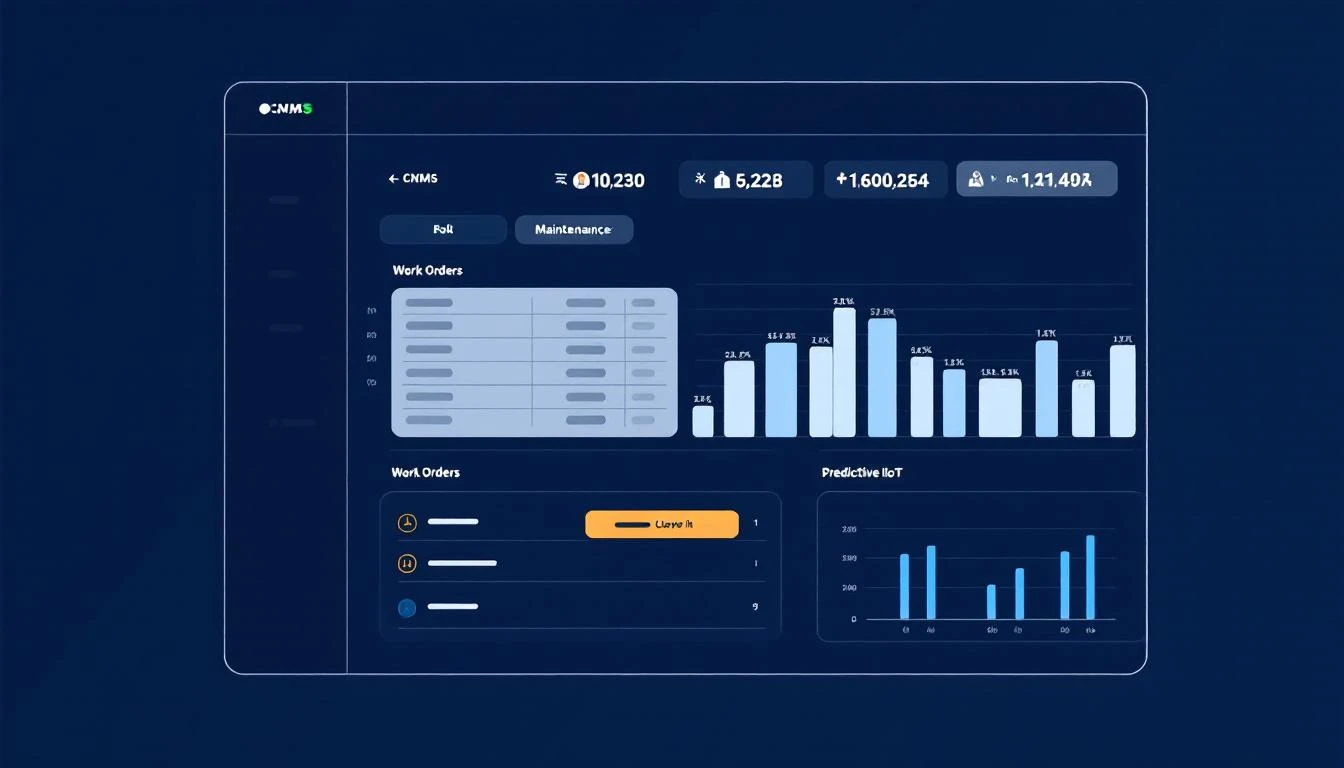
The Fundamental Difference: Knowing vs. Scheduling
Limble CMMS is a maintenance management system — it helps you organize work orders, track maintenance tasks, manage parts inventory, and schedule preventative maintenance. It's the digital version of the clipboard your maintenance supervisor carries.
MachineCDN is an Industrial IoT platform — it connects to your machines' PLCs, reads real-time data, detects anomalies through threshold alerting, and provides the information that tells you when and why maintenance is needed.
Think of it this way: Limble helps you manage the work. MachineCDN tells you what work needs doing.
These aren't competing products in the traditional sense. They operate at different layers of the maintenance stack. But increasingly, manufacturers are asking: do I really need both, or can one platform cover both layers?
What Limble CMMS Does Well
Limble has built a reputation as one of the more user-friendly CMMS platforms on the market. Founded in 2016, they've grown rapidly by targeting small and mid-size manufacturers who want to move from spreadsheets to digital maintenance management.
Limble's core capabilities:
- Work order management — create, assign, track, and close maintenance work orders with mobile-first interface
- Preventative maintenance scheduling — calendar-based and meter-based PM schedules
- Parts inventory — track spare parts quantities, costs, and reorder points
- Asset hierarchy — organize equipment by location, building, and system
- Mobile app — technicians receive and complete work orders on their phones
- Reporting — wrench time, MTBF (mean time between failures), MTTR (mean time to repair)
What makes Limble popular:
- Clean, modern interface that maintenance teams actually adopt
- Free tier for small operations
- Quick setup — no on-site installation, cloud-based
- Good customer support
- Integrations with ERP and accounting systems
Where Limble falls short:
- No real-time machine data — Limble doesn't connect to PLCs or read machine parameters
- Reactive by design — work orders are created after problems are identified, not before
- IoT capabilities are basic — Limble's sensor integrations trigger work orders but don't provide continuous monitoring dashboards
- No OEE or utilization tracking — Limble tracks maintenance metrics, not production metrics
- No downtime analysis — can track that a machine was down but not why at the fault code level
- No fleet management — managing equipment across multiple sites requires separate views
What MachineCDN Does Well
MachineCDN approaches maintenance from the opposite direction — starting with machine data and building upward to maintenance actions.
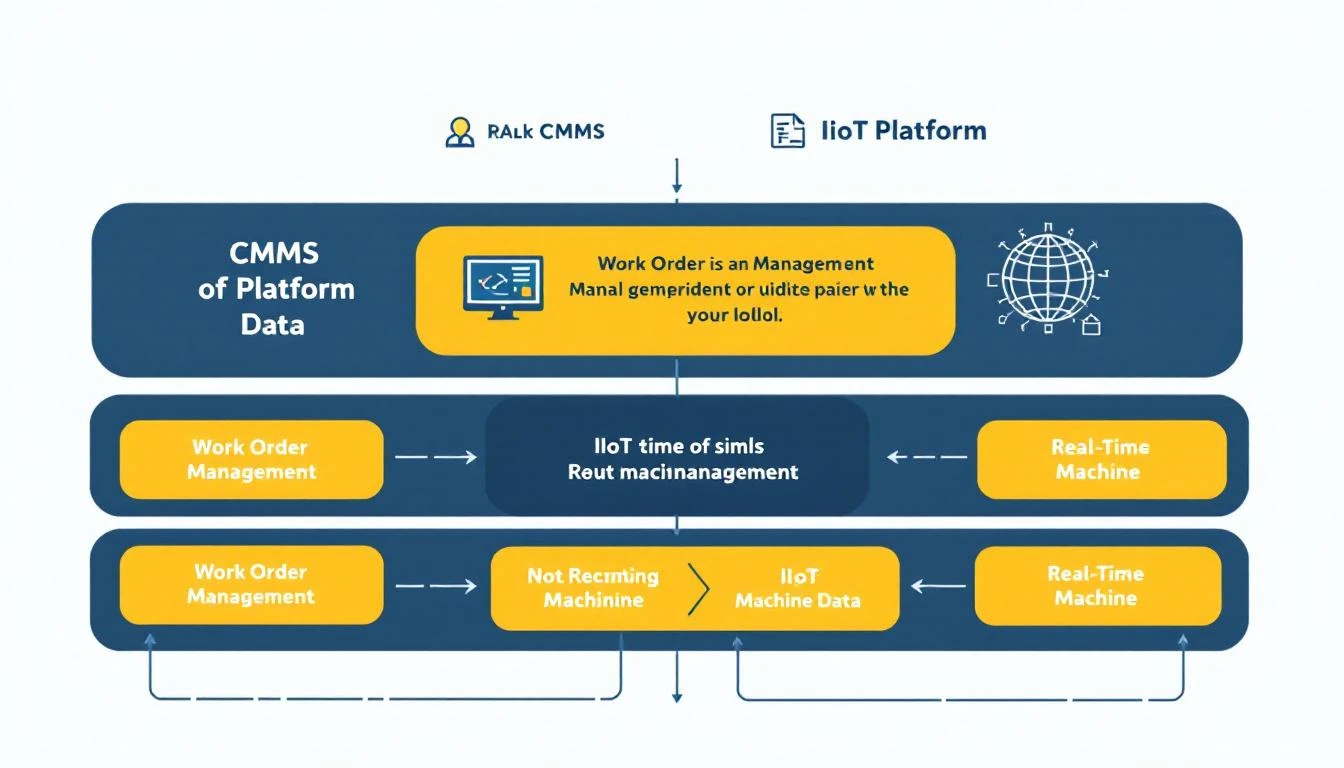
MachineCDN's core capabilities:
- Real-time PLC connectivity — reads machine data directly through Ethernet/IP and Modbus protocols
- Live machine status — dashboard shows running, idle, alarm, and offline states across your fleet
- Alarm management — active alarms with specific fault codes, alarm types, and status tracking
- Threshold alerting — configurable thresholds with both "approaching" and "active" alert views, enabling early intervention
- Preventative maintenance scheduling — PM task creation, scheduling, and alert management tied to actual machine data
- Spare parts tracking — machine parts availability views and spare parts management
- Material and inventory tracking — job inventory reports, material locations, system inventory with consumption monitoring
- Fleet management — multi-location, multi-zone fleet overview with capacity utilization, failure analysis, and part management
- OEE and utilization — capacity utilization views, equipment availability overview, planned production time tracking
- Custom report builder — select specific tags, time ranges, zones, and locations for exportable reports
- Energy monitoring — built-in energy consumption tracking per machine
What makes MachineCDN different:
- 3-minute device setup — connect to the PLC, configure tags, data flows immediately
- Cellular connectivity — zero IT involvement, bypasses plant network entirely
- 5-week ROI — driven by fast deployment and immediate production visibility
- AI-powered analytics — not just monitoring, but predictive insights
Feature-by-Feature Comparison
| Capability | MachineCDN | Limble CMMS |
|---|---|---|
| Real-time machine data | ✅ Direct PLC connectivity | ❌ No machine connectivity |
| Live machine status | ✅ Running/idle/alarm/offline | ❌ Manual status updates only |
| Alarm management | ✅ Automatic with fault codes | ❌ Manual alarm logging |
| Threshold alerts | ✅ Approaching + active views | ❌ Basic sensor triggers |
| Work order management | Basic (PM tasks) | ✅ Full WO lifecycle |
| PM scheduling | ✅ Task-based with alerts | ✅ Calendar + meter-based |
| Spare parts tracking | ✅ Parts availability views | ✅ Full inventory with costs |
| Materials/inventory | ✅ Job + system reports | Basic |
| Fleet management | ✅ Multi-location/zone | ❌ |
| OEE tracking | ✅ Capacity utilization | ❌ |
| Downtime analysis | ✅ Fault codes + reasons | Manual classification |
| Custom reporting | ✅ Tag-based report builder | ✅ Maintenance reports |
| Energy monitoring | ✅ Per-machine | ❌ |
| Mobile app | Dashboard access | ✅ Native mobile WO app |
| Setup time | 3 minutes per device | Hours (cloud SaaS) |
| IT involvement | Zero (cellular) | Minimal (cloud-based) |
Three Deployment Scenarios
Scenario 1: You Only Need Maintenance Management
If your maintenance challenge is primarily organizational — you need to track work orders, schedule PM tasks, manage parts inventory, and report on maintenance KPIs — Limble is the right choice. It's purpose-built for maintenance management and does it well.
This fits if:
- Your machines rarely break down unexpectedly
- PM schedules based on calendar or runtime hours are sufficient
- You don't need real-time machine visibility
- Your maintenance team needs a mobile-first work order system
- Budget is tight and you're moving from paper/spreadsheets
Scenario 2: You Need Production Visibility AND Maintenance
Most manufacturers beyond a certain scale need both: they need to see what their machines are doing in real time AND manage the maintenance work that results. This is where the overlap gets interesting.
MachineCDN includes preventative maintenance scheduling, spare parts tracking, and alarm-based alerting — covering many of the maintenance management functions that would otherwise require a CMMS. The advantage is that these functions are directly connected to real-time machine data:
- PM tasks can be informed by actual machine runtime and condition data
- Alarms automatically surface when equipment needs attention
- Spare parts views connect directly to the machines that consume them
- Threshold alerts provide early warning before failures occur
This fits if:
- You want to predict maintenance needs rather than just schedule them
- Real-time production visibility is important alongside maintenance management
- You need OEE monitoring and downtime analysis
- Fleet management across multiple sites matters
- You want a single platform for operations and maintenance
Scenario 3: You Need Both — Full CMMS + Real-Time IIoT
Large enterprises with complex maintenance organizations sometimes benefit from both: MachineCDN for real-time machine intelligence and Limble for detailed work order lifecycle management.
In this model:
- MachineCDN detects conditions that require maintenance
- Threshold alerts and alarms trigger work order creation
- Limble manages the work order through assignment, execution, and closure
- MachineCDN verifies the repair was effective through post-maintenance data monitoring
This fits if:
- You have a large maintenance team with complex work order workflows
- Regulatory compliance requires detailed work order documentation
- You need both machine intelligence AND enterprise maintenance management
- Budget supports two platforms
The Cost of Not Having Machine Data
Here's what Limble users discover after running a CMMS for a year: their PM schedules are based on guesses.
Without real-time machine data, preventative maintenance schedules are set using manufacturer recommendations (which are conservative) and experience (which is incomplete). The result:
- Over-maintenance — replacing parts that still have life, spending money and downtime unnecessarily
- Under-maintenance — missing degradation that manufacturer intervals don't catch
- Reactive firefighting — unexpected failures still happen because calendar-based PM doesn't account for actual operating conditions
According to Deloitte's study on predictive maintenance, organizations using condition-based monitoring reduce maintenance costs by 25-30% compared to time-based preventative maintenance alone.
MachineCDN's threshold alerting fills this gap. By reading actual operating parameters — temperatures, vibration levels, pressures, speeds — from the PLC, the platform identifies approaching thresholds before they become failures. This is condition-based maintenance driven by real data, not statistical intervals.
Migration Path: Limble to MachineCDN
If you're currently on Limble and considering MachineCDN, the transition doesn't have to be all-or-nothing:
- Phase 1: Deploy MachineCDN on your most critical machines (3 minutes each)
- Phase 2: Use MachineCDN data to validate and improve your Limble PM schedules
- Phase 3: Migrate PM scheduling to MachineCDN as your team gets comfortable with the platform
- Phase 4: Evaluate whether Limble's remaining work order features justify continued licensing
Many manufacturers find that MachineCDN's built-in PM scheduling, spare parts tracking, and alarm management cover 80% of what they were using Limble for — while adding real-time visibility they never had.
The Bottom Line
Choose Limble CMMS if your maintenance team needs organizational tools and mobile work order management, and real-time machine data isn't a current priority.
Choose MachineCDN if you want your maintenance decisions driven by actual machine data rather than calendar schedules, and you value having production visibility, predictive maintenance, fleet management, and maintenance management in a single platform.
Consider both if you're a large enterprise with regulatory work order documentation requirements AND you want real-time machine intelligence driving those work orders.
For most manufacturers, the question isn't "CMMS or IIoT platform?" — it's "do I want to schedule maintenance based on guesses or based on what my machines are actually telling me?"
See the difference data makes. Book a MachineCDN demo and watch your PLC data flow in under 5 minutes.