MachineCDN vs Rockwell FactoryTalk: Which Platform Belongs on Your Factory Floor?

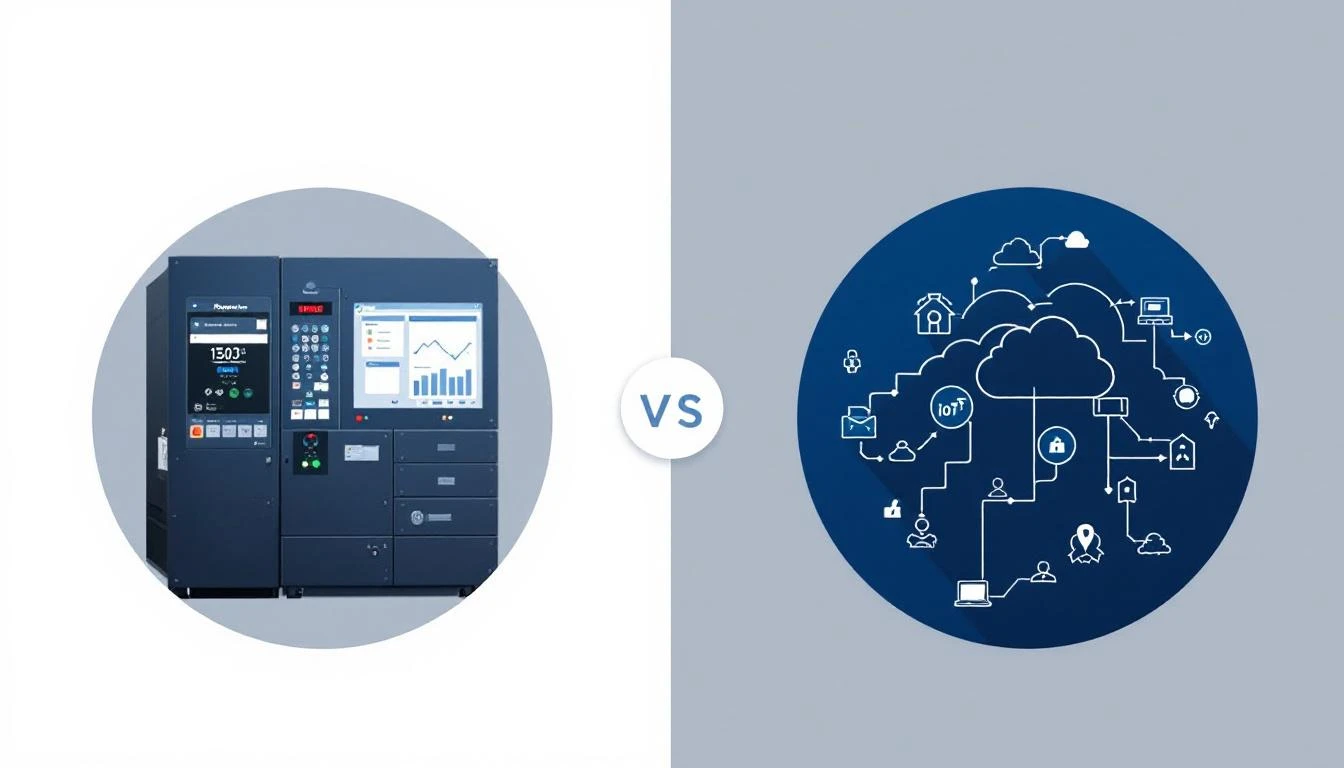
Rockwell Automation dominates the manufacturing automation market. Their Allen-Bradley PLCs, PowerFlex drives, and ControlLogix controllers run in factories across every industry. FactoryTalk is Rockwell's software portfolio — spanning HMI, SCADA, analytics, MES, and IoT — designed to extend the value of that automation investment.
MachineCDN takes a different approach. Instead of extending a PLC vendor's ecosystem, it provides a standalone platform that connects to any PLC, monitors any machine, and delivers predictive intelligence without vendor lock-in.
For manufacturing teams evaluating their next step in operational technology, this comparison examines where each platform excels — and where each one creates friction.
Understanding Rockwell FactoryTalk
FactoryTalk isn't a single product — it's a portfolio of software applications that Rockwell has assembled through development and acquisition over two decades. Key components relevant to monitoring and analytics include:
FactoryTalk Optix
Rockwell's next-generation HMI/SCADA platform, designed to replace the aging FactoryTalk View series. Optix provides web-based visualization, multi-device access, and modern UI design tools. It runs on-premises with optional cloud connectivity.
FactoryTalk InnovationSuite (with PTC)
Born from Rockwell's $1 billion strategic partnership with PTC, InnovationSuite combines ThingWorx IoT, Kepware connectivity, and Vuforia AR into Rockwell's ecosystem. This is Rockwell's enterprise IoT and analytics platform.
FactoryTalk Analytics
Edge and cloud analytics tools including LogixAI (formerly Project Sherlock) for anomaly detection in ControlLogix controllers, and DataMosaix for enterprise analytics aggregation.
Plex MES
Acquired in 2021 for $2.2 billion, Plex is a cloud-native manufacturing execution system providing production tracking, quality management, and supply chain visibility. It's positioned as the MES layer in Rockwell's smart factory vision.
Fiix CMMS
Acquired in 2021, Fiix provides AI-powered computerized maintenance management — work orders, asset management, and maintenance scheduling.
The breadth of FactoryTalk is impressive. But breadth introduces complexity. Each component has its own licensing, deployment model, and learning curve. Integrating them into a cohesive smart factory solution is an enterprise-scale project.
How MachineCDN Differs
MachineCDN is a single, integrated platform. There's no portfolio to assemble, no components to integrate, no partner ecosystem to navigate.
The platform handles everything from machine connectivity to predictive maintenance in one product:
- Edge devices connect directly to PLCs via Ethernet/IP and Modbus
- Cellular backhaul eliminates plant network dependencies
- Cloud platform provides dashboards, alerts, OEE, fleet management, and AI predictions
- No additional software, middleware, or infrastructure required
For Rockwell/Allen-Bradley shops, this creates an interesting dynamic: MachineCDN connects to the same ControlLogix and CompactLogix PLCs that FactoryTalk does, but through a simpler deployment model.
Deployment Comparison
FactoryTalk Deployment
Deploying FactoryTalk components typically involves:
FactoryTalk Optix (HMI/SCADA):
- Install on industrial PCs or servers on the plant floor
- Configure connections to Logix controllers
- Design HMI screens and SCADA displays
- Set up alarming and historian
- Timeline: 2-8 weeks per facility (depending on scope)
FactoryTalk InnovationSuite:
- Deploy ThingWorx platform (cloud or on-premises)
- Install Kepware for protocol connectivity
- Build data models and "Things" in ThingWorx
- Develop or configure analytics dashboards
- Timeline: 3-12 months for initial deployment
Full Smart Factory Stack (Optix + InnovationSuite + Plex + Fiix):
- Multi-phase implementation across 12-24 months
- Professional services from Rockwell or Certified System Integrators
- Network infrastructure upgrades for plant-to-cloud connectivity
- Operator and engineer training across multiple platforms
- Typical investment: $500K-$2M+ for a mid-size facility
MachineCDN Deployment
- Connect edge device to PLC Ethernet port (3 minutes per machine)
- Device auto-registers over cellular
- Configure monitoring tags and thresholds
- Dashboards, OEE, and predictive maintenance available immediately
- Timeline: 1-3 days for an entire facility
- No professional services required
Connectivity and Protocol Support
FactoryTalk
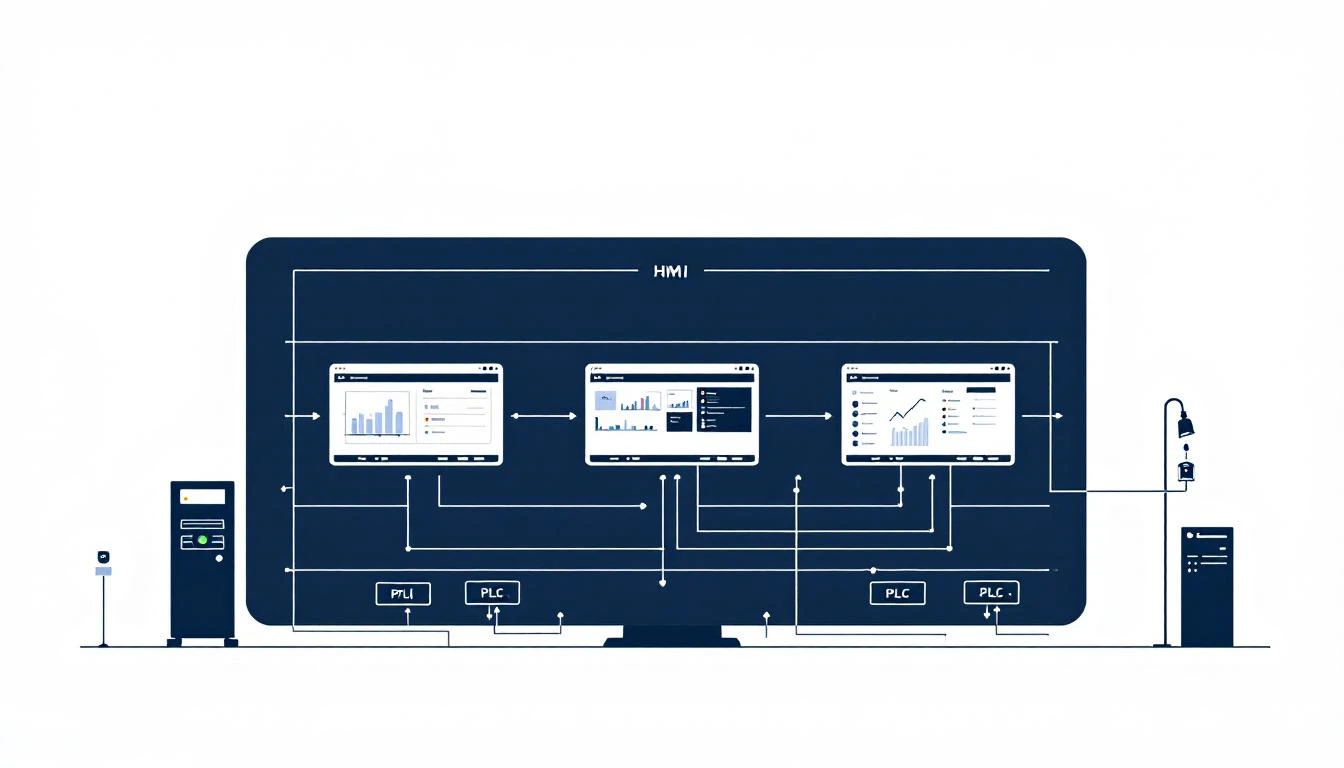
FactoryTalk Optix connects natively to Allen-Bradley Logix controllers using CIP (Common Industrial Protocol). For non-Rockwell equipment, you need Kepware (included in InnovationSuite, sold separately otherwise).
Native connectivity:
- ControlLogix (1756 series)
- CompactLogix (1769 series)
- Micro800 series
- PowerFlex drives
Via Kepware:
- Siemens S7 (MPI, Ethernet)
- Modbus TCP/RTU
- OPC-UA/DA
- BACnet, DNP3, PROFINET
- 150+ additional drivers
Key consideration: If your factory has equipment from Siemens, Mitsubishi, Omron, or other vendors alongside Rockwell, every non-Allen-Bradley connection requires Kepware licensing and configuration. Kepware is capable but adds cost and complexity.
MachineCDN
MachineCDN connects directly to industrial controllers using native protocols:
- Ethernet/IP — the same CIP protocol that Rockwell PLCs speak natively. MachineCDN reads Allen-Bradley tags directly, just as FactoryTalk does.
- Modbus TCP — covers Siemens, Schneider, ABB, Mitsubishi, Omron, and hundreds of other controllers
- Modbus RTU — for legacy serial-connected devices
No middleware required. No Kepware. No protocol server. The edge device speaks the PLC's language directly.
For mixed-vendor factories — which represent the majority of manufacturing environments — MachineCDN's multi-protocol support without additional software provides a meaningful simplicity advantage.
Analytics and Intelligence
FactoryTalk Analytics
Rockwell's analytics capabilities span multiple products:
- LogixAI — anomaly detection for ControlLogix controllers (runs as a module in the Logix chassis)
- DataMosaix — enterprise analytics aggregation (acquired from AVATA Intelligence)
- InnovationSuite analytics — ThingWorx analytics and machine learning models
- FactoryTalk Optix dashboards — real-time visualization and trending
The analytics depth varies significantly by component. LogixAI provides PLC-level anomaly detection but is limited to Logix controllers. DataMosaix aggregates data but requires separate analytics tools. InnovationSuite provides the most capable analytics but at enterprise-scale investment.
OEE tracking in FactoryTalk requires either Plex MES or custom configuration in FactoryTalk Optix — it's not automatic.
MachineCDN Analytics
MachineCDN provides integrated analytics in a single platform:
- Automated OEE — availability, performance, and quality calculated from machine signals
- AI-powered predictive maintenance — failure probability models running on equipment data
- Threshold alerting — active and approaching alarm states
- Downtime root cause analysis — categorized, trended, and actionable
- Energy consumption monitoring — per-machine energy visibility
- Fleet analytics — cross-site performance comparison
The key difference: MachineCDN's analytics are built-in and activated automatically as data flows. FactoryTalk's analytics require assembly from multiple products and configuration by trained personnel.
Pricing Reality
FactoryTalk Pricing
Rockwell uses a traditional enterprise licensing model:
- FactoryTalk Optix: Licensing based on tag count and deployment size
- Kepware: Per-server, per-driver licensing ($1,500-$5,000+ per server depending on drivers)
- InnovationSuite: Enterprise licensing ($100K-$500K+ annually)
- Plex MES: Subscription per user/module
- Fiix CMMS: Per-user subscription
A mid-size factory (50 machines) implementing FactoryTalk Optix + Kepware + analytics can expect:
| Component | Estimated Annual Cost |
|---|---|
| FactoryTalk Optix licenses | $10,000-$30,000 |
| Kepware (multi-driver) | $3,000-$8,000 |
| FactoryTalk Analytics | $15,000-$50,000 |
| Server infrastructure | $5,000-$15,000 |
| System integrator services | $50,000-$150,000 (year 1) |
| Total Year 1 | $83,000-$253,000 |
| Total Year 2+ | $28,000-$88,000/year |
Adding InnovationSuite or Plex MES significantly increases these figures.
MachineCDN Pricing
MachineCDN's pricing is device-based and all-inclusive — monitoring, analytics, predictive maintenance, OEE, alerting, and fleet management are included. No separate licenses for analytics, no Kepware fees, no server infrastructure costs, no system integrator required.
For the same 50-machine factory, MachineCDN's total cost is typically 60-80% lower than a comparable FactoryTalk deployment in year one, and 40-60% lower in subsequent years.
When FactoryTalk Makes Sense
FactoryTalk is the right choice when:
- You're 90%+ Rockwell — if nearly every PLC is Allen-Bradley, FactoryTalk's native integration is seamless
- You need MES-level functionality — Plex provides production tracking, quality, and traceability beyond what monitoring platforms offer
- You want HMI/SCADA on the floor — FactoryTalk Optix provides operator-level interface on industrial PCs and HMI panels
- You have certified system integrators — Rockwell's SI network can implement complex solutions
- AR and digital twin are priorities — the PTC partnership brings Vuforia AR into the Rockwell ecosystem
- You have budget for the full stack — FactoryTalk's value compounds when you use multiple components together
When MachineCDN Makes Sense
MachineCDN is the right choice when:
- You have mixed-vendor equipment — Rockwell, Siemens, ABB, Mitsubishi all monitored through one platform
- IT is a bottleneck — cellular connectivity deploys without network changes
- You need predictive maintenance fast — AI is built-in, not a separate implementation
- Your budget is focused — you want monitoring and prediction without MES, HMI, and SCADA scope
- You need multi-site visibility — fleet management across locations with different automation vendors
- You value speed over comprehensiveness — live monitoring this week, not a complete smart factory in 18 months
Can You Use Both?
Yes — and some manufacturers do. A common pattern:
- FactoryTalk Optix handles operator-level HMI/SCADA on the factory floor (the interface operators interact with during production)
- MachineCDN handles enterprise monitoring, predictive maintenance, and fleet analytics across all locations
This approach leverages Rockwell's strength in real-time control and operator interface while using MachineCDN for the analytics, prediction, and multi-site visibility that requires assembling multiple FactoryTalk products to achieve.
The Bottom Line
Rockwell FactoryTalk is the most comprehensive software portfolio from any automation vendor. For organizations deeply invested in the Rockwell ecosystem with system integrators on retainer, it's a natural extension of existing infrastructure.
MachineCDN is for manufacturing teams that need operational intelligence without the enterprise implementation. It connects to Allen-Bradley PLCs just as naturally as FactoryTalk does — but it also connects to everything else, deploys in days instead of months, and includes predictive AI without additional products or services.
The question isn't which platform is better. It's which problem you're solving, and how fast you need the answer.
Related Reading:
- MachineCDN vs Samsara
- MachineCDN vs PTC ThingWorx
- Best Machine Monitoring Software 2026
- How to Connect PLCs to the Cloud
- Smart Factory Software 2026
See how fast you can get Allen-Bradley data into a predictive analytics platform. Book a MachineCDN demo — we'll connect your Logix PLC in under 5 minutes.