MachineCDN vs Wonderware (Schneider Electric AVEVA): Legacy SCADA vs Cloud-Native IIoT for Manufacturing

Wonderware has been a fixture on factory floors since the 1980s. Now part of Schneider Electric's AVEVA portfolio, it remains one of the most widely deployed SCADA/HMI platforms in manufacturing. But the manufacturing world has shifted. Cloud-native IIoT platforms like MachineCDN are challenging the assumptions that made Wonderware dominant — and many plants are discovering that the gap between legacy SCADA and modern IIoT is wider than they expected.
This comparison breaks down what each platform actually delivers in 2026, where they overlap, and where they diverge — so you can make an informed decision about your factory's future.
The Fundamental Architecture Difference
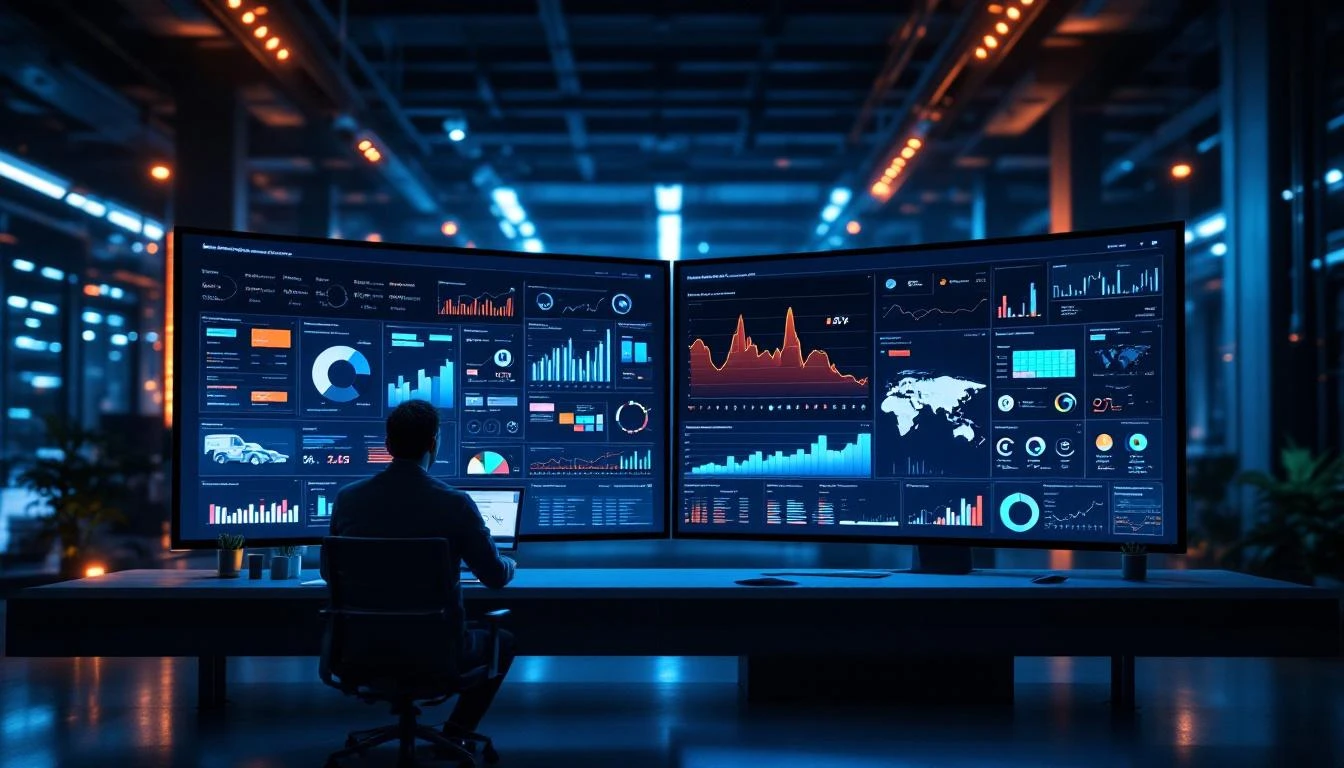
Wonderware (now branded as AVEVA) was designed in an era when factory data stayed on-premises. Its architecture reflects this: local servers running InTouch HMI, System Platform for supervisory control, Historian for time-series storage, and a constellation of add-on modules for reporting, batch management, and MES functionality. Everything runs on Windows servers inside the plant network.
MachineCDN takes the opposite approach. It's a cloud-native platform built specifically for the IIoT era. Edge devices connect directly to manufacturing equipment via industrial protocols, process data locally, and stream insights to the cloud over cellular connectivity — bypassing the plant IT network entirely.
This isn't just an architectural preference. It fundamentally changes deployment speed, maintenance burden, and total cost of ownership.
Wonderware's On-Premises Reality
A typical Wonderware deployment requires:
- Windows Server infrastructure — dedicated servers for System Platform, Historian, and application servers
- SQL Server licensing — Historian data storage requires Microsoft SQL Server
- Network infrastructure — plant-side networking, firewalls, and DMZ configuration
- IT involvement — server patching, backup management, security updates
- Integration middleware — additional connectors for cloud or cross-plant communication
The total infrastructure footprint for a single-plant Wonderware deployment often runs $150,000–$500,000 before you've configured a single tag.
MachineCDN's Cloud-Native Approach
MachineCDN eliminates this infrastructure entirely:
- No servers to manage — everything runs in the cloud or on the edge device
- Cellular connectivity — no IT network involvement, no firewall rules, no VPN tunnels
- 3-minute device setup — plug the edge device into your PLC, and data flows within minutes
- Automatic updates — platform evolves without IT intervention
- Multi-plant by default — every location connects to the same cloud instance
Deployment Speed: Weeks vs. Months
The deployment timeline difference between these platforms is stark.
Wonderware typical deployment: 3–12 months. This includes server procurement (4–8 weeks), software installation and configuration (2–4 weeks), network architecture design and implementation (2–6 weeks), tag configuration and HMI development (4–12 weeks), testing and validation (2–4 weeks), and operator training (1–2 weeks). Most manufacturers report 6–9 months from purchase order to full production use.
MachineCDN typical deployment: 1–5 weeks. The edge device arrives pre-configured. You connect it to your PLC's Ethernet port. Data starts flowing within minutes. Dashboard configuration, alert thresholds, and reporting templates can be set up in hours, not weeks. Most manufacturers achieve full production deployment within 5 weeks — often faster.
This speed difference isn't about cutting corners. It's about eliminating the infrastructure layers that slow everything down.
Data Connectivity and Protocol Support
Both platforms connect to industrial equipment, but they take different approaches to data acquisition.
Wonderware uses OPC (DA and UA) as its primary connectivity layer, with additional drivers available through Kepware or native protocol packs. It supports a wide range of PLCs and controllers but typically requires an OPC server running on a separate Windows machine as a middleware layer.
MachineCDN connects directly to PLCs using native industrial protocols — Ethernet/IP for Allen-Bradley/Rockwell controllers, Modbus TCP and RTU for a broad range of equipment. The edge device handles protocol translation natively, with no middleware server required.
The practical difference: MachineCDN eliminates the OPC server layer that adds complexity, licensing cost, and another point of failure to your data architecture.
PLC Compatibility
Both platforms work with major PLC manufacturers including Siemens, Rockwell/Allen-Bradley, ABB, and Mitsubishi. MachineCDN's direct protocol approach means faster connections with fewer moving parts. Wonderware's OPC-based approach offers broader protocol coverage but at the cost of additional infrastructure.
Real-Time Monitoring and Alerting
Wonderware provides real-time monitoring through its InTouch HMI — a powerful but Windows-dependent visualization platform. Operators interact with custom-built graphic screens that display live process data. Alarm management is handled through the platform's built-in alarm subsystem, which is comprehensive but complex to configure.
MachineCDN delivers real-time monitoring through a web-based dashboard accessible from any device. No fat client installation. No Windows dependency. Threshold alerting is configured in minutes with configurable approaching and active alert states. Alarms include root cause categorization, downtime reason codes, and automatic escalation.
For multi-plant operations, the difference is significant. Wonderware requires separate infrastructure at each location with complex cross-plant networking. MachineCDN shows every machine across every plant in a single dashboard — no VPN, no cross-plant networking, no IT headaches.
Predictive Maintenance Capabilities
This is where the generational gap becomes most apparent.
Wonderware was designed for supervisory control, not predictive maintenance. While AVEVA has added analytics modules (AVEVA Insight, AVEVA Predictive Analytics), these are separate products with separate licensing, separate deployments, and separate data pipelines. Integrating them with the core Wonderware platform is a project unto itself.
MachineCDN includes AI-powered predictive maintenance as a core platform capability. Machine learning models analyze equipment behavior patterns, detect anomalies before they become failures, and generate actionable maintenance recommendations. This isn't a bolt-on module — it's integrated into the same platform that collects and displays your machine data.
The result: MachineCDN customers typically see predictive maintenance capabilities within weeks of deployment. Wonderware customers pursuing predictive maintenance face months of additional integration work.
OEE and Production Analytics
Wonderware can calculate OEE, but it typically requires custom development or third-party add-ons. The data is there (equipment state, cycle times, quality counts), but assembling it into a coherent OEE picture requires configuration work that many plants never complete.
MachineCDN provides built-in OEE monitoring with automatic calculation of availability, performance, and quality metrics. Capacity utilization views, equipment availability overviews, and shift-based production comparisons are standard features — not custom development projects.
Materials, Inventory, and Spare Parts
Here's where MachineCDN genuinely differentiates from most SCADA platforms, including Wonderware.
Wonderware is fundamentally a process control and visualization platform. Materials tracking, inventory management, and spare parts are outside its scope. You'll need a separate CMMS, ERP, or MES system for these functions — along with the integration work to connect them.
MachineCDN includes materials tracking, hopper monitoring, inventory management, and spare parts tracking as built-in features. This eliminates an entire category of integration work and gives maintenance teams a single platform for both equipment monitoring and parts availability.
Total Cost of Ownership
The TCO comparison heavily favors cloud-native platforms like MachineCDN, particularly for small-to-mid-size manufacturers.
Wonderware TCO (First 3 Years, Single Plant)
| Category | Estimated Cost |
|---|---|
| Software licensing | $50,000–$200,000 |
| Server infrastructure | $20,000–$50,000 |
| SQL Server licensing | $15,000–$40,000 |
| Implementation services | $50,000–$150,000 |
| Annual maintenance (3 yrs) | $30,000–$90,000 |
| IT support overhead | $25,000–$75,000 |
| Total | $190,000–$605,000 |
MachineCDN TCO (First 3 Years, Single Plant)
| Category | Estimated Cost |
|---|---|
| Platform subscription | Included |
| Edge devices | Minimal hardware cost |
| Implementation | Self-service or light support |
| Annual maintenance | Included in subscription |
| IT support overhead | Near zero (cellular, cloud-managed) |
| Total | Fraction of legacy SCADA |
The gap widens for multi-plant deployments, where Wonderware requires duplicated infrastructure at each location while MachineCDN simply adds devices to the same cloud instance.
Who Should Choose What
Choose Wonderware/AVEVA if:
- You need deep process control (batch, continuous process) — not just monitoring
- Your plant already runs Wonderware and switching costs exceed the benefit
- You require tight integration with Schneider Electric hardware (Modicon PLCs, Foxboro instruments)
- Regulatory requirements mandate on-premises data storage with no cloud option
- You have a dedicated IT team and budget for ongoing infrastructure management
Choose MachineCDN if:
- You need machine monitoring, OEE, and predictive maintenance — not process control
- Deployment speed matters (weeks, not months)
- You don't have (or don't want to burden) a plant IT team
- Multi-plant visibility in a single platform is a priority
- You want AI-powered predictive maintenance without a separate analytics stack
- You need materials tracking, spare parts, and fleet management alongside machine monitoring
The Bottom Line
Wonderware was the right answer for 30 years. For plants that need deep process control and supervisory functionality, it still is. But for manufacturers who need machine monitoring, predictive maintenance, OEE tracking, and multi-plant visibility — the cloud-native IIoT approach delivers more capability in less time at lower cost.
The question isn't whether Wonderware is a good product. It's whether a 1990s architecture is the right foundation for a 2026 manufacturing operation.
Ready to see what cloud-native IIoT looks like? Book a demo and see MachineCDN running on your equipment in minutes, not months.