IoTFlows AI Job Scheduling vs MachineCDN Predictive Maintenance: Which AI Approach Delivers More Value?

Both IoTFlows and MachineCDN use AI to improve manufacturing outcomes, but they apply artificial intelligence to fundamentally different problems. IoTFlows focuses its AI capabilities on job scheduling optimization — using machine learning to sequence production runs for maximum throughput. MachineCDN applies AI to predictive maintenance and anomaly detection — using real-time PLC data to predict equipment failures before they happen.
Understanding which AI approach delivers more value depends entirely on where your plant loses the most money today.
IoTFlows AI Job Scheduling: What It Actually Does
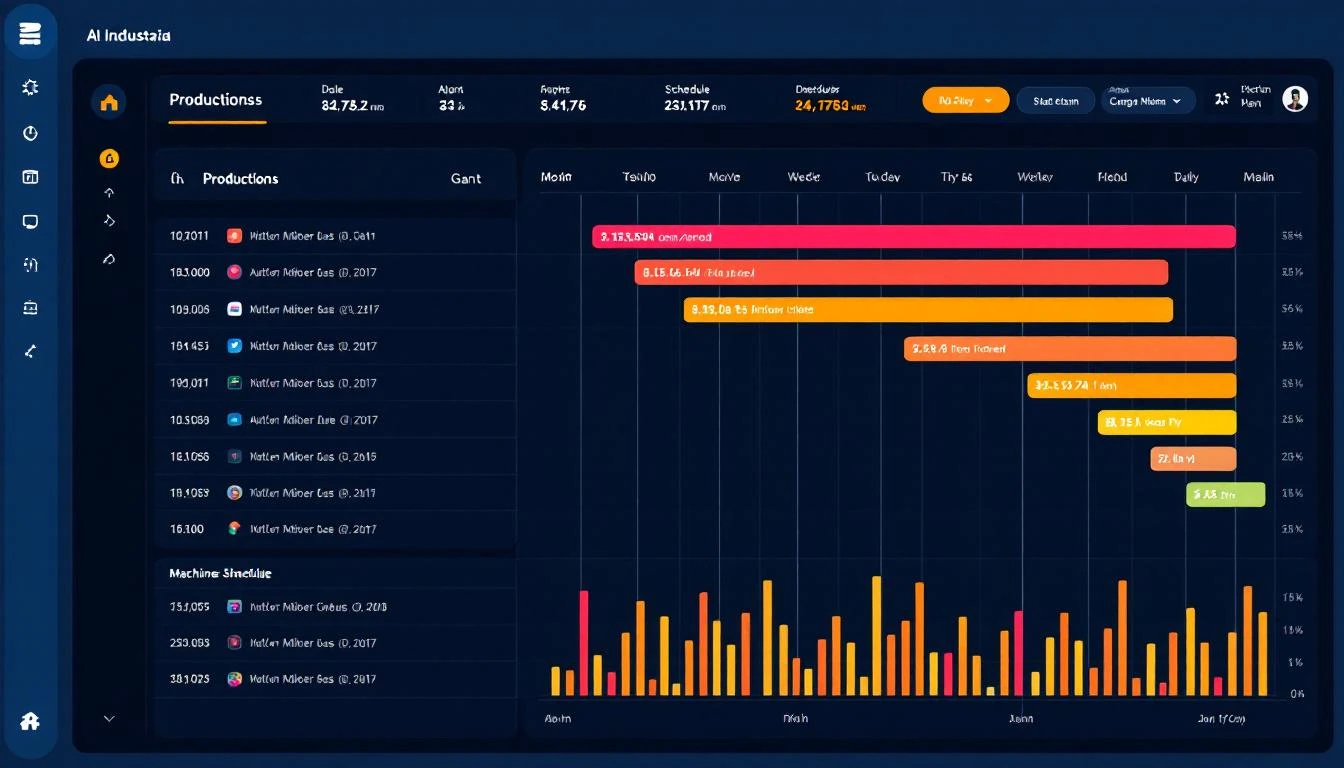
IoTFlows has built AI-powered job scheduling that analyzes historical production data to optimize how work orders are sequenced across machines. The system considers factors like:
- Machine capabilities — which equipment can handle which job types
- Setup and changeover times — minimizing transitions between different product types
- Production deadlines — prioritizing urgent orders
- Historical cycle times — estimating how long each job will take on each machine
- Machine health scores — routing work away from equipment showing degradation
The concept is sound: if you're running a job shop with 20 machines and 150 active work orders, manually scheduling is a combinatorial nightmare. IoTFlows claims their AI scheduling can reduce idle time and increase throughput by optimizing the sequence.
However, IoTFlows' scheduling intelligence is constrained by its data inputs. Because IoTFlows collects data primarily through SenseAi vibration and acoustic sensors, the "machine health" component of scheduling decisions is based on inferred mechanical condition rather than actual operational parameters. The system knows a bearing might be degrading based on vibration signatures — but it doesn't know that the hydraulic pump is operating at 85% efficiency because oil temperature is elevated, or that a servo drive is approaching its thermal limit during heavy cuts.
MachineCDN's AI Approach: Predict the Failure, Prevent the Disruption
MachineCDN applies AI at a different layer of the manufacturing stack — not to optimize what runs on which machine, but to predict when a machine will fail so you can intervene before it disrupts production.
Here's why this matters more for most manufacturers: unplanned downtime costs 10-20x more than planned maintenance. According to Deloitte's research on predictive maintenance, unplanned downtime costs manufacturers an estimated $50 billion annually. Optimizing job scheduling by 10% is valuable. Eliminating even one unplanned shutdown per month is transformational.
MachineCDN's AI operates on the complete data stream from your PLCs — not just vibration patterns, but every operating parameter the controller monitors:
- Motor currents and power draw — subtle increases indicate increased friction, bearing wear, or belt slippage weeks before failure
- Hydraulic pressures and flow rates — gradual decreases reveal pump degradation, valve wear, or seal leaks
- Temperature profiles — across motors, bearings, coolant systems, and process zones
- Cycle time variations — microsecond changes in cycle time often precede mechanical problems
- Alarm frequency and patterns — increasing nuisance alarms are leading indicators of impending failure
- Threshold trends — parameters approaching but not yet crossing alarm limits
MachineCDN's AI analyzes these multi-dimensional data streams to identify patterns that human operators miss. A maintenance engineer might notice that a motor is running hot. The AI notices that the same motor's current draw increased 3% over two weeks, its bearing temperature is rising 0.5°C per day, and a similar pattern on machine #7 preceded a bearing failure 6 months ago.
Data Foundation: Why Input Quality Determines AI Output Quality
Every manufacturing engineer knows the principle: garbage in, garbage out. The quality of any AI system's predictions depends entirely on the quality and completeness of its input data.
IoTFlows' data foundation consists of:
- Vibration amplitude and frequency spectra from SenseAi sensors
- Acoustic signatures from embedded microphones
- Temperature readings from sensor modules
- OEE data derived from machine state detection
- Production counts from sensor-based cycle detection
This is valuable data, but it's indirect measurement. The sensors measure the symptoms of machine behavior from the outside. When a bearing degrades, vibration patterns change. When a motor struggles, acoustic signatures shift. But there are hundreds of failure modes that don't produce detectable vibration or acoustic changes until it's too late — electrical faults, software errors, hydraulic leaks, pneumatic failures, material jams, and control system issues.
MachineCDN's data foundation consists of:
- Every PLC tag configured for monitoring — potentially hundreds per machine
- Alarm states and fault codes — the machine telling you exactly what's wrong
- Operating parameters — pressures, temperatures, speeds, positions, currents, flows
- Material tracking data — hopper levels, material usage rates, inventory positions
- Energy consumption — kWh per machine, per shift, per product
This is direct measurement — reading the same data the control system uses to operate the machine. No inference required. When the PLC reports a hydraulic pressure of 2,847 PSI, that's the actual pressure measured by the machine's own transducer. When it reports a servo drive temperature of 72°C, that's the drive's internal thermistor reading.
The Scheduling Problem: Is It Really Your Biggest Pain Point?
Before investing in AI job scheduling, manufacturers should ask: is scheduling optimization actually our #1 opportunity?
For high-mix, low-volume job shops with dozens of machines and hundreds of active orders, scheduling optimization can move the needle. These environments have significant idle time from suboptimal sequencing, and AI can meaningfully reduce changeover frequency.
But for most discrete manufacturers — including continuous production, semi-continuous processes, and moderate-mix environments — the scheduling problem is secondary to the reliability problem. Here's a reality check:
- Scheduling optimization typically yields 5-15% throughput improvement by reducing idle time and changeover losses
- Predictive maintenance typically yields 20-35% reduction in unplanned downtime (McKinsey estimates)
- Unplanned downtime costs $100K-$250K per hour in automotive, $50K-$100K per hour in general manufacturing
Even if IoTFlows' AI scheduling delivers a 10% throughput improvement, one prevented unplanned shutdown that would have cost $150K wipes out months of scheduling gains.
Beyond AI: The Complete Platform Comparison
AI capabilities are important, but they exist within a broader platform context. Here's where the platforms diverge beyond their AI approaches:
Maintenance Management
MachineCDN includes a full preventive maintenance (PM) scheduling system built into the platform. You can create PM tasks with defined frequencies, assign them to technicians, attach spare parts requirements, track completion, and generate compliance reports. This means your predictive AI insights flow directly into actionable maintenance work orders.
IoTFlows provides machine health scores and recommended actions, but the depth of maintenance management workflow is lighter. You'll likely still need a standalone CMMS for PM scheduling, work order management, and spare parts tracking.
Materials and Inventory
MachineCDN includes materials tracking and inventory management capabilities — hopper monitoring, material usage reporting, material location tracking, and inventory levels. When the AI predicts a machine needs maintenance, you can immediately see whether the required spare parts are in inventory.
IoTFlows doesn't offer materials or inventory management. You need a separate system for this.
Fleet Management and Multi-Site Visibility
MachineCDN provides fleet management across locations and zones, with capacity utilization views that span your entire operation. If you have plants in three states, you see all of them in one dashboard.
IoTFlows supports multi-site deployments but its fleet analytics are focused on production tracking and OEE rather than comprehensive fleet failure analysis.
Setup and Connectivity
MachineCDN uses cellular-connected edge gateways — zero IT involvement, zero network changes. Setup time: minutes per machine. Total deployment for a 50-machine plant: typically completed in a single day.
IoTFlows requires physical sensor installation on each machine. Setup time: varies by machine complexity, but typically hours per machine including mounting, pairing, and baseline calibration. Total deployment for a 50-machine plant: one to several weeks.
Real-World Scenario: Two Approaches to the Same Problem
Imagine a food and beverage manufacturer with 30 packaging lines across two plants. Production runs 18 hours per day, 6 days per week. Unplanned downtime averages 4 hours per week per line.
With IoTFlows: SenseAi sensors are installed on all motors, conveyors, and rotating equipment. AI scheduling optimizes changeover sequences between product SKUs. Vibration monitoring catches some bearing and motor degradation before failure. But when a pneumatic actuator fails (no vibration signature), a temperature sensor drifts (not monitored by external sensors), or a material jam occurs (a process event, not a mechanical event), the platform has limited visibility. Estimated benefit: 15-25% of current downtime prevented.
With MachineCDN: Edge gateways connect to all PLC-controlled lines within a day. Every alarm, every operating parameter, and every state change streams in real time. AI identifies that Line 7's servo on the case packer has been consuming 8% more current over the past week — same pattern that preceded the Line 3 servo failure last quarter. PM task auto-created, part confirmed in inventory, scheduled for next changeover. Every downtime event is categorized with reason codes. After 30 days, the Pareto shows that 40% of unplanned downtime comes from three root causes. Engineering attacks those three. Estimated benefit: 30-40% of current downtime prevented.
The Verdict
IoTFlows' AI job scheduling is a genuine innovation for job shops with complex scheduling needs and rotating equipment where vibration monitoring provides clear predictive value.
But for the majority of discrete and process manufacturers, predictive maintenance AI operating on complete PLC data is the higher-value application of AI in manufacturing. The data is richer, the failure modes covered are broader, and the financial impact of prevented downtime dwarfs scheduling optimization gains.
MachineCDN's approach — protocol-native PLC connectivity feeding AI-powered anomaly detection, combined with integrated PM scheduling, spare parts tracking, and fleet management — delivers a complete system for moving from reactive to predictive maintenance.
Want to see what AI can do with your actual machine data? Book a demo and bring your toughest downtime problem.