Best Manufacturing Analytics Tools 2026: Turn Machine Data Into Actionable Intelligence

Manufacturing generates more data than nearly any other industry — yet according to McKinsey, factories use less than 5% of the data they collect. The gap isn't data collection. It's analysis. Most plants have PLCs logging thousands of data points every second, SCADA historians archiving years of process data, and MES systems tracking production orders. What they don't have is a way to turn that noise into decisions.
Manufacturing analytics tools bridge that gap. Here's what's actually worth your time in 2026.
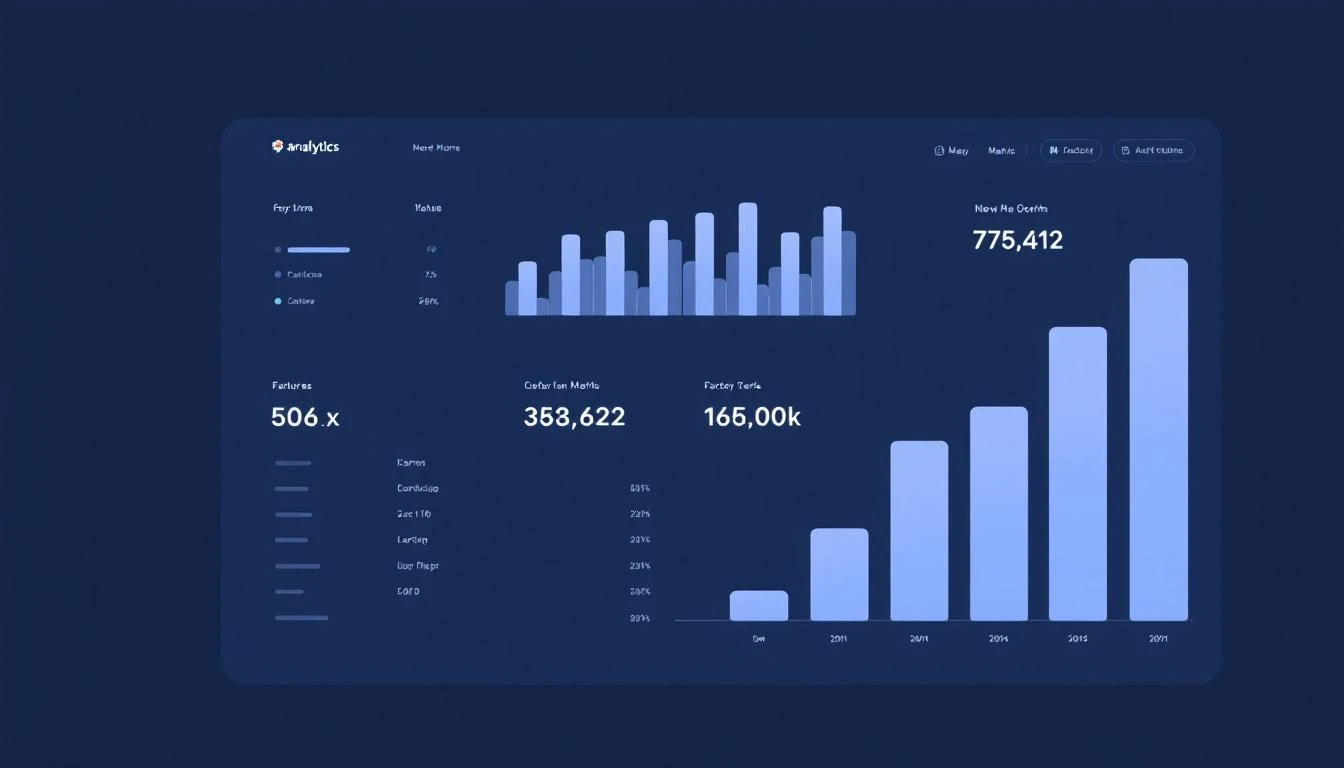
What Manufacturing Analytics Actually Means
Let's cut through the buzzwords. Manufacturing analytics is the practice of using data from your factory floor to answer three questions:
- What's happening right now? (Real-time monitoring)
- Why did it happen? (Root cause analysis)
- What's going to happen next? (Predictive analytics)
The maturity spectrum looks like this:
Descriptive analytics — dashboards showing current state (OEE, machine status, production counts). This is where most manufacturers are today. It's necessary but not sufficient.
Diagnostic analytics — drill-down analysis to understand why a machine went down, why a quality defect occurred, or why a shift underperformed. Requires correlated data across multiple sources.
Predictive analytics — using historical patterns and AI/ML to forecast equipment failures, quality issues, or production bottlenecks before they happen. This is where the real ROI lives.
Prescriptive analytics — automated recommendations for what to do next: "Schedule maintenance on Machine 7 in the next 48 hours" or "Reduce feed rate by 5% to prevent tool breakage." The frontier.
Top Manufacturing Analytics Tools Compared
1. MachineCDN
Best for: End-to-end analytics from PLC to AI predictions
MachineCDN stands apart because it handles the entire analytics pipeline — from data collection at the edge to AI-powered predictive maintenance in the cloud. Most analytics tools assume you've already solved the data collection problem. MachineCDN solves both simultaneously.
Analytics capabilities:
- Real-time machine status dashboards with running/idle/alarm states
- OEE monitoring (availability × performance × quality)
- AI-powered anomaly detection via Azure OpenAI
- Threshold alerting with approaching and active warning states
- Downtime tracking with categorized reasons and root cause analysis
- Fleet-wide performance comparison across locations
- Energy consumption monitoring per machine
- Custom report builder with tag selection and time ranges
What makes it different:
- 3-minute setup — connect to PLCs, data flows immediately
- Cellular connectivity — no IT involvement
- Spare parts and PM scheduling integrated with monitoring
- 5-week ROI for most implementations
Best for: Manufacturers who want analytics without a multi-vendor integration project.
2. Seeq
Best for: Process manufacturing time-series analysis
Seeq is a specialized analytics platform designed for engineers working with time-series process data. It excels at ad hoc analysis — letting process engineers search, visualize, and model historical data without programming.
Analytics capabilities:
- Advanced time-series visualization and pattern search
- Prediction models using regression and ML
- Condition monitoring with custom calculations
- Scorecard reporting for operational metrics
- Integration with OSIsoft PI, Honeywell PHD, and other historians
Strengths:
- Purpose-built for process engineers (not data scientists)
- Powerful pattern search across years of historical data
- Jupyter notebook integration for advanced analysis
- SaaS deployment available
Considerations:
- Process manufacturing focus — less suited for discrete manufacturing
- Requires existing data infrastructure (historians, databases)
- $50,000-$200,000/year licensing
- Doesn't collect data — you need a separate OPC/SCADA layer
3. TrendMiner
Best for: Self-service analytics for process engineers
TrendMiner (now part of Software AG) offers time-series pattern recognition for process manufacturing. Engineers can search historical data visually — drawing patterns and finding when they occurred.
Analytics capabilities:
- Visual pattern recognition across time-series data
- Contextual data overlays (shift, batch, operator)
- Anomaly detection via pattern deviation
- Root cause analysis through correlated events
- Integration with OSIsoft PI, IP.21, and Proficy Historian
Strengths:
- Intuitive visual interface — minimal training required
- Self-service analytics without IT dependence
- Fast time-to-insight for experienced process engineers
Considerations:
- Process manufacturing focus
- Requires historian infrastructure
- Limited discrete manufacturing support
- Pricing in the $100,000+/year range for enterprise
4. Sight Machine
Best for: Enterprise manufacturing intelligence across global operations
Sight Machine uses AI to create a "digital twin of process" — modeling entire manufacturing operations to identify patterns, optimize quality, and reduce waste across facilities.
Analytics capabilities:
- AI-powered root cause analysis for quality defects
- Multi-site performance benchmarking
- Recipe optimization for process manufacturing
- Throughput optimization and bottleneck identification
- Enterprise-wide data normalization
Strengths:
- True enterprise-scale platform
- AI models trained on manufacturing-specific problems
- Strong partnerships with major OEMs
- Comprehensive data normalization across disparate systems
Considerations:
- Enterprise pricing ($500,000+/year for multi-site)
- Long deployment timelines (6-12 months)
- Requires significant data engineering
- Overkill for single-site manufacturers
5. MachineMetrics
Best for: CNC machine shop analytics
MachineMetrics focuses specifically on CNC machining — connecting to Fanuc, Haas, Mazak, and other CNC controllers for real-time production monitoring.
Analytics capabilities:
- Real-time CNC utilization and OEE
- Part counting and cycle time analysis
- Tool life monitoring and optimization
- Operator performance benchmarking
- Production scheduling integration
Strengths:
- Deep CNC expertise — understands G-code and machine states
- Quick setup for supported CNC brands
- Intuitive shop floor display boards
Considerations:
- CNC-only — doesn't support stamping, molding, assembly, or other machine types
- Limited predictive maintenance compared to platform IIoT solutions
- $200-$500/machine/month pricing can add up quickly
6. Augury
Best for: Vibration-based machine health scoring
Augury uses proprietary vibration and acoustic sensors with AI to provide machine health scores and failure predictions for rotating equipment.
Analytics capabilities:
- Machine health scores on 7 dimensions (cavitation, looseness, imbalance, lubrication, alignment, bearing, temperature)
- Automated diagnostics for rotating equipment
- Vibration frequency analysis
- Prescriptive repair recommendations
Strengths:
- Excellent for rotating equipment (pumps, fans, motors, compressors)
- Prescriptive, not just predictive — tells you what's wrong
- Managed service model — Augury's analysts review alerts
Considerations:
- Requires proprietary sensor installation on each machine
- Hardware-dependent — no software-only option
- Limited to rotating equipment vibration analysis
- $300-$600/machine/month (sensor + analytics)
7. Databricks/Snowflake (DIY Approach)
Best for: Organizations with data engineering teams who want full control
Some manufacturers build their own analytics stack using cloud data platforms. Databricks provides ML/AI workbenches; Snowflake provides scalable data warehousing.
Analytics capabilities:
- Anything you build — unlimited flexibility
- ML model training and deployment
- SQL-based analysis across any data source
- Integration with BI tools (Tableau, Power BI, Grafana)
Strengths:
- Full control over data models and algorithms
- Scalable to petabytes
- Leverage existing data engineering skills
Considerations:
- You build everything — dashboards, alerts, models, integrations
- Requires data engineers, data scientists, and ML engineers
- 12-18 month build time for a production-quality system
- $500,000+/year fully loaded team cost
- No domain knowledge — you're building manufacturing expertise from scratch
How to Choose the Right Tool
Decision Framework
Question 1: Do you have data flowing from your machines already?
- No → Start with MachineCDN (data collection + analytics in one platform)
- Yes → Consider your data source: Historian (Seeq/TrendMiner), CNC (MachineMetrics), rotating equipment (Augury), or general (MachineCDN)
Question 2: What's your manufacturing type?
- Discrete manufacturing (parts, assemblies) → MachineCDN, MachineMetrics
- Process manufacturing (chemicals, food, pharma) → Seeq, TrendMiner, Sight Machine
- Mixed → MachineCDN (handles both via protocol-native PLC connectivity)
Question 3: What's your budget?
- Under $50,000/year → MachineCDN
- $50,000-$200,000/year → Seeq, MachineMetrics, Augury
- $200,000+/year → Sight Machine, TrendMiner, DIY
Question 4: How fast do you need results?
- This week → MachineCDN (3-minute setup, immediate data)
- This quarter → MachineMetrics, Augury (hardware installation required)
- This year → Seeq, TrendMiner, Sight Machine (integration projects)
The ROI Case for Manufacturing Analytics
According to a 2024 Deloitte study, manufacturers that implement analytics achieve:
- 10-20% reduction in unplanned downtime
- 5-15% improvement in OEE
- 20-30% reduction in maintenance costs
- 10-25% reduction in quality defects
- 3-5% improvement in energy efficiency
For a plant with $10 million in annual maintenance costs, even a modest 15% improvement means $1.5 million in annual savings. Against a $50,000-$100,000 analytics platform investment, the ROI is measured in weeks, not years.
The Build vs. Buy Decision
Every manufacturing analytics project eventually confronts this question. Here's the honest answer:
Build when:
- You have unique analytical requirements that no platform addresses
- You have a 10+ person data team with manufacturing domain expertise
- Analytics is a core competitive advantage (you sell insights, not products)
- You're willing to invest 18+ months before production value
Buy when:
- You need machine monitoring, OEE, and predictive maintenance (standard use cases)
- Your team has fewer than 5 data/analytics people
- Time-to-value matters (quarter, not years)
- You'd rather your engineers engineer things, not build dashboards
For 90% of manufacturers, buying is the right answer. The problems MachineCDN solves — real-time monitoring, predictive maintenance, downtime analysis, OEE tracking — are well-understood. Building them from scratch is reinventing the wheel.
Conclusion
The best manufacturing analytics tool is the one that gets your machines monitored, your maintenance predicted, and your operations optimized — without a 12-month integration project.
For most manufacturers, that means starting with MachineCDN: connect your PLCs, see real-time data, and let AI identify patterns you're missing. You can always add specialized tools (Seeq for deep process analysis, Augury for vibration-specific diagnostics) later.
But start. The data your machines are generating right now is being ignored. Every day without analytics is a day you're flying blind.
Related reading: