The Digital Thread in Manufacturing: Connecting Design, Production, and Service Data for Complete Product Traceability

The digital thread is one of those Industry 4.0 concepts that sounds brilliant in a conference keynote and impossibly abstract on the factory floor. The idea is simple: create an unbroken chain of data that connects every stage of a product's lifecycle — from initial design through manufacturing, testing, delivery, and field service. The execution is where things get complicated.
But here's why it matters: without a digital thread, your manufacturing data exists in silos. CAD files live in engineering. Process parameters live in the PLC. Quality records live in the QMS. Field failure data lives in the service CRM. When a customer reports a defect, tracing it back to the root cause means manually stitching together data from four or five different systems — a process that takes days or weeks.
With a digital thread, that same investigation takes minutes. You query the serial number and see the complete story: who designed it, what machine made it, what the operating parameters were during production, what quality checks it passed, and what happened in the field.
This guide cuts through the buzzwords and shows you what a practical digital thread looks like in 2026 — including the role IIoT plays as the manufacturing data backbone.
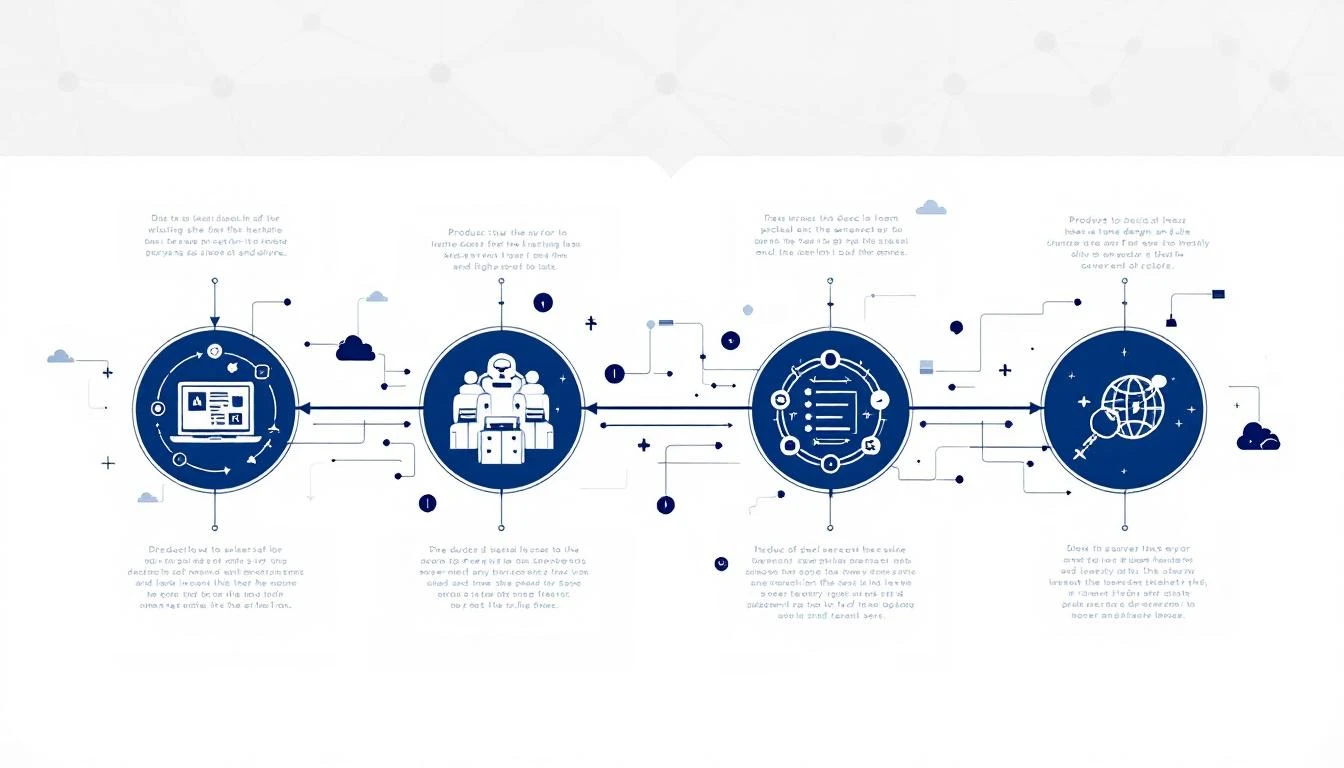
What the Digital Thread Actually Is
The digital thread is a communication framework that connects data across the product lifecycle. It's not a single software platform — it's the integration between platforms that allows data to flow from one stage to the next.
Think of it as the data equivalent of a manufacturing traveler (the paper document that follows a part through the shop floor). But instead of a clipboard, it's a digital record that:
- Carries forward — design specifications flow into manufacturing instructions
- Captures in real-time — actual production parameters are recorded as the part is made
- Feeds back — field performance data flows back to design and manufacturing for improvement
The Four Segments of the Digital Thread
Segment 1: Design Thread
- CAD geometry and tolerances
- Material specifications
- Simulation results (FEA, CFD, etc.)
- Design intent and constraints
- Revision history and change orders
Segment 2: Manufacturing Thread
- Process parameters (temperatures, pressures, speeds, feeds)
- Machine identification and setup
- Operator identification
- In-process measurements
- Cycle times and production rates
- Environmental conditions
Segment 3: Quality Thread
- Inspection results (CMM, vision, manual)
- Test data (functional, environmental, reliability)
- Non-conformance records
- Disposition decisions (accept, rework, scrap)
- Certifications and compliance documentation
Segment 4: Service Thread
- Installation records
- Maintenance history
- Field performance data
- Failure analysis results
- Warranty claims
- Customer feedback
Why Most Digital Thread Initiatives Fail
According to LNS Research, only 23% of manufacturers report successful digital thread implementations. The majority fail for predictable reasons:
1. Starting with Software, Not Data
Companies buy a PLM platform expecting it to create the digital thread automatically. But PLM only manages design data. The manufacturing data that connects design to production — actual process parameters, machine conditions, environmental readings — lives in PLCs, SCADA systems, and historians. Without IIoT bridging this gap, the thread breaks at the factory door.
2. Underestimating Integration Complexity
The average manufacturer uses 8-12 different software systems across the product lifecycle:
- CAD (SolidWorks, NX, CATIA, Creo)
- PLM (Teamcenter, Windchill, ENOVIA)
- ERP (SAP, Oracle, Epicor)
- MES (Apriso, DELMIA, Plex)
- QMS (ETQ, MasterControl, Veeva)
- SCADA/DCS (Wonderware, FactoryTalk, Ignition)
- CMMS (SAP PM, Fiix, UpKeep)
- CRM/Service (Salesforce, ServiceNow)
Each has its own data model, API, and version history. Integrating them into a coherent thread is an enterprise integration project, not a plug-and-play deployment.
3. Ignoring the Manufacturing Layer
This is the most common failure. Companies invest in PLM-to-ERP integration (design to planning) and skip the hardest part: capturing actual manufacturing data in real time. Without knowing what actually happened during production — the actual temperatures, actual pressures, actual cycle times — the digital thread is a fiction. It records what was supposed to happen, not what did happen.
This is exactly where IIoT closes the gap.
IIoT: The Manufacturing Backbone of the Digital Thread
IIoT platforms provide the real-time manufacturing data that makes the digital thread real. Here's how:
Real-Time Process Parameter Capture
When a part is being manufactured, the IIoT platform records exactly what happened:
- Injection molding: Barrel temperature, injection pressure, hold time, cooling time, mold temperature, clamp force
- CNC machining: Spindle speed, feed rate, tool wear, coolant temperature, axis loads
- Welding: Current, voltage, wire feed speed, travel speed, gas flow rate, interpass temperature
- Heat treating: Furnace temperature profile, soak time, quench temperature, atmosphere composition
- Assembly: Torque values, press-fit forces, test results, electrical measurements
Each data point is timestamped and associated with the specific part being produced (via serial number tracking or batch ID). This creates the manufacturing segment of the digital thread automatically — no manual data entry, no clipboard records, no after-the-fact reconstruction.
Machine Condition Context
Beyond process parameters, IIoT captures machine health data that adds context to the manufacturing record:
- Was the machine's vibration within normal range during production?
- Were all threshold alerts clear?
- What was the machine's OEE during the production run?
- Were there any alarms or interruptions?
This machine condition data answers a question that traditional quality systems can't: was the equipment performing normally when this part was made? If a batch of parts later fails in the field, knowing that the machine had elevated vibration during production immediately narrows the root cause investigation.

Closed-Loop Quality Feedback
The most powerful application of the digital thread is closed-loop quality — automatically feeding field performance data back into the manufacturing process:
- Field failure — customer reports a bearing failure at 5,000 hours (expected life: 10,000 hours)
- Digital thread query — which machine made this bearing? What were the process parameters?
- Pattern detection — IIoT analytics identify that all bearings from a specific machine during a specific time window show elevated failure rates
- Root cause — the machine's grinding spindle had increased vibration (recorded by IIoT) that caused micro-surface defects
- Corrective action — adjust vibration threshold, schedule spindle maintenance, quarantine remaining bearings from that batch
Without the digital thread, this investigation takes weeks of manual data collection. With it, the pattern can be identified in hours.
Building a Practical Digital Thread
Here's a pragmatic approach that avoids the common pitfalls:
Layer 1: IIoT Foundation (Weeks 1-4)
Start with the manufacturing data layer — it's the hardest to add retroactively and the most valuable:
- Deploy IIoT monitoring on critical production equipment
- Configure tag mapping to capture key process parameters
- Establish serial number or batch tracking for traceability
- Begin building the manufacturing data repository
MachineCDN provides this foundation with 3-minute device setup, reading directly from existing PLCs without any control system modification. Every PLC tag reading is timestamped and stored in the cloud — the raw material of the digital thread.
Layer 2: Quality Integration (Months 1-3)
Connect quality data to manufacturing data:
- Link inspection results to specific machines and time windows
- Correlate process parameters with quality outcomes (SPC)
- Build automated quality alerts when process parameters drift
- Create part genealogy records (which machine, which material batch, which operator)
Layer 3: Design Feedback Loop (Months 3-6)
Connect field and quality data back to design:
- Identify systematic quality issues that trace back to design choices
- Provide production data to designers (actual vs. specified tolerances)
- Feed manufacturing capability data into design tools (what can we actually hold?)
- Close the loop: design → production → quality → field → design
Layer 4: Predictive and Prescriptive Analytics (Months 6+)
With a complete data chain, apply AI to predict and prevent:
- Predict quality outcomes from process parameters (before inspection)
- Automatically adjust process parameters based on incoming material properties
- Predict field failure rates from manufacturing data
- Optimize design for manufacturability based on actual production data
Industry-Specific Applications
Automotive: Recall Cost Reduction
The average automotive recall costs $500 per vehicle. For a 1 million-unit recall, that's $500 million. A digital thread enables targeted recalls — instead of recalling all vehicles from a model year, you recall only those produced during the specific time window on the specific production line where the anomaly occurred. This can reduce recall scope by 90%+ and save hundreds of millions of dollars.
Aerospace: AS9100 and FAA Compliance
Aerospace manufacturing requires complete traceability per AS9100 and FAA regulations. The digital thread automates compliance documentation that currently requires manual records:
- First Article Inspection Reports (FAIR)
- Process compliance records
- Material certifications linked to specific parts
- Non-conformance and disposition records
Medical Devices: FDA 21 CFR Part 820
Medical device manufacturers must maintain Device History Records (DHR) for every device produced. The digital thread creates the DHR automatically from IIoT data — process parameters, environmental conditions, inspection results, and operator records — all timestamped and linked to the specific device's serial number.
Defense: ITAR and MIL-SPEC Traceability
Defense manufacturing requires chain of custody documentation for ITAR-controlled items and process compliance documentation for MIL-SPEC requirements. The digital thread provides an immutable record of every manufacturing step, supporting audit and compliance requirements.
Technology Requirements
Building a digital thread requires several technology capabilities:
Unique Part Identification
Every part needs a unique identifier that travels through the entire lifecycle. Options include:
- Serial numbers (physical marking + PLC tracking)
- RFID tags (automatic identification at each station)
- 2D barcodes/Data Matrix codes (machine-readable, permanent marking)
- Digital twins (virtual representation linked to physical part)
Time-Series Data Storage
Manufacturing data is time-series data — billions of data points with timestamps. Traditional relational databases aren't designed for this volume. IIoT platforms use purpose-built time-series storage that can handle millions of data points per second with efficient compression and fast querying.
API-First Architecture
The digital thread is an integration challenge. Every system in the chain must expose APIs that allow data to flow between platforms. Cloud-native IIoT platforms are designed with APIs from the ground up — unlike legacy SCADA systems that often require middleware for external connectivity.
Edge Computing
Not all manufacturing data can wait for cloud round-trips. Edge computing processes data locally for real-time quality decisions while simultaneously streaming data to the cloud for analytics and storage. MachineCDN's edge gateways handle this dual processing natively.
The ROI of Digital Thread
The financial impact varies by industry, but research consistently shows significant returns:
| Industry | Typical Digital Thread ROI |
|---|---|
| Automotive | 40-60% reduction in recall costs |
| Aerospace | 30-50% reduction in compliance documentation effort |
| Medical Devices | 50-70% reduction in DHR creation time |
| General Manufacturing | 20-40% reduction in root cause investigation time |
| All Industries | 15-25% reduction in scrap and rework |
The digital thread doesn't eliminate quality problems — it makes them visible faster and traceable to root causes. That speed is what drives ROI.
Getting Started
The digital thread starts with manufacturing data. Without real-time process parameter capture, there is no thread — just disconnected databases with manual bridges.
Book a demo with MachineCDN and start building the manufacturing backbone of your digital thread today. Connect your first machine in 3 minutes. Every data point captured is a stitch in the thread.