How to Monitor Hydraulic Press Systems with IIoT: A Practical Guide for Maintenance Engineers

A hydraulic press failure doesn't give you a gentle warning. One day the press is forming 800-ton stampings at 12 cycles per minute. The next day, a seal blows, hydraulic fluid sprays across the floor, production stops, and you're looking at $50,000 in emergency repairs, lost production, and hazmat cleanup.
The tragedy is that every hydraulic press failure tells the same story in hindsight: the pressure was drifting for weeks, the oil temperature was climbing for months, and the pump vibration had been elevated since the last oil change. The data was there — nobody was watching it.
IIoT transforms hydraulic press maintenance from reactive firefighting to predictive precision. By continuously monitoring the parameters that precede failure, you can schedule repairs during planned downtime and eliminate the catastrophic failures that shut down your stamping, forming, and molding operations.
This guide covers the specific monitoring points, threshold values, and implementation approach for hydraulic press systems in manufacturing — based on what actually predicts failures, not what vendors think you should monitor.
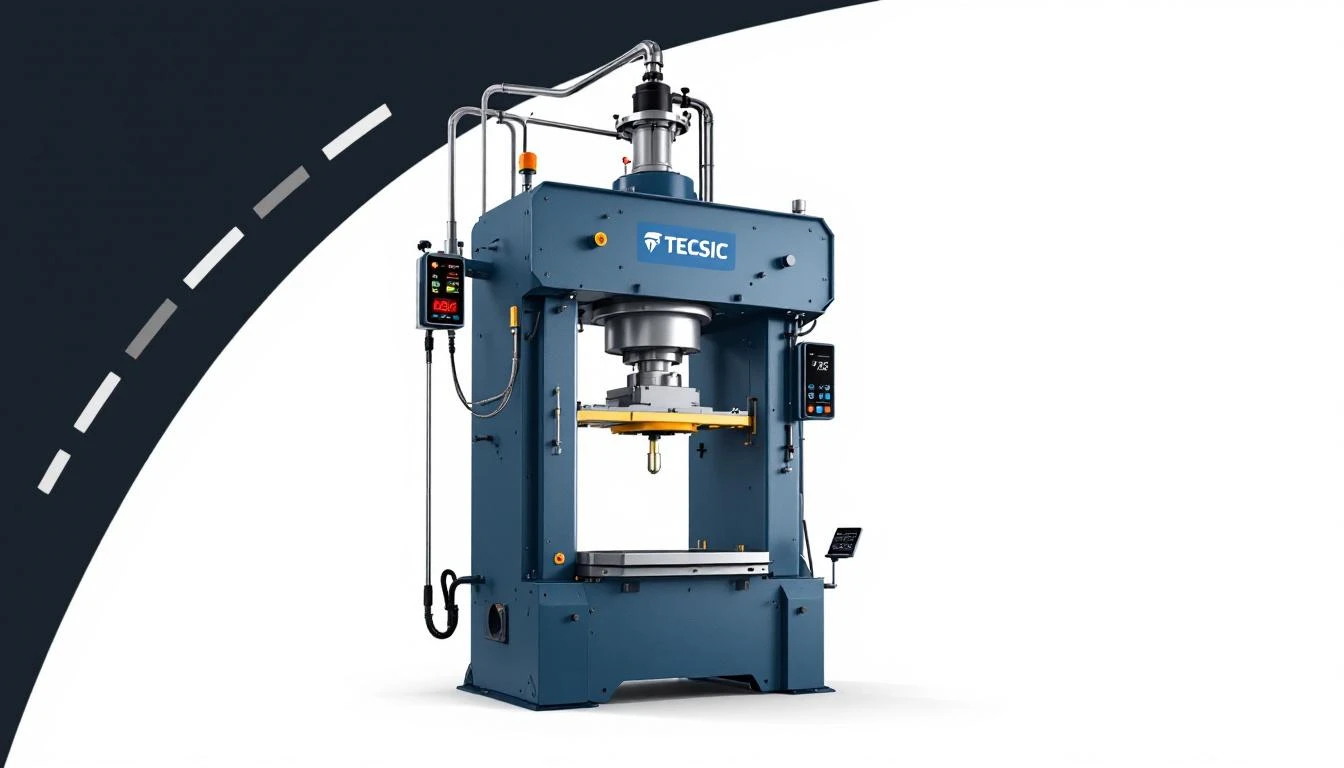
Why Hydraulic Presses Deserve Dedicated IIoT Monitoring
Hydraulic presses are among the most failure-consequential equipment in manufacturing. A typical stamping plant operates 10-30 presses ranging from 50-ton C-frame presses to 2,000+ ton straight-side transfer presses. Each press represents $200K-$5M in capital and $1,500-$10,000 per hour in production value.
The failure cost pyramid for hydraulic presses:
| Failure Type | Avg. Cost | Avg. Downtime | Predictable via IIoT? |
|---|---|---|---|
| Seal/gasket failure | $2,000-$8,000 | 4-16 hours | Yes — pressure trend + temperature |
| Hydraulic pump failure | $15,000-$40,000 | 24-72 hours | Yes — vibration + flow + pressure ripple |
| Cylinder failure | $20,000-$60,000 | 48-120 hours | Yes — drift rate + position accuracy |
| Valve failure | $3,000-$12,000 | 8-24 hours | Partially — response time + leakage |
| Accumulator failure | $5,000-$15,000 | 12-36 hours | Yes — precharge pressure + cycle time |
| Catastrophic hose burst | $5,000-$25,000 | 8-24 hours | Partially — visual + pressure ripple |
At least 80% of hydraulic press failures are preceded by measurable parameter changes 2-8 weeks before failure occurs. That's the window IIoT gives you.
The 7 Critical Monitoring Parameters
1. System Pressure (Static and Dynamic)
System pressure is the most fundamental hydraulic monitoring parameter. But static pressure alone tells you almost nothing — it's the dynamic pressure signature that reveals problems.
What to monitor:
- Peak pressure — Maximum pressure during each press cycle. Trending downward indicates pump wear or internal leakage.
- Pressure ripple — High-frequency pressure fluctuation. Increasing ripple indicates pump cavitation, worn gears (in gear pumps), or worn pistons (in piston pumps).
- Pressure hold — During the dwell phase (when the press is holding force), pressure should remain constant. Pressure decay during hold indicates cylinder seal leakage or valve seat wear.
- Pressure build-up rate — How quickly the system reaches target pressure. Slowing build-up rate indicates pump degradation or internal leakage.
Threshold guidance:
- Peak pressure drop > 5% from baseline → Investigate
- Pressure ripple increase > 20% from baseline → Schedule pump inspection
- Pressure hold decay > 2% during dwell → Seal inspection required
- Build-up time increase > 15% from baseline → Pump performance degrading
2. Hydraulic Fluid Temperature
Hydraulic fluid temperature is the single best predictor of system health over time. Every 10°C increase above optimal doubles the oxidation rate of the oil and halves the life of seals and hoses.
What to monitor:
- Fluid temperature at pump outlet — The primary measurement point
- Fluid temperature at tank return — Should be 3-8°C above tank ambient
- Temperature rise per cycle — How much heat each press cycle adds
- Cooler effectiveness — Delta-T across the heat exchanger
Threshold guidance (for mineral-based hydraulic fluid):
- Optimal operating range: 40-55°C (104-131°F)
- Warning: > 60°C (140°F) — Oil degradation accelerating
- Critical: > 70°C (158°F) — Immediate attention required, seal damage imminent
- Alarm: > 80°C (176°F) — Shut down and investigate
Root causes when temperature trends upward:
- Cooler fouling (most common — clean the heat exchanger)
- Internal leakage creating heat (check valves and cylinders)
- Overworking the system (cycle rate too high for cooling capacity)
- Low fluid level (less thermal mass to absorb heat)
- Ambient temperature increase (seasonal)
3. Hydraulic Fluid Flow Rate
Flow rate monitoring is less common than pressure and temperature but is one of the most diagnostic parameters available.
What to monitor:
- Pump output flow — At rated speed and pressure, pump flow should be consistent. Declining flow = volumetric efficiency loss = worn pump.
- Return flow — Flow returning to the tank during press retraction. Abnormal flow patterns indicate valve issues.
- Case drain flow (on piston pumps) — Fluid leaking past pistons into the pump case. Increasing case drain flow is the most reliable early indicator of piston pump wear.
Threshold guidance:
- Pump volumetric efficiency < 90% → Schedule rebuild
- Case drain flow > 2x baseline → Pump approaching end of life
- Flow rate variation > 10% cycle-to-cycle → Investigate valve or pump issue
4. Vibration on Pump and Motor Assembly
Vibration monitoring on the hydraulic pump/motor assembly catches mechanical degradation weeks before it affects pressure or flow.
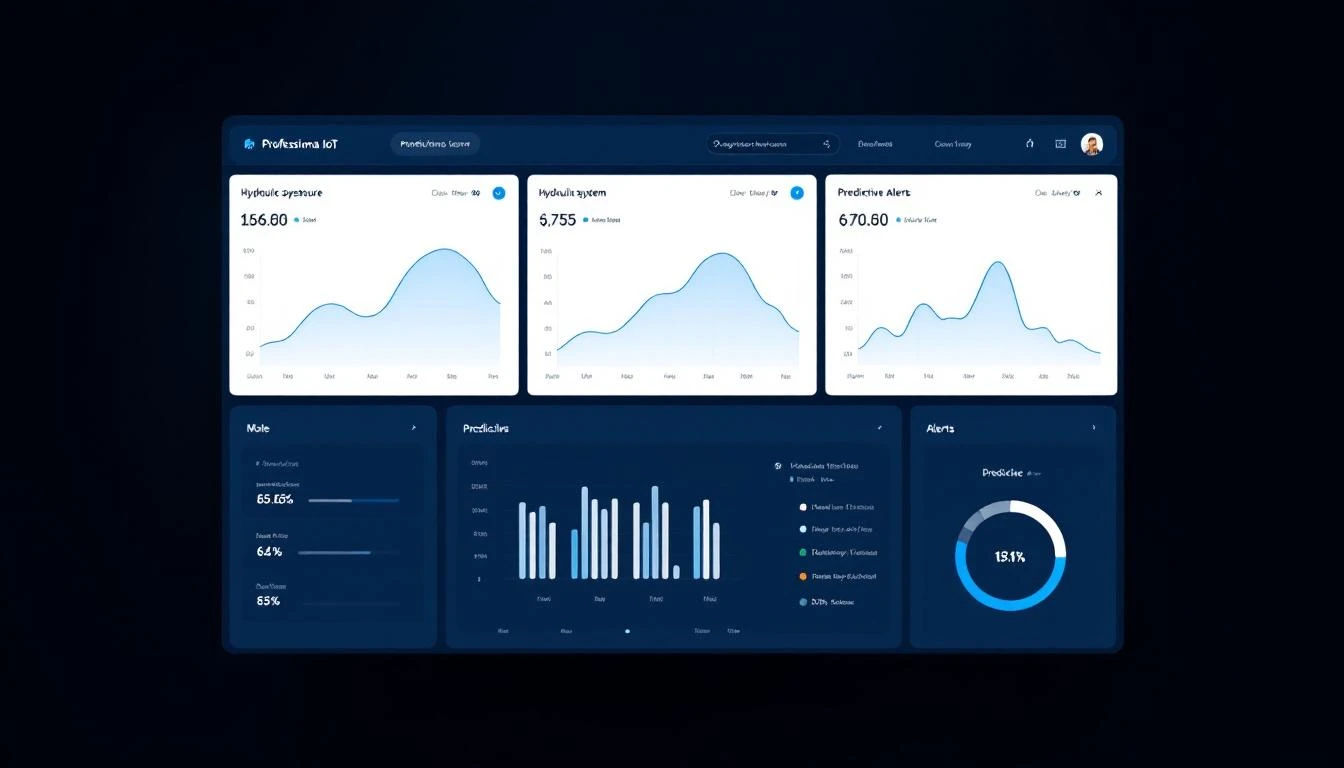
What to monitor:
- Overall vibration velocity (mm/s RMS) — The broadband health indicator
- Bearing frequencies — BPFI, BPFO, BSF, FTF for the pump and motor bearings
- Gear mesh frequency (gear pumps) — Amplitude at gear mesh frequency and harmonics
- Cavitation signatures — High-frequency broadband energy (>5 kHz) indicating air entrainment or inlet restriction
Threshold guidance (ISO 10816 for small to medium machines):
- Good: < 2.8 mm/s RMS
- Acceptable: 2.8-7.1 mm/s RMS
- Alert: 7.1-11.2 mm/s RMS — Schedule inspection
- Danger: > 11.2 mm/s RMS — Failure imminent
Most IIoT platforms, including MachineCDN, support vibration monitoring through PLC-connected accelerometers. You don't need a dedicated vibration analysis system — PLC-level vibration data at 1-second intervals catches the trend changes that matter.
5. Cycle Time and Position Accuracy
Hydraulic press cycle time and ram position accuracy are performance indicators that also serve as health diagnostics.
What to monitor:
- Total cycle time — Approach time + press time + dwell time + retract time. Increasing total cycle time indicates system degradation.
- Approach speed — The speed at which the ram descends before contacting the workpiece. Slowing approach speed indicates pump capacity loss or valve restriction.
- Position accuracy — The repeatability of the ram position at bottom dead center. Increasing variation indicates cylinder wear or servo valve degradation.
- Dwell time consistency — Variation in the time the press holds at full tonnage. Inconsistency indicates pressure regulation issues.
Threshold guidance:
- Cycle time increase > 5% from baseline → Investigation needed
- Position repeatability > ±0.5mm (for precision operations) → Cylinder inspection
- Approach speed decrease > 10% → Pump or valve degradation
6. Filtration System Health
Contamination is the #1 cause of hydraulic component wear. Monitoring filtration system health prevents the root cause of most failures.
What to monitor:
- Filter differential pressure — Increasing ΔP across the filter indicates clogging
- Particle count (if equipped with online particle counter) — ISO 4406 cleanliness class
- Bypass valve activation — If the filter bypass valve opens, unfiltered fluid is circulating
Threshold guidance:
- Filter ΔP > 75% of bypass setting → Change filter
- ISO cleanliness > 19/17/14 (for standard hydraulic systems) → Investigate contamination source
- Any bypass valve activation → Immediate filter change + contamination investigation
7. Accumulator Pre-Charge Pressure
Hydraulic accumulators store energy and dampen pressure spikes. Pre-charge pressure (nitrogen charge) gradually decays over time and affects press performance.
What to monitor:
- Pre-charge pressure (checked during maintenance or via pressure transient analysis)
- Cycle-to-cycle pressure consistency — Increasing pressure variation suggests accumulator performance degradation
- Pressure spike amplitude — The accumulator should absorb pressure spikes. If spikes are increasing, the accumulator isn't performing.
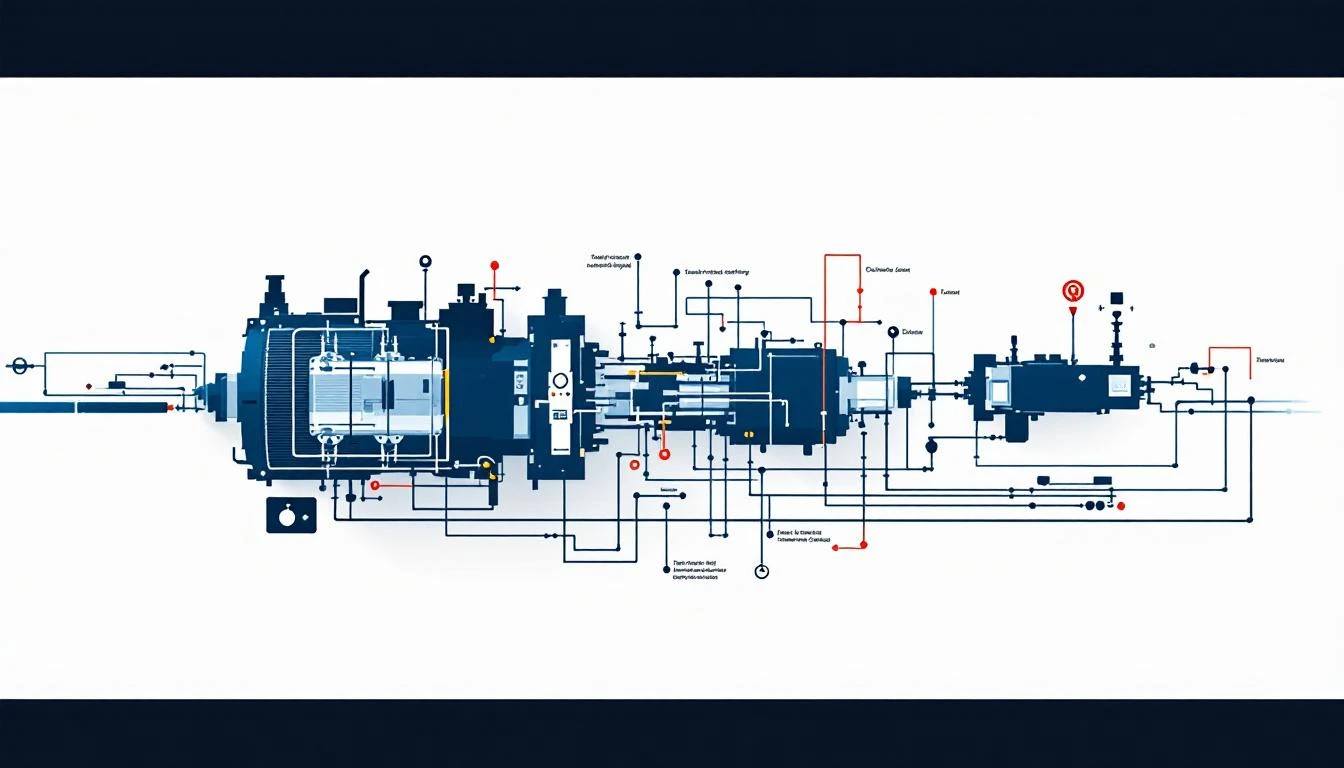
Implementation: Connecting Your Hydraulic Press to IIoT
Most hydraulic presses built after 2000 have PLCs that already monitor the parameters listed above — or at least the sensors are installed and wired to the PLC, even if the data isn't being trended.
Step 1: Identify Available Data
Before adding any sensors, check what your press PLC already has:
- Modern presses (Komatsu, Schuler, Neff, Beckwood post-2010): Usually have pressure, temperature, position, and cycle data available via Ethernet/IP or Modbus TCP.
- Older presses with retrofitted controls: May have basic pressure and temperature via analog inputs. Check if the PLC has unused input channels for additional sensors.
- Legacy presses with relay-based controls: Require external sensors and a standalone data acquisition device. Consider a PLC retrofit if the press is worth keeping.
Step 2: Connect an Edge Device
An IIoT edge device connects to the press PLC and streams data to the cloud. MachineCDN's edge devices connect via Modbus TCP or Ethernet/IP — the protocols used by virtually every industrial press PLC.
Typical connection timeline:
- Unbox and power up edge device: 5 minutes
- Configure PLC communication (IP address, register map): 15-30 minutes
- Verify data is flowing to dashboard: 5 minutes
- Total: Under 60 minutes per press
Step 3: Baseline and Alert
Collect 2-4 weeks of baseline data before setting threshold alerts. During baselining:
- Run the press on all products/dies it normally runs
- Note which parameters vary with die changes vs. which remain constant
- Identify the "normal" ranges for each parameter under each operating condition
Step 4: Build Condition-Based Maintenance Triggers
Once baselines are established, configure alerts that trigger maintenance actions:
| Alert | Condition | Action |
|---|---|---|
| Oil temp trending | 7-day average > 55°C and rising | Check cooler, check fluid level |
| Pressure decay | Dwell pressure decay > 2%/sec | Schedule seal inspection |
| Cycle time drift | 5-day average cycle time > 105% baseline | Investigate pump/valve performance |
| Vibration alert | Pump vibration > 4.5 mm/s RMS | Order pump rebuild kit, schedule downtime |
| Filter ΔP | Filter ΔP > 3.0 bar | Change filter within 48 hours |
Calculating ROI for Hydraulic Press IIoT Monitoring
Conservative scenario for a plant with 15 hydraulic presses:
| Category | Annual Savings |
|---|---|
| Avoided catastrophic failures (2/year → 0.5/year) | $45,000 |
| Reduced emergency repair premiums | $25,000 |
| Extended component life through condition-based replacement | $30,000 |
| Reduced unplanned downtime (120 hrs → 40 hrs) | $120,000 |
| Optimized fluid change intervals | $8,000 |
| Total annual savings | $228,000 |
Against a typical IIoT platform cost of $3K-8K/month for a 15-press deployment, the ROI is 3-6x in the first year.
Conclusion
Hydraulic press systems generate clear, measurable signals before every major failure. The seven parameters in this guide — pressure dynamics, temperature, flow, vibration, cycle time, filtration health, and accumulator condition — provide comprehensive coverage of the failure modes that cost stamping, forming, and molding operations millions annually.
The technology to monitor these parameters is neither complex nor expensive. Most press PLCs already have the sensor data; you just need a way to stream it, trend it, and alert on it.
Book a demo with MachineCDN to see how hydraulic press monitoring works — from PLC to predictive alert in under 60 minutes.
Running hydraulic presses? Book a demo to see real-time pressure, temperature, and vibration monitoring for your press shop.