Best Condition Monitoring Software 2026: 10 Platforms for Protecting Manufacturing Equipment

Condition monitoring is the backbone of any serious maintenance strategy. Instead of waiting for equipment to fail or replacing parts on a calendar schedule, condition monitoring tracks the actual health of your machines in real time — vibration, temperature, pressure, current draw, oil quality, and dozens of other parameters that tell you exactly when something needs attention.
The global condition monitoring market reached $3.4 billion in 2025 and is projected to hit $5.2 billion by 2028, according to MarketsandMarkets. Manufacturers are finally moving past reactive maintenance — not because they want to, but because they can't afford not to. With unplanned downtime costing an average of $260,000 per hour in automotive manufacturing and $180,000 per hour in food & beverage, the math is compelling.
Here are the 10 best condition monitoring platforms for manufacturing in 2026, ranked by deployment speed, feature completeness, and real-world value.
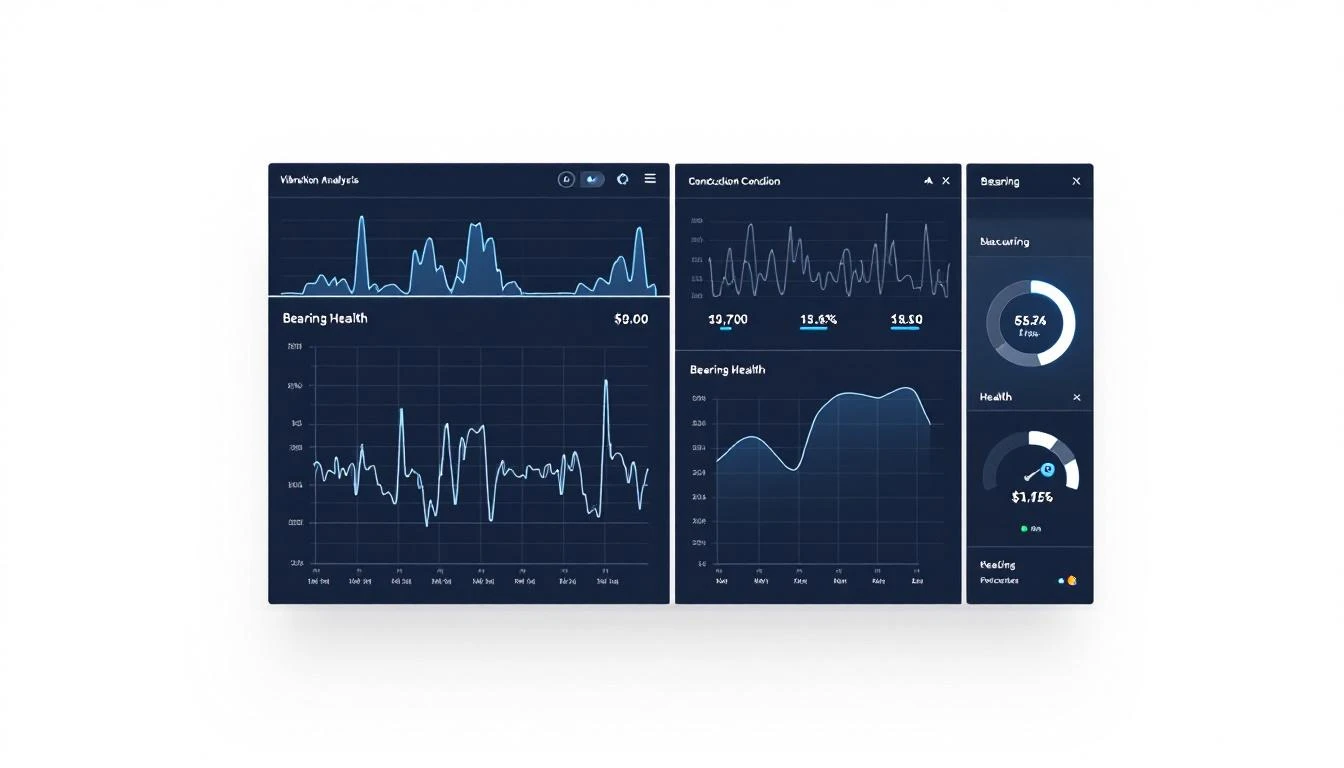
What to Look For in Condition Monitoring Software
Before diving into the rankings, here's what separates great condition monitoring platforms from mediocre ones:
1. Data Acquisition Flexibility
The best platforms connect to your existing equipment without requiring proprietary sensors. If a platform can only monitor machines that have their specific hardware installed, your coverage will always be limited to what you can afford to instrument.
2. Real-Time vs. Periodic Monitoring
Some platforms check equipment health every few hours or once a day. Others stream data continuously. For critical equipment, the difference between catching a bearing failure 6 hours early versus 6 seconds early is the difference between a scheduled repair and a catastrophic breakdown.
3. AI and Pattern Recognition
Modern condition monitoring goes beyond simple threshold alerts. AI-powered platforms learn what "normal" looks like for each machine and detect subtle anomalies that rules-based systems miss — micro-changes in vibration patterns that precede failures by weeks.
4. Integration with Maintenance Workflows
Detecting a problem is only half the job. The platform needs to trigger work orders, notify the right people, and track the resolution. Standalone monitoring without workflow integration creates alert fatigue.
5. Multi-Site Scalability
If you run multiple plants, you need a single platform that gives you fleet-wide visibility — not separate installations per site that require manual aggregation.
The 10 Best Condition Monitoring Platforms
1. MachineCDN — Best for Protocol-Native Machine Monitoring
What it is: A cloud-native IIoT platform that connects directly to PLCs via Ethernet/IP and Modbus protocols, providing real-time condition monitoring, predictive maintenance, and OEE tracking without proprietary sensors.
Why it ranks #1:
- 3-minute device setup — connect an edge gateway to your PLC and data flows immediately
- Zero IT involvement — cellular connectivity bypasses plant networks entirely
- AI-powered anomaly detection — learns normal operating patterns for each machine
- Protocol-native — reads data directly from PLCs, covering vibration, temperature, pressure, current, cycle times, and any other PLC-accessible parameter
- Built-in maintenance workflows — PM scheduling, spare parts tracking, work order management
- Fleet management — monitor all plants from a single dashboard
- 5-week ROI — not an aspiration, a documented average
Best for: Discrete and hybrid manufacturers with 10-500+ machines across one or multiple plants. Works with Rockwell, Siemens, ABB, Mazak, Fanuc, Mitsubishi, and any PLC supporting standard industrial protocols.
Pricing: Transparent subscription model. Book a demo for specifics.
2. Augury — Best for Vibration and Acoustics
What it is: An AI-powered machine health platform that uses proprietary vibration and acoustic sensors to detect mechanical faults in rotating equipment (motors, pumps, compressors, fans).
Why it ranks well:
- Purpose-built vibration AI with 500+ machine types trained
- 7-metric machine health score (cavitation, looseness, imbalance, lubrication, alignment, bearing, temperature)
- Strong track record in food & beverage and consumer goods
- Partnership with Colgate-Palmolive, PepsiCo, and ICL
Limitations:
- Requires proprietary Halo sensors ($$$)
- Only monitors rotating equipment — doesn't cover hydraulics, pneumatics, or process parameters
- No PLC integration — can't read cycle times, reject counts, or production data
- Sensor installation requires physical access and planning
Pricing: Enterprise pricing, typically $500-1,500 per monitoring point annually plus sensor hardware.
3. Samsara — Best for Fleet and Environmental Monitoring
What it is: A connected operations platform originally built for vehicle fleet management, expanded into industrial equipment monitoring through IoT sensors for vibration, temperature, humidity, and power consumption.
Why it ranks well:
- Simple sensor deployment (battery-powered wireless)
- Strong mobile app experience
- Environmental monitoring (cold chain, HVAC, warehouse)
- Large installed base (10,000+ customers)
Limitations:
- Limited depth for manufacturing — no OEE, no cycle time tracking, no PLC connectivity
- Sensors provide basic threshold monitoring, not deep vibration analysis
- Better suited for facilities management than production equipment
- No predictive maintenance AI for manufacturing equipment
Pricing: Per-sensor subscription, typically $300-500 per sensor annually.
4. MachineMetrics — Best for CNC Monitoring
What it is: A cloud platform focused on CNC machine monitoring with adapters for Mazak, DMG Mori, Haas, Okuma, Fanuc, and other CNC controllers. Provides utilization tracking, condition monitoring, and production analytics.
Why it ranks well:
- Deep CNC protocol expertise (MTConnect, FOCAS, OPC UA)
- Real-time utilization and efficiency tracking
- Production scheduling integration
- Clean, modern dashboard experience
Limitations:
- CNC-focused — limited coverage for non-CNC equipment (presses, injection molders, conveyors)
- Doesn't support Ethernet/IP or Modbus for general PLC connectivity
- Higher per-machine cost than broader IIoT platforms
- No spare parts or materials tracking
Pricing: Per-machine subscription, estimated $200-400 per machine monthly.
5. IoTFlows — Best for Sensor-Based OEE
What it is: A YC-backed IIoT platform combining proprietary SenseAi vibration/acoustic sensors with cloud analytics for OEE monitoring, downtime analysis, and machine health scoring.
Why it ranks well:
- AI-powered vibration and acoustic analysis
- OEE monitoring with automatic downtime categorization
- Machine health scoring across 7 metrics
- Claims less than 3 months ROI
Limitations:
- Requires proprietary SenseAi hardware — can't use existing PLC data
- Limited protocol support for diverse PLC environments
- Smaller installed base limits AI training data breadth
- No materials/inventory management, no spare parts tracking
Pricing: Not publicly disclosed. Requires sales engagement.

6. Fiix (Rockwell Automation) — Best CMMS with Condition Monitoring
What it is: A cloud-based CMMS (Computerized Maintenance Management System) acquired by Rockwell Automation. Primarily a work order and maintenance management platform with condition monitoring integrations.
Why it ranks well:
- Strong work order and PM scheduling
- Rockwell Automation ecosystem integration
- Asset lifecycle management
- Inventory and spare parts management
Limitations:
- CMMS first, condition monitoring second — monitoring is an integration, not core
- No native PLC connectivity — requires separate data sources
- Limited real-time analytics compared to purpose-built monitoring platforms
- No edge computing or cellular connectivity
Pricing: $45-75 per user per month (CMMS). Condition monitoring integrations additional.
7. Uptake — Best for Asset Performance Management
What it is: An industrial AI company focused on asset performance management (APM) for heavy industries — mining, energy, aviation, and transportation.
Why it ranks well:
- Deep domain AI models for specific asset types
- Strong analytics and failure prediction
- Integration with major ERP/EAM systems
- Used by major enterprises (Caterpillar heritage)
Limitations:
- Enterprise-focused with enterprise pricing ($500K+ annually)
- Implementation takes months, requires professional services
- Less suitable for diverse manufacturing environments
- Declining market presence in recent years
Pricing: Enterprise contracts, typically $500,000+ annually.
8. Sight Machine — Best for Manufacturing Analytics
What it is: A manufacturing analytics platform that ingests data from multiple sources (historians, MES, ERP, IoT sensors) and applies AI to identify production optimization opportunities.
Why it ranks well:
- Comprehensive data integration (connects to almost anything)
- Digital twin capabilities for process optimization
- Strong analytics for quality defect root cause analysis
- Used by manufacturers like Stanley Black & Decker
Limitations:
- Analytics platform, not monitoring platform — requires data sources to exist
- Expensive implementation ($300K+ year one)
- Needs data engineering resources to configure
- Not a replacement for real-time equipment monitoring
Pricing: Enterprise contracts, typically $300,000-1,000,000+ annually.
9. UpKeep — Best Mobile-First CMMS
What it is: A mobile-first CMMS designed for maintenance teams who work on the floor, not at desks. Includes work orders, asset management, preventive maintenance scheduling, and basic sensor integrations.
Why it ranks well:
- Excellent mobile app for technicians
- Easy setup and user-friendly interface
- Affordable entry point
- Growing sensor integration capabilities
Limitations:
- CMMS, not condition monitoring — sensor integration is basic
- No PLC connectivity or real-time machine data
- Limited analytics and AI capabilities
- Better for maintenance management than condition detection
Pricing: $45-75 per user per month.
10. Limble CMMS — Best for Small Operations
What it is: A cloud-based CMMS with a clean interface, work order management, and basic condition-based maintenance capabilities through sensor integrations.
Why it ranks well:
- Free tier available (up to 2 users)
- Clean, intuitive interface
- Good for small teams getting started with digital maintenance
- Sensor integrations for basic monitoring
Limitations:
- Limited condition monitoring depth
- No PLC connectivity or industrial protocol support
- Not designed for real-time analytics at scale
- Limited AI/predictive capabilities
Pricing: Free (basic), $28-69 per user per month (paid tiers).
Choosing the Right Platform: Decision Framework
The right condition monitoring platform depends on three factors:
1. Equipment Type
- CNC machines only? MachineMetrics
- Rotating equipment only? Augury
- Mixed manufacturing equipment? MachineCDN
- Vehicles and facilities? Samsara
2. Budget
- Under $50K/year: MachineCDN, UpKeep, Limble
- $50K-200K/year: MachineCDN (multi-plant), IoTFlows, Fiix
- $200K+/year: Uptake, Sight Machine, Augury (enterprise)
- $500K+/year: C3 AI (but is it worth it?)
3. Deployment Speed
- Same day: MachineCDN (3-minute setup)
- 1-4 weeks: Samsara, MachineMetrics, UpKeep
- 1-3 months: IoTFlows, Augury, Fiix
- 3-12 months: Uptake, Sight Machine, C3 AI
The Trend: Protocol-Native Over Sensor-Dependent
The biggest shift in condition monitoring for 2026 is the move from proprietary sensor overlays to protocol-native monitoring. Instead of buying and installing thousands of new sensors, manufacturers are realizing that their existing PLCs already collect vast amounts of condition data — motor current, vibration (where accelerometers are wired to PLC inputs), temperature, pressure, cycle times, and more.
Platforms that can read this existing data — through standard industrial protocols like Ethernet/IP and Modbus — deliver condition monitoring at a fraction of the cost of sensor-dependent approaches. You're leveraging the instrumentation you've already paid for.
This is why MachineCDN's protocol-native approach resonates with manufacturing engineers. You don't need to justify $500K in new sensors to your CFO. You connect an edge gateway, and the data that's already flowing through your PLCs becomes visible.
Getting Started
If you're still running reactive maintenance, the cost of doing nothing is clear: unexpected failures, production losses, overtime, and expedited parts. Condition monitoring pays for itself in the first prevented failure.
Ready to see your machines' real-time health data? Book a demo with MachineCDN and connect your first machine in 3 minutes.