Prescriptive Maintenance for Manufacturing: Beyond Prediction — What to Do When Your AI Tells You Something's Wrong

Predictive maintenance tells you that something is going to fail. Prescriptive maintenance tells you what to do about it. That distinction sounds subtle, but in practice it's the difference between a maintenance team that gets alerts they don't know how to act on, and one that receives specific, actionable guidance that prevents failures with minimal disruption.
Most manufacturers are still working on getting predictive maintenance right. But the leaders — the plants that have moved from 2-5% unplanned downtime to less than 1% — have made the leap to prescriptive. They don't just know a bearing will fail in 14 days. They know which bearing, what replacement part number to order, who should do the work, what tools they'll need, how long it will take, and which maintenance window minimizes production impact.
This is where IIoT and AI intersect to transform maintenance from a cost center into a competitive advantage.
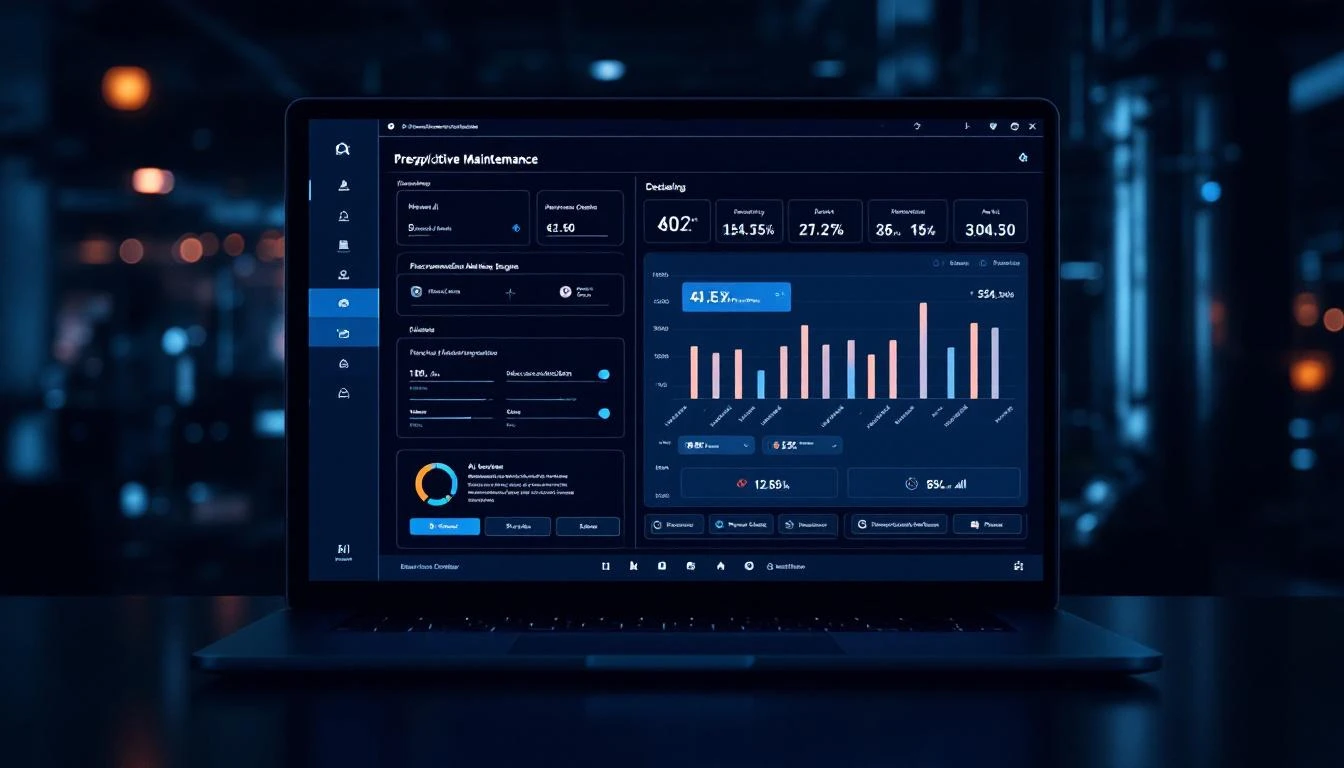
The Maintenance Maturity Spectrum
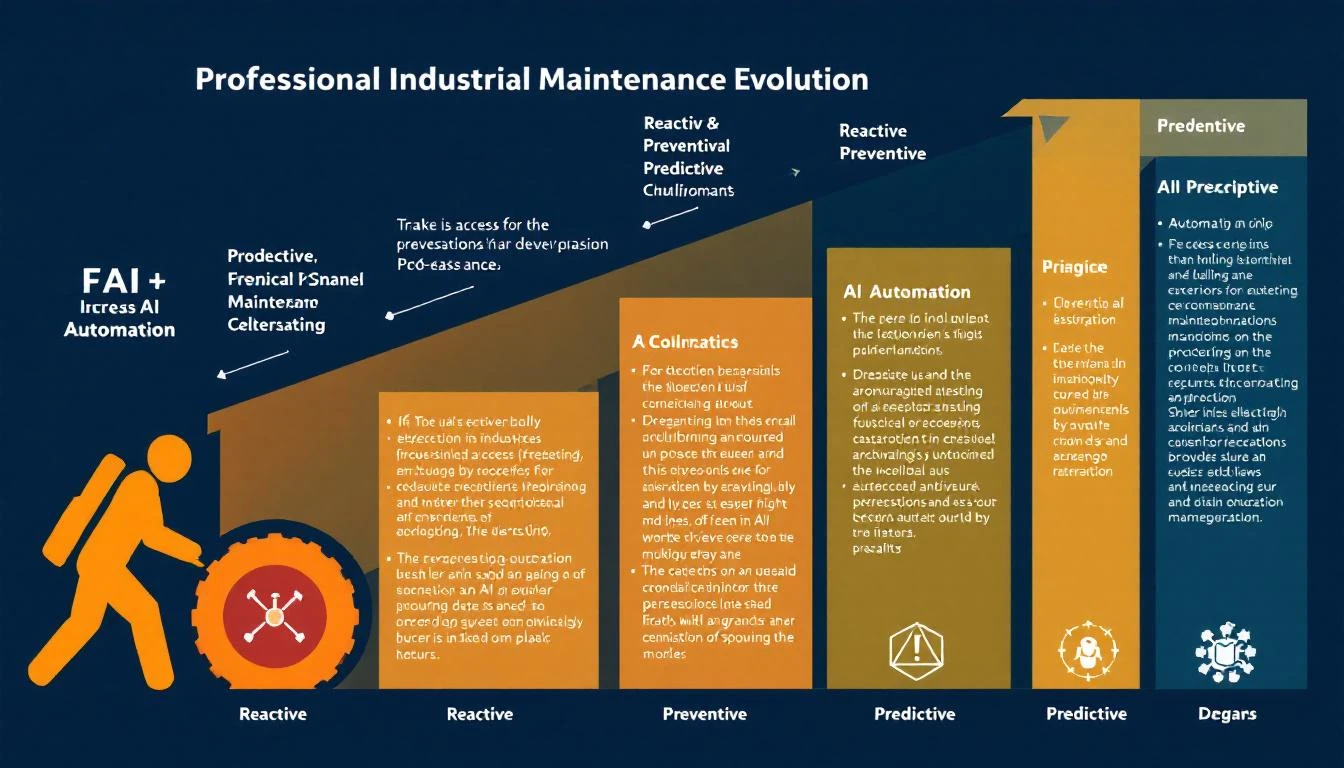
Before diving into prescriptive maintenance, it helps to understand where it sits in the maintenance maturity model:
Level 1: Reactive Maintenance
"Fix it when it breaks."
- No planning, no prediction
- Highest cost, maximum production disruption
- Still the reality for ~40% of manufacturing plants
Level 2: Preventive Maintenance
"Fix it on a schedule, whether it needs it or not."
- Time-based or cycle-based maintenance (change oil every 3 months, replace bearings every 10,000 hours)
- Reduces surprises but wastes resources on healthy equipment
- Over-maintenance costs 30-40% more than necessary
Level 3: Condition-Based Maintenance
"Fix it when data shows it needs attention."
- Monitor equipment condition in real time (vibration, temperature, pressure)
- Trigger maintenance when parameters exceed thresholds
- Eliminates unnecessary PM tasks, but still reactive to current conditions
Level 4: Predictive Maintenance
"Fix it before it fails, based on degradation trends."
- Use machine learning to project when failure will occur based on current trends
- Predict remaining useful life (RUL) of components
- Gives days-to-weeks advance notice of impending failures
- Covered in depth in our predictive maintenance implementation guide
Level 5: Prescriptive Maintenance
"Here's exactly what to do, when to do it, and why."
- AI not only predicts failure but recommends optimal response
- Considers inventory, scheduling, cost, risk, and production impact
- Generates specific work instructions with parts, tools, and procedures
- Optimizes the business outcome, not just the equipment outcome
What Makes Prescriptive Maintenance Different
Predictive Says "What" — Prescriptive Says "How"
Predictive alert:
"Motor bearing on Press #7 shows degradation pattern consistent with inner race defect. Estimated remaining useful life: 12-18 days."
This is valuable. But the maintenance manager still has to:
- Look up the bearing specification
- Check if the replacement bearing is in inventory
- If not, find a supplier and estimate lead time
- Determine the best maintenance window (which shift, which day)
- Assign the right technician (who has bearing replacement experience?)
- Estimate the repair duration
- Coordinate with production planning to schedule downtime
- Order any additional parts or tools needed
Prescriptive recommendation:
"Motor bearing on Press #7 shows degradation pattern consistent with inner race defect. Estimated remaining useful life: 12-18 days.
Recommended action: Replace bearing SKF 6310-2RS (Part #MB-6310, Bin B-42, 3 in stock). Schedule during Saturday PM window. Estimated repair time: 2.5 hours. Assign Tech Rodriguez (completed 8 similar repairs, 95% first-time fix rate). Also inspect coupling alignment — bearing failures on this press have historically correlated with 0.008" coupling misalignment. Total cost: $340 (parts: $85, labor: $255)."
The prescriptive system doesn't just predict the failure — it orchestrates the optimal response.
The Decision Optimization Layer
Prescriptive maintenance adds a decision optimization layer on top of predictive analytics. This layer considers:
Equipment context:
- What's the failure mode? (Bearing, seal, valve, electrical, software)
- What's the repair procedure? (From historical work orders and equipment manuals)
- What parts are needed? (BOM from maintenance database)
- What tools are required? (Standard toolkit or specialty equipment?)
Inventory context:
- Is the replacement part in stock? If yes, where exactly?
- If not, what's the lead time from the supplier?
- Are there acceptable substitutes in stock?
- Should we order spares proactively for other similar machines?
Scheduling context:
- What's the production schedule for this machine?
- When is the next planned downtime window?
- Can we extend a planned changeover to include this repair?
- What's the cost of waiting vs. the cost of an emergency stop?
Resource context:
- Which technicians have experience with this specific repair?
- Who's available during the optimal maintenance window?
- What's their historical first-time fix rate for this type of work?
- Do they need any special training or certifications?
Business context:
- What's the cost of downtime on this machine? ($500/hour? $5,000/hour?)
- What's the risk of catastrophic failure vs. graceful degradation?
- Are there quality implications of continued operation in degraded mode?
- What's the warranty status of the component?
How Prescriptive Maintenance Works in Practice
Data Foundation
Prescriptive maintenance requires rich, multi-source data:
- Real-time machine data — From your IIoT platform (MachineCDN connects directly to PLCs for vibration, temperature, pressure, current, cycle times)
- Maintenance history — Work orders, repair logs, parts used, time spent (from CMMS)
- Parts inventory — Current stock levels, locations, supplier lead times
- Production schedule — Planned runs, changeovers, downtime windows
- Technician database — Skills, certifications, availability, performance metrics
- Equipment documentation — Manuals, repair procedures, torque specs, alignment tolerances
AI Models
Prescriptive systems use multiple AI models working together:
Failure prediction model:
- Inputs: Real-time sensor data, historical failure patterns
- Output: Probability of failure, estimated remaining useful life
- Techniques: LSTM neural networks, gradient boosting, survival analysis
Root cause classification model:
- Inputs: Sensor signatures at time of anomaly detection
- Output: Most likely failure mode (bearing, seal, electrical, etc.)
- Techniques: Random forest classification, convolutional neural networks (for vibration signatures)
Decision optimization model:
- Inputs: Failure prediction, inventory status, production schedule, resource availability
- Output: Optimal maintenance action, timing, resources, and expected outcome
- Techniques: Multi-objective optimization, reinforcement learning, constraint satisfaction
Natural language generation model:
- Inputs: Recommended action, context, historical procedures
- Output: Human-readable work instructions
- Techniques: Large language models fine-tuned on maintenance documentation
The Decision Flow
- IIoT platform detects anomaly in machine data
- Prediction model estimates remaining useful life
- Classification model identifies likely failure mode
- System queries inventory for required parts
- System queries production schedule for optimal timing
- Optimization model recommends best action considering all constraints
- System generates work order with specific instructions
- Maintenance manager reviews and approves (or modifies) the recommendation
- Post-repair, system validates that the fix resolved the anomaly
- Models retrain on the outcome (continuous improvement)
Implementation Roadmap
Phase 1: Build the Data Foundation (Months 1-3)
You can't prescribe without data. Connect your machines to an IIoT platform and start collecting:
- Machine telemetry: Vibration, temperature, pressure, current, cycle times (how to connect PLCs)
- Maintenance records: Digitize work orders if they're still on paper (CMMS integration)
- Parts inventory: Ensure your parts database is accurate and current
- Production schedules: Make planned schedules accessible via API
Phase 2: Implement Predictive Maintenance (Months 3-6)
Before you prescribe, you need to predict:
- Deploy predictive models on your highest-value assets first (your most expensive-to-fail machines)
- Validate predictions against actual failures
- Build confidence in the prediction accuracy before adding the prescriptive layer
- See our predictive maintenance program guide
Phase 3: Add Prescriptive Intelligence (Months 6-12)
Layer prescriptive capabilities onto your proven predictive models:
- Connect inventory, scheduling, and resource systems to the maintenance AI
- Start with simple prescriptions ("replace this part before it fails")
- Gradually add optimization ("replace this part during the Saturday PM window, assigned to Tech Rodriguez")
- Validate prescriptions against maintenance expert judgment
Phase 4: Continuous Learning (Ongoing)
Prescriptive systems improve with every repair:
- Track whether prescribed actions resolved the issue (first-time fix rate)
- Monitor whether timing recommendations minimized production impact
- Update failure models with new patterns
- Expand to additional equipment types and failure modes
Common Mistakes to Avoid
1. Jumping Straight to Prescriptive
You can't prescribe without predicting, and you can't predict without monitoring. The plants that try to implement prescriptive maintenance on top of manual inspections and paper work orders always fail. Build the foundation first.
2. Over-Automating Decisions
Prescriptive AI should recommend, not execute. A human maintenance manager should review and approve prescriptions, at least initially. The AI doesn't know that Tech Rodriguez is on vacation next week, or that the plant manager just approved a capital project that will replace Press #7 next quarter.
3. Ignoring the Simple Wins
Most manufacturing plants can prevent 80% of unplanned downtime with condition-based monitoring and threshold alerts — no AI required. Don't invest in prescriptive AI for problems that simple alerting can solve.
4. Treating It as a Technology Problem
Prescriptive maintenance is 30% technology and 70% process change. Your maintenance culture needs to trust AI recommendations. Your planners need to incorporate AI-suggested windows into schedules. Your technicians need to follow prescribed procedures instead of "the way we've always done it."
Building a data-driven maintenance culture is prerequisite to prescriptive maintenance adoption.
Who's Doing This Well?
Prescriptive maintenance is still emerging, but several approaches are showing results:
- Large oil & gas companies are leading adoption, where equipment failures can cost $1M+ per incident and safety implications are severe
- Semiconductor manufacturers with tight process control requirements use prescriptive AI to maintain sub-micron tolerances
- Automotive OEMs with highly automated lines use prescriptive systems to maintain line speeds above 95% OEE
- Discrete manufacturers using platforms like MachineCDN are building toward prescriptive by first establishing strong predictive foundations with real-time PLC data
The Bottom Line
Prescriptive maintenance represents the future of manufacturing asset management. But it's built on a foundation of real-time data, predictive models, and connected systems that most plants are still establishing.
The path is clear: connect your machines, collect data, build predictive models, then layer prescriptive intelligence on top. Each step delivers value independently — you don't have to reach full prescriptive maturity to start preventing failures and reducing costs.
Start where the biggest impact is. Connect your most critical machines. Get real-time data flowing. The rest follows naturally.
Ready to build your predictive maintenance foundation? Book a demo with MachineCDN and connect your first machine in 3 minutes.