
187 posts tagged with "Industrial IoT"

Industrial Internet of Things insights and best practices

View All Tags

EtherNet/IP and CIP: A Practical Guide to Implicit vs Explicit Messaging for Plant Engineers [2026]

· 12 min read

EtherNet/IP is everywhere in North American manufacturing — from plastics auxiliary equipment to automotive assembly lines. But the protocol's layered architecture confuses even experienced controls engineers. What's the actual difference between implicit and explicit messaging? When should you use connected vs unconnected messaging? And how does CIP fit into all of it?

This guide breaks down EtherNet/IP from the wire up, with practical configuration considerations drawn from years of connecting real industrial equipment to cloud analytics platforms.

IIoT for Automotive Manufacturing: A Practical Guide to Connecting Your Stamping, Welding, and Assembly Lines

· 8 min read
MachineCDN Team
Industrial IoT Experts

Automotive manufacturing is one of the most demanding environments for Industrial IoT. The combination of high-speed production, tight quality tolerances, multi-process workflows, and enormous downtime costs creates both the strongest need and the highest bar for IIoT platforms.

If you're running stamping presses, robotic welding cells, paint systems, or final assembly lines, here's what IIoT actually looks like in automotive — beyond the vendor brochures.

IIoT for Energy and Utilities: A Practical Guide to Monitoring Power Generation, Transmission, and Distribution Equipment

· 9 min read
MachineCDN Team
Industrial IoT Experts

The energy sector operates some of the most expensive, most critical, and most geographically dispersed equipment in any industry. A single transformer failure can cost $2-10 million. A turbine bearing failure can take a power plant offline for weeks. And unlike a factory that loses one production line, a utility that loses a substation can darken an entire city.

Industrial IoT isn't optional for energy and utilities anymore — it's the difference between proactive asset management and rolling the dice on $50 million turbines.

IIoT for Food and Beverage Manufacturing: A Practical Guide to Protecting Quality, Compliance, and Uptime

· 11 min read
MachineCDN Team
Industrial IoT Experts

Food and beverage manufacturing operates under constraints that most other industries don't face. Your products expire. Your regulators show up unannounced. Your equipment touches what people eat. And when a production line goes down during a seasonal peak, the raw materials waiting in your cooler don't politely pause their biological clocks.

These constraints make food and beverage one of the most compelling use cases for industrial IoT — and one of the most underserved. Most IIoT platforms were built for automotive, aerospace, or heavy industry. They don't understand changeover frequencies, CIP cycles, cold chain requirements, or why a 2°F temperature deviation at 3 AM matters more than a 20°F deviation in a metal stamping plant.

This guide breaks down how IIoT specifically helps food and beverage manufacturers address their unique challenges — not in theory, but in the practical, measurable ways that justify the investment.

IIoT for Pharmaceutical Manufacturing: Real-Time Monitoring for GMP Compliance, Batch Quality, and Equipment Reliability

· 9 min read
MachineCDN Team
Industrial IoT Experts

Pharmaceutical manufacturing operates under constraints that most industries never face. Every batch must meet exact specifications. Every process parameter must be documented. Every deviation must be investigated. And every minute of downtime on a high-value drug production line can cost hundreds of thousands of dollars.

Industrial IoT in pharma isn't about general "Industry 4.0" buzzwords — it's about solving the specific tension between regulatory compliance, batch quality, and operational efficiency.

Industrial IoT Platform Comparison 2026: 12 Platforms Ranked for Manufacturing

· 10 min read
MachineCDN Team
Industrial IoT Experts

The industrial IoT platform market has exploded. Gartner counts over 150 vendors. IoT Analytics tracks 450+. Choosing the right platform for your manufacturing operation feels like navigating a minefield of buzzwords, vendor claims, and analyst reports that somehow all recommend different winners.

Here's what most comparison guides won't tell you: 80% of IIoT platform evaluations end without a purchase. Not because the technology isn't ready — but because buyers get paralyzed by options, overwhelmed by complexity, and spooked by implementation timelines that stretch into quarters and years.

This guide cuts through the noise. We've evaluated 12 IIoT platforms across the dimensions that actually matter for manufacturing engineers and plant managers: deployment speed, total cost, features that deliver ROI, and the honest trade-offs each platform makes.

Industrial OT Security for IIoT: TLS, Certificates, Network Segmentation, and Zero Trust at the Edge [2026 Guide]

· 14 min read
MachineCDN Team
Industrial IoT Experts

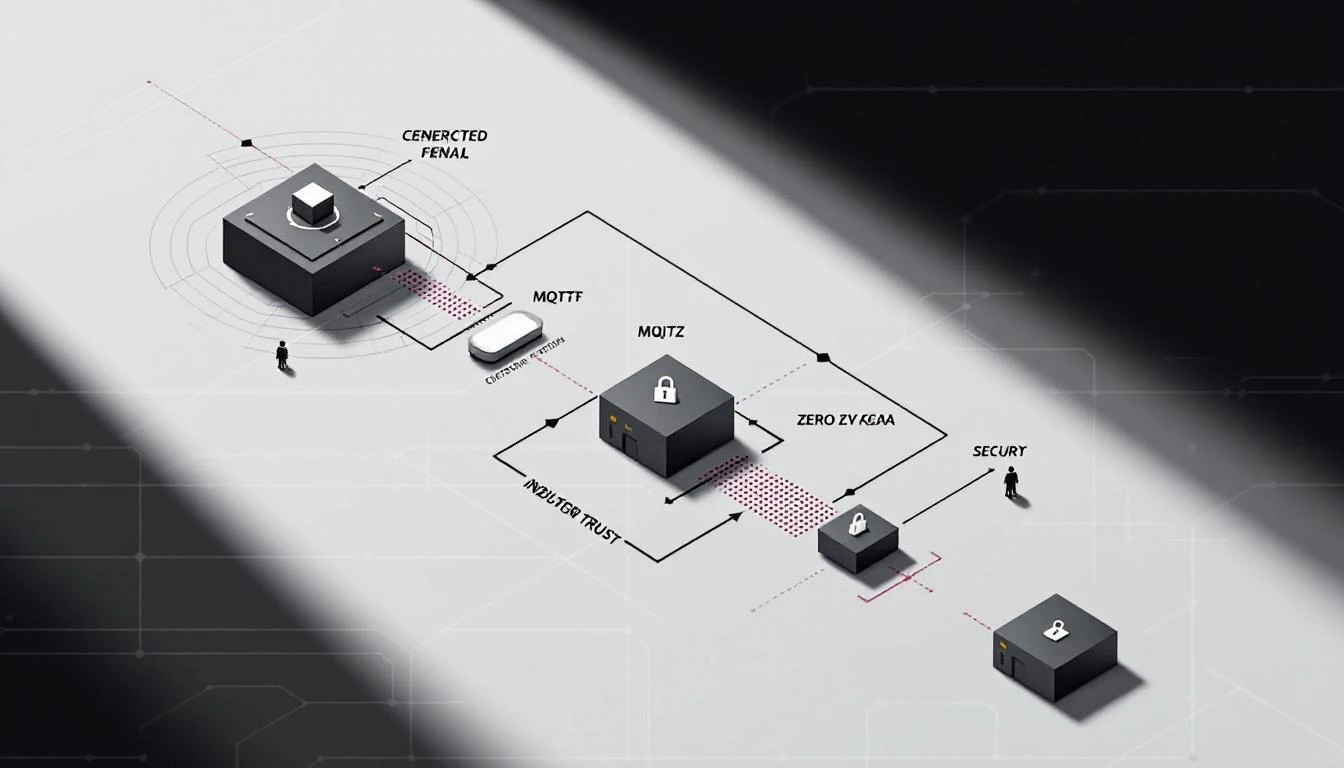
There's a persistent myth in manufacturing that "air-gapped" OT networks don't need security. The moment you connect a PLC to an edge gateway that publishes data to the cloud via MQTT, that air gap is gone. You've built a bridge between your operational technology and the internet, and every decision you make about that bridge — TLS configuration, certificate management, authentication, network architecture — determines whether you've built a secure connection or an open door.

This guide covers the practical security decisions for IIoT deployments, based on hard-won experience connecting industrial equipment in environments where a misconfiguration doesn't just leak data — it can affect physical processes.

Securing Industrial IoT: TLS for MQTT, OPC-UA Certificates, and Zero-Trust OT Networks [2026]

· 12 min read

Industrial OT Security Architecture

Here's a uncomfortable truth from the field: most industrial IoT deployments I've seen have at least one Modbus TCP device exposed without any authentication. No TLS. No access control. Just port 502, wide open, on a "segmented" network that's one misconfigured switch from the corporate LAN.

The excuse is always the same: "It's air-gapped." It never actually is.

This guide covers what securing industrial protocol communications looks like in practice — not the compliance checkbox version, but the engineering decisions that determine whether an attacker who lands on your OT network can read holding registers, inject false sensor data, or shut down a production line.

Litmus Edge Review 2026: An Honest Assessment for Manufacturing Engineers

· 7 min read
MachineCDN Team
Industrial IoT Experts

Litmus is one of the most talked-about edge platforms in industrial IoT, and for good reason — their protocol library is genuinely impressive. But after working with manufacturers who've evaluated (and sometimes deployed) Litmus, we've seen a pattern: the breadth of protocol support often overshadows questions about deployment complexity, total cost, and whether all those protocols actually matter for your specific factory floor.

This is an honest review of Litmus Edge in 2026, covering what it does well, where it falls short, and who it's actually built for.

MachineCDN vs Augury: Protocol-Native IIoT vs Sensor-Based Machine Health Monitoring

· 10 min read
MachineCDN Team
Industrial IoT Experts

When manufacturing engineers evaluate predictive maintenance platforms, two fundamentally different philosophies emerge: monitor what the machine is already telling you through its PLC, or add external sensors to detect what the PLC can't see.

MachineCDN and Augury represent these two approaches in their purest forms. MachineCDN connects directly to PLCs and reads the data your machines are already generating. Augury attaches vibration and temperature sensors to rotating equipment and uses acoustic AI to detect failure patterns. Both claim to prevent unplanned downtime. Both deliver real results. But they solve different problems, require different infrastructure, and suit different manufacturing environments.

This comparison helps you understand which approach — or combination — makes sense for your operation.