Best Industrial Edge Gateway Software 2026: Connect Your Factory Floor to the Cloud

The edge gateway is where the factory floor meets the cloud. It's the device — and the software running on it — that reads data from your PLCs, sensors, and controllers, processes it locally, and transmits it to cloud platforms for analytics, monitoring, and predictive maintenance.
In 2026, the edge gateway market has matured significantly. You no longer need to build custom solutions with Raspberry Pis and Python scripts. Purpose-built industrial edge gateway software handles protocol translation, data buffering, security, and cloud connectivity out of the box. But the options range from bare-metal connectivity platforms to full IIoT suites that include the edge as just one component.
Here's how to evaluate edge gateway software and which platforms deliver the most value for manufacturing environments.
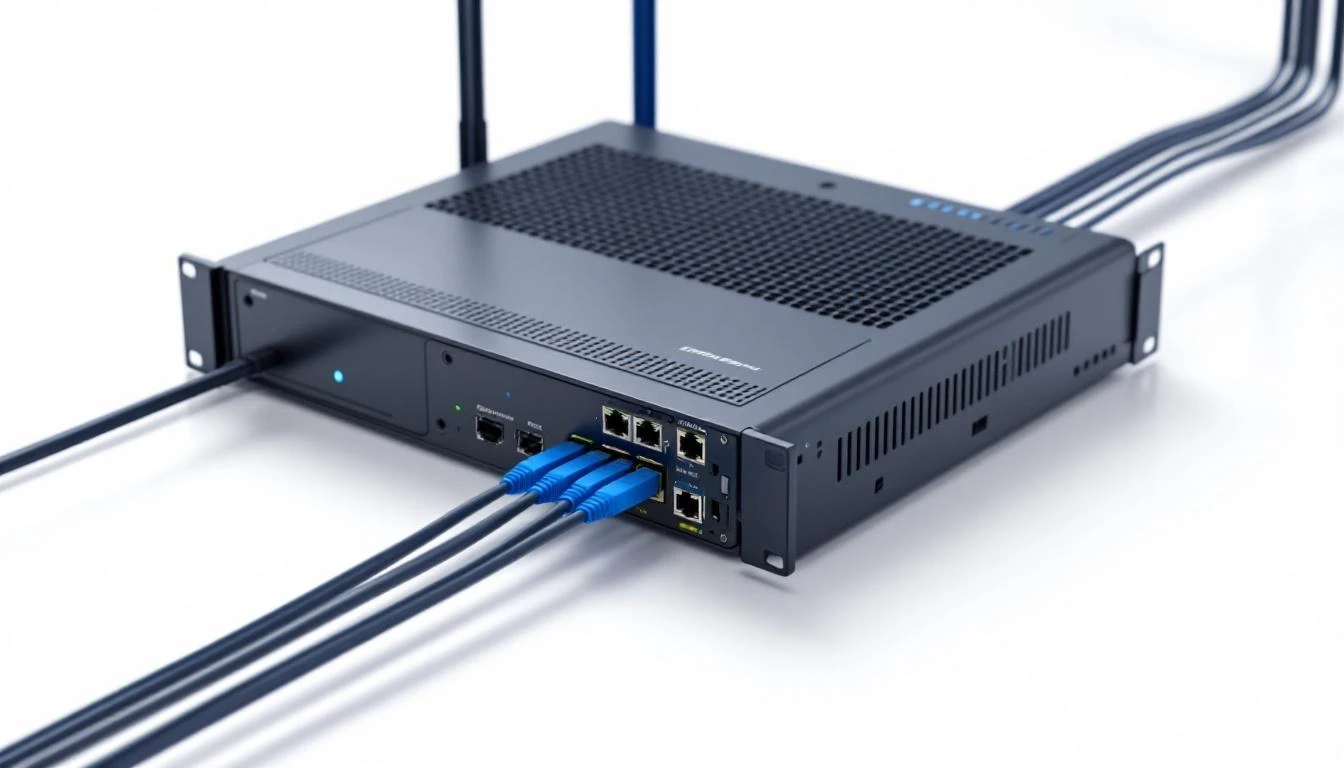
What Industrial Edge Gateway Software Actually Does
An industrial edge gateway sits between your operational technology (OT) — PLCs, sensors, motor drives, HMIs — and your information technology (IT) — cloud platforms, databases, analytics tools. The software on that gateway handles:
Protocol Translation
Your Allen-Bradley PLC speaks Ethernet/IP. Your Siemens PLC speaks S7 or Profinet. Your power meter speaks Modbus RTU. Your cloud platform speaks MQTT or HTTPS. The edge gateway translates between all of these.
Data Preprocessing
Raw PLC data is noisy and high-frequency. Sending every data point to the cloud is expensive and unnecessary. Edge software handles filtering (remove duplicates), aggregation (1-minute averages from 1-second samples), and compression to reduce bandwidth costs by 80-95%.
Local Buffering
Internet connections fail. Cellular drops. Cloud services have outages. Edge gateway software must buffer data locally during connectivity interruptions and sync when the connection returns — without losing a single data point.
Security
The edge gateway is the boundary between your plant network and the internet. It must handle TLS encryption, certificate management, firewall rules, and — ideally — operate on a separate network (cellular) to avoid exposing the OT network entirely.
Edge Analytics
Some decisions can't wait for a round trip to the cloud. Edge analytics lets you process data locally for real-time alarms, threshold monitoring, and basic anomaly detection — even when cloud connectivity is unavailable.
Top Industrial Edge Gateway Software in 2026
1. MachineCDN Edge
Best for: Manufacturers wanting zero-configuration, cellular-connected edge computing
MachineCDN's edge approach is fundamentally different from traditional gateways. Instead of deploying software on generic hardware and configuring it, MachineCDN provides a pre-configured edge device that:
- Connects directly to PLCs via Ethernet/IP and Modbus — no configuration needed
- Uses cellular connectivity — completely bypasses the plant network, requiring zero IT involvement
- Buffers locally — stores data during connectivity gaps and syncs automatically
- Auto-detects devices — identifies PLC type on connection and configures data collection
- Delivers data to MachineCDN cloud — where dashboards, OEE tracking, and predictive maintenance are ready to use
Setup time: 3 minutes from plug-in to live data.
Best fit: Discrete manufacturing (injection molding, CNC, stamping, packaging, assembly, extrusion). Plants with limited IT staff. Multi-site deployments where consistency and speed matter.
2. Litmus Edge
Best for: Enterprises needing edge-native containerized applications
Litmus Edge provides a Kubernetes-based edge computing platform:
- 200+ industrial protocol drivers
- Docker container orchestration at the edge
- Edge analytics and ML model deployment
- OPC UA, MQTT, Kafka connectivity
- Integration marketplace for third-party apps
Pricing: Enterprise-only, typically $50,000+ per year for meaningful deployments.
Limitations: Complex to deploy and manage. Requires Kubernetes expertise. The platform is powerful but over-engineered for manufacturers who just want to monitor machines and track OEE.
3. Kepware KEPServerEX + IoT Gateway
Best for: Connecting legacy/exotic protocols to modern cloud platforms
Kepware remains the gold standard for industrial protocol support:
- 150+ protocol drivers (most in the industry)
- IoT Gateway module for MQTT and REST transmission
- Tag-level configuration for precise data selection
- Windows-only deployment
Pricing: $5,000–$25,000 per server (license) plus the cost of the IT stack around it.
Limitations: Kepware is connectivity middleware, not an analytics platform. You still need a cloud backend, analytics tools, and dashboards — Kepware just moves the data.
4. AWS IoT Greengrass
Best for: Organizations already invested in AWS for their cloud infrastructure
AWS IoT Greengrass is Amazon's edge runtime:
- Lambda functions at the edge for local compute
- ML inference via SageMaker Neo
- OTA deployment and management
- Deep integration with AWS IoT Core, S3, Kinesis
Pricing: Greengrass Core is free; you pay for AWS IoT Core ($1 per million messages), data transfer, and compute services. Costs scale with volume.
Limitations: Requires significant AWS expertise. Industrial protocol support is limited — you'll likely still need Kepware or custom drivers to read from PLCs. Not a turnkey solution for manufacturing.
5. Azure IoT Edge
Best for: Microsoft-centric IT environments
Azure IoT Edge is Microsoft's edge computing framework:
- Docker container deployment at the edge
- Stream Analytics at the edge for real-time processing
- Azure Machine Learning model deployment
- Integration with Azure IoT Hub, Digital Twins, Time Series Insights
Pricing: Similar to AWS — the runtime is free, but you pay for IoT Hub, storage, and compute. Enterprise deployments typically run $5,000–$30,000/month for cloud services.
Limitations: Same as Greengrass — strong cloud platform, weak industrial protocol support. You need additional middleware to read from PLCs.
Key Evaluation Criteria
1. Protocol Support
Does the platform natively support your PLC protocols? For most discrete manufacturers, Ethernet/IP and Modbus cover 80%+ of equipment. Process manufacturers may need OPC UA, Profinet, HART, or Foundation Fieldbus.
| Platform | Ethernet/IP | Modbus | OPC UA | Siemens S7 | Profinet | Exotic Protocols |
|---|---|---|---|---|---|---|
| MachineCDN | ✅ | ✅ | — | — | — | — |
| Litmus Edge | ✅ | ✅ | ✅ | ✅ | ✅ | 200+ |
| Kepware | ✅ | ✅ | ✅ | ✅ | ✅ | 150+ |
| AWS Greengrass | Via adapters | Via adapters | Via adapters | — | — | Limited |
| Azure IoT Edge | Via modules | Via modules | Via modules | — | — | Limited |
2. Deployment Complexity
How many hours/days does it take to go from hardware-in-hand to data flowing? This is the most underestimated factor in edge gateway selection.
| Platform | Typical Deployment Time | Expertise Required |
|---|---|---|
| MachineCDN | 3 minutes | None (plug-and-play) |
| Litmus Edge | 1-4 weeks | OT + Kubernetes |
| Kepware | 2-5 days | OT + Windows admin |
| AWS Greengrass | 1-4 weeks | AWS + OT |
| Azure IoT Edge | 1-4 weeks | Azure + OT |
3. Network Requirements
Does the platform require access to the plant network? This is a critical question for cybersecurity.
- MachineCDN: No — uses dedicated cellular. Plant network is never exposed.
- Litmus/Kepware/AWS/Azure: Yes — the gateway sits on the plant network. Requires VLANs, firewall rules, and OT network security architecture.
For plants without a mature OT cybersecurity program, cellular-based solutions like MachineCDN eliminate the single biggest IIoT security risk.
4. Edge Intelligence
Can the platform make decisions locally without cloud connectivity?
- MachineCDN: Yes — edge processing for real-time alerts and data filtering
- Litmus Edge: Yes — full container-based analytics at the edge
- Kepware: Limited — tag-level filtering and triggering only
- AWS Greengrass: Yes — Lambda functions and ML inference at the edge
- Azure IoT Edge: Yes — Stream Analytics and ML at the edge
5. Manageability at Scale
If you have 50 machines across 5 plants, how do you manage 50 edge gateways?
- MachineCDN: Centralized fleet management — all devices visible from a single console, OTA configuration updates
- Litmus Edge: Fleet management via Litmus Edge Manager
- Kepware: Manual management per server (no centralized fleet management)
- AWS Greengrass: Fleet management via AWS IoT Core device management
- Azure IoT Edge: Fleet management via Azure IoT Hub
Build vs. Buy: The Edge Gateway Decision
Some engineering teams consider building their own edge gateway using:
- Raspberry Pi or industrial PC
- Node-RED or Python for protocol reading
- MQTT broker for data transmission
- Custom cloud backend
This works for proof of concepts. It fails for production because:
- Reliability — Industrial environments have power fluctuations, temperature extremes, and vibration. Consumer hardware fails.
- Security — Certificate management, firmware updates, and vulnerability patching on custom solutions are a full-time job.
- Scale — Managing 50 custom gateways with different configurations and software versions is a nightmare.
- Support — When your DIY gateway fails at 2 AM and the production line stops, who do you call?
The "build" approach typically costs 3-5x more than "buy" when you account for engineering hours, maintenance, and reliability — even before counting the cost of production downtime during gateway failures.
The Convergence Trend: Edge Gateway → IIoT Platform
The edge gateway market is converging with the IIoT platform market. Five years ago, you bought a gateway (Kepware), a cloud platform (AWS IoT), and an analytics layer (Grafana) separately. Today, platforms like MachineCDN bundle everything into a single solution.
This convergence makes sense because manufacturers don't want to manage a 5-component stack. They want to plug a device into their PLC and see real-time OEE dashboards, predictive maintenance alerts, and multi-plant fleet views — without hiring a cloud architect.
Making the Right Choice
For most discrete manufacturers in 2026, the right edge gateway isn't a standalone gateway at all — it's an integrated IIoT platform with edge computing built in. The era of assembling industrial IoT solutions from components is ending.
If you're still evaluating standalone edge gateways, you're solving last year's problem.
Book a demo with MachineCDN to see what edge-to-cloud manufacturing intelligence looks like when it's built as one platform, not five components.